
material guide
Choosing a Spray Nozzle Material for Your Liquid
Match Material to Liquid and Duty Before Selecting the Nozzle
The wrong material fails early in service. Start by listing the liquid's properties: is it water, a solvent, a brine, or a slurry? Does it contain chlorides, acids, or abrasive particles? What is the operating temperature? These factors determine which of the available materials will survive. Brass, 303 stainless steel, 304 stainless steel, 316 stainless steel, and plastics like PVC, PP, PVDF, and PTFE are all used in the CNSS range, but each has limits.
Brass for General Water Use at Moderate Temperatures
Brass is suitable for clean water or low-temperature wash applications. It resists general corrosion and is cost-effective. It is not recommended for abrasive liquids or long-term exposure to acidic or alkaline solutions.
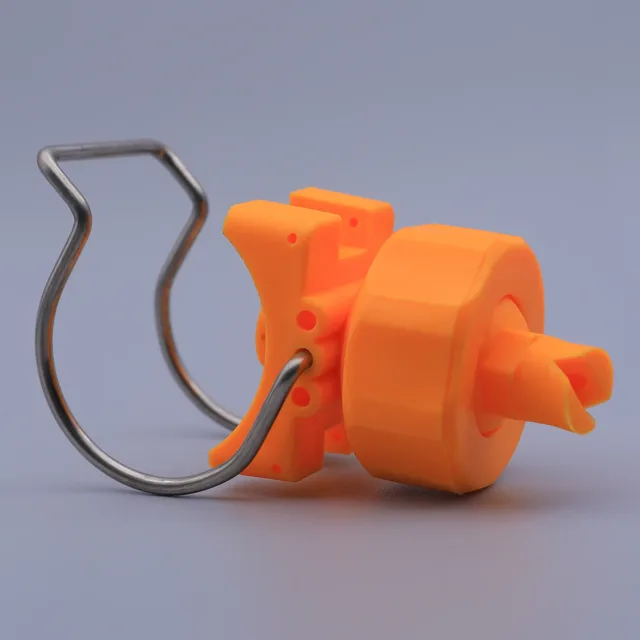
Orange plastic and metal tool with a wire handle and a pointed nozzle
303 Stainless Steel for Moderate Corrosion and Wear
303 stainless steel offers better corrosion resistance than brass and is used in applications with mild chemicals or moderate temperatures. It is not recommended for chloride-rich environments or high-abrasion duty. It is more durable than brass but less resistant than 316 stainless steel.
304 Stainless Steel for General Industrial Washing
304 stainless steel is used in general washing, cooling, and rinsing processes. It resists oxidation and moderate chemical exposure. It is suitable for temperatures up to 150°C. Avoid 304 in chloride-containing environments, especially under stress or at high temperatures, where pitting may occur.
316 Stainless Steel for Chlorides and Harsh Chemicals
316 stainless steel is required when chlorides are present, such as in sea water, brine, or scrubbing liquor. It resists pitting and crevice corrosion better than 304. Use it in gas scrubbing, flue gas washing, and cooling tower applications where chloride exposure is expected.
Plastics for Acids, Solvents, and Abrasive Slurries
PVC, PP, PVDF, and PTFE are used where metals fail. They resist strong acids, alkalis, and solvents. They are also used in abrasive slurries where metal nozzles wear quickly. These materials are not suitable for high temperatures or high-pressure applications. They are typically used in low to medium pressure systems.
Material Choice Affects Clogging and Maintenance
Materials with large, unobstructed flow passages reduce clogging risk. Hollow cone nozzles with plastic bodies or 316 stainless steel are used in gas scrubbing and cooling where clogging from fly ash or scale is a concern. Plastic bodies are lighter and less expensive but have lower temperature limits than metal.
Confirm Material Against Your Process Conditions
Nozzle material must be confirmed against the actual liquid, temperature, pressure, and abrasion level. If the duty is uncertain, provide a process sheet or sample to the supplier. The factory accepts customisation and can match material to your specific application.
Keep Reading
Ranges Industries and Other Guides
Questions Buyers Ask
Questions on This Topic
What materials are available for the hollow cone nozzle?
The hollow cone nozzle is available in brass, 303 stainless steel, 316 stainless steel, PVC, PP, PVDF, and PTFE. Choose based on the liquid, temperature, and presence of chlorides or abrasives.
When should I use 316 stainless steel instead of 304 for a full cone nozzle?
Use 316 stainless steel when the liquid contains chlorides, such as in flue gas scrubbing or cooling tower applications. 304 is not resistant to chloride-induced pitting under these conditions.
Can I use plastic materials for high-temperature applications?
No. Plastic materials like PVC, PP, PVDF, and PTFE have temperature limits below 100°C. They are not suitable for high-temperature processes. Use metal materials like brass or stainless steel instead.
What is the difference between 303 and 316 stainless steel for nozzles?
303 stainless steel is more machinable but less resistant to corrosion than 316. 316 stainless steel has better resistance to chlorides and harsh chemicals, making it suitable for scrubbing and cooling systems.
Are plastic nozzles suitable for abrasive liquids?
Plastic nozzles like PP, PVDF, and PTFE are used in abrasive slurries because they resist wear better than metal. However, they are not suitable for high-pressure or high-temperature environments.
How do I choose the right material for my spray application?
Match the material to the liquid, temperature, and presence of chlorides or abrasives. Brass is for clean water, 304 for general washing, 316 for chlorides, and plastics for acids, solvents, or slurries.
Can I get a sample of a nozzle made from a specific material?
Yes. Trial samples can be sent free of charge. Provide the material and model number, and the factory will prepare a sample within 10 days.
Apply This to Your Own Line
Send the duty, the pressure and a photograph of the existing head. We will confirm the pattern, the size and the material.