
maintenance guide
When to Replace a Worn Spray Nozzle
Detect Wear Before It Causes Process Failure
A worn nozzle shows reduced impact, increased flow, and a distorted spray pattern. These changes degrade cleaning, cooling, or scrubbing performance. Maintenance teams can detect wear by comparing current spray coverage to the original design, measuring flow at constant pressure, and checking for uneven or broken spray lines during operation.
Check Flow and Pattern During Routine Inspection
At constant line pressure, a rising flow rate indicates orifice enlargement from erosion. A flat fan nozzle with a distorted or split spray pattern suggests internal wear or debris buildup. Use a simple visual check under operating conditions to spot gaps, misalignment, or uneven wetting across the target surface.
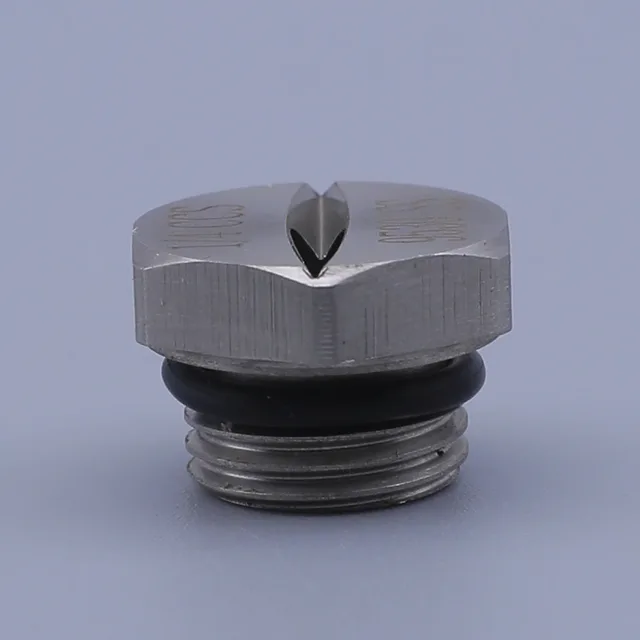
Stainless steel hex nozzle with V-shaped slit tip, black O-ring, and threaded base on a plain background
Plan Replacements Around Scheduled Shutdowns
Do not wait for a breakdown. Replace nozzles during planned maintenance windows. Track wear by recording flow and pattern changes over time. Use the original nozzle specifications as a baseline to identify when replacement is needed, avoiding unplanned downtime and process inefficiency.
Verify Replacement Nozzles Match the Original Duty
Ensure the replacement nozzle matches the original thread size, material, and spray angle. Confirm the body material is suitable for the liquid and temperature in use. If the original nozzle was made of 303 stainless steel, brass, or a plastic like PP, PVC, PVDF, or PTFE, select the same material unless process conditions require a change.
Use Trial Samples to Validate Performance
Before replacing a full set of nozzles, test a sample in the same position. Compare flow, spray pattern, and coverage to the original. Trial samples can be sent free of charge and are ready within 10 days, allowing verification without risk.
Products in This Guide
Parts Referred To Above
Keep Reading
Ranges Industries and Other Guides
Questions Buyers Ask
Questions on This Topic
What signs indicate a flat fan nozzle is worn?
A worn flat fan nozzle shows increased flow at the same pressure, a distorted or broken spray pattern, and reduced impact on the target surface. These changes reduce cleaning, cooling, or scrubbing effectiveness.
How do I confirm the correct replacement nozzle size?
Confirm the replacement nozzle matches the original thread size, spray angle, and body material. If the original was a 1/8 inch to 3 inch BSPT or NPT nozzle, select the same size. The material must suit the liquid and temperature in use.
Can I replace a flat fan nozzle with a different material?
Yes, if the new material better suits the liquid or temperature. For example, switch to 316 stainless steel if chlorides are present, or to PP, PVC, PVDF, or PTFE if the liquid is corrosive. Confirm the material choice against the duty sheet.
What is the lead time for a replacement flat fan nozzle?
Samples can be ready within 10 days. Standard replacement nozzles are produced from stock and shipped after payment. Small volume orders are accepted, and payment terms are T/T 100% in advance.
Is there a quality guarantee for flat fan nozzles?
Yes, a 3 month quality guarantee is stated on the product listing. Every nozzle is tested before shipping, and quality is controlled at material selection, manufacturing, inspection, packaging, and transportation.
Can I get a trial sample of a flat fan nozzle before ordering?
Yes, trial samples can be sent free of charge. They are ready within 10 days and allow you to verify the spray pattern, flow, and material before placing a full order.
Are custom flat fan nozzles available?
Yes, OEM orders are accepted. Standard and non-standard parts can be customised. Provide your drawing or duty sheet to confirm dimensions, material, and thread size.
Apply This to Your Own Line
Send the duty, the pressure and a photograph of the existing head. We will confirm the pattern, the size and the material.