
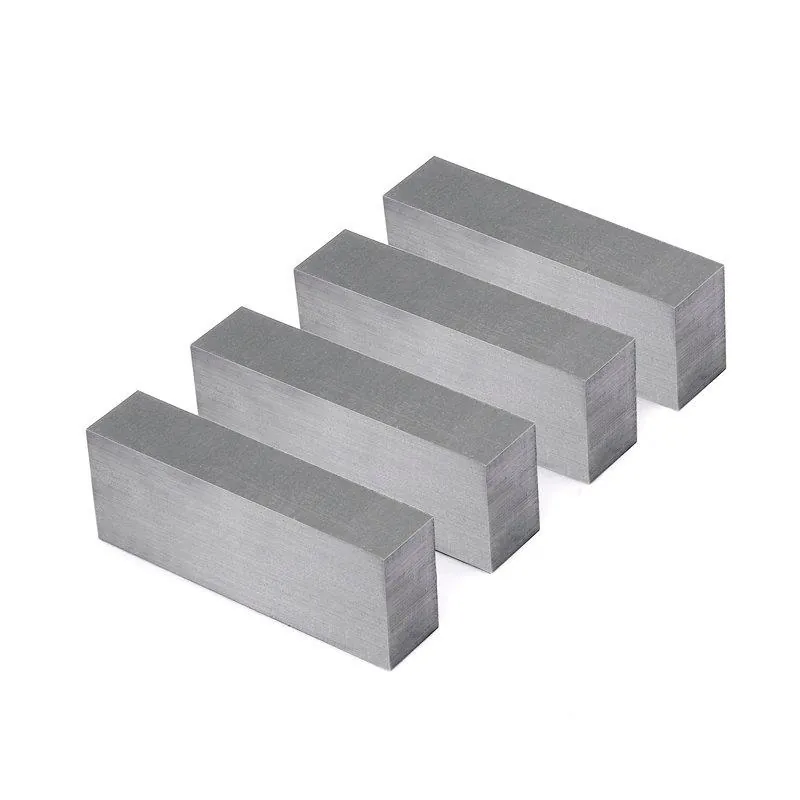
Core Materials › Silicon Steel Cores
Super core
Characteristics ■ Low Core Loss Low core loss at high frequencies improves equipment efficiency and reduce energy consumption of reactors and transformers.
Have a drawing already? Send the PDF or DXF on WhatsApp or by email and it will be checked against an existing tool first.
Specifications
As published by CB Magnetics for this part number. Confirm against the current drawing before releasing tooling or a PCB.
| Published data | Characteristics / ■ Low Core Loss / Low core loss at high frequencies improves equipment efficiency and reduce energy consumption of reactors and transformers. / ■ Low Magnetostriction / Magnetostriction causes nearly zero noise and vibration and significantly reduces the noise of magnetic components such as reactors and transformers. / ■ / H / igh Permeability / For shields applications and CT. / ■ Stable Quality / The high-temperature process improves thermal stability. Since machining can cause performance degradation, stress-relieving annealing is not required. / ■ Non-oriented / There is virtually no difference between the rolling direction (L-direction) and the transverse (C-direction) in the characteristics. Therefore, the Super Core can be used for stationary or rolling machines. / Application – Transformers / With the characteristic of low core loss at high-frequency, the Super Core can be used for various types of transformers in a wide range of frequencies (x Hz to y kHz). / Super Core helps reduce heat generation in transformers and provides higher magnetic induction intensity than conventional silicon steel sheets, which can reduce the size of transformers. Other required components of transformer, such as the copper wire, can be downsized accordingly, resulting in overall cost reduction. / By taking the advantage of the low magnetostriction characteristics of JNEX-Core, the noise of transformers CAN be reduced dramatically. / Application – Reactors / With the characteristics of high saturation magnetic flux density, low core loss at high-frequency, and high permeability, Super Core is ideal for applying to reactors with high-frequency current superimposition over a broad range of frequencies. / Super Core meets all high frequency wave regulations and power factor improvements. The demand is on the increase for its use in inverter output reactors, active filters, PWM converter reactors. It serves many market sectors, including consumer electronics, industrial renewable power generation, and automobile market. / Super Core meets diverse needs of customers. It can be formed into wound cores in various shapes, such as C-Cores and toroidal cores, as well as into lamination cores, glued block cores by cutting or pressing. |
|---|
Published Notes
- Low core loss at high frequencies improves equipment efficiency and reduce energy consumption of reactors and transformers.
- ■ Low Magnetostriction
- Magnetostriction causes nearly zero noise and vibration and significantly reduces the noise of magnetic components such as reactors and transformers.
- ■
- H
- igh Permeability
- For shields applications and CT.
- ■ Stable Quality
- The high-temperature process improves thermal stability. Since machining can cause performance degradation, stress-relieving annealing is not required.
- ■ Non-oriented
- There is virtually no difference between the rolling direction (L-direction) and the transverse (C-direction) in the characteristics. Therefore, the Super Core can be used for stationary or rolling machines.
- Application – Transformers
- With the characteristic of low core loss at high-frequency, the Super Core can be used for various types of transformers in a wide range of frequencies (x Hz to y kHz).
- Super Core helps reduce heat generation in transformers and provides higher magnetic induction intensity than conventional silicon steel sheets, which can reduce the size of transformers. Other required components of transformer, such as the copper wire, can be downsized accordingly, resulting in overall cost reduction.
- By taking the advantage of the low magnetostriction characteristics of JNEX-Core, the noise of transformers CAN be reduced dramatically.
- Application – Reactors
- With the characteristics of high saturation magnetic flux density, low core loss at high-frequency, and high permeability, Super Core is ideal for applying to reactors with high-frequency current superimposition over a broad range of frequencies.
- Super Core meets all high frequency wave regulations and power factor improvements. The demand is on the increase for its use in inverter output reactors, active filters, PWM converter reactors. It serves many market sectors, including consumer electronics, industrial renewable power generation, and automobile market.
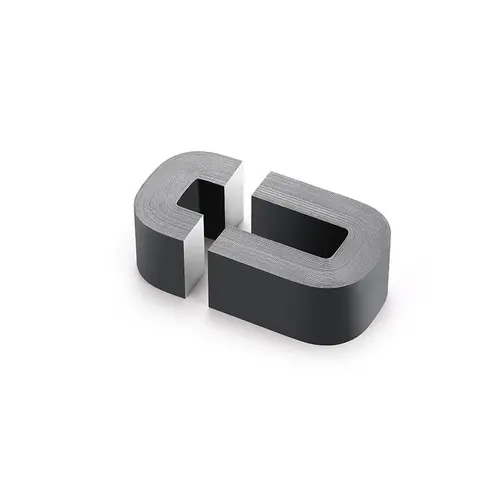
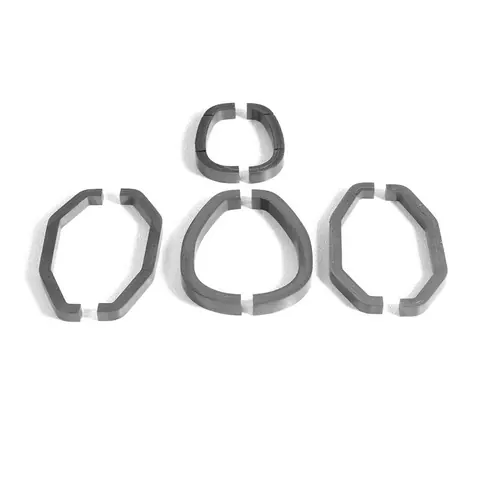
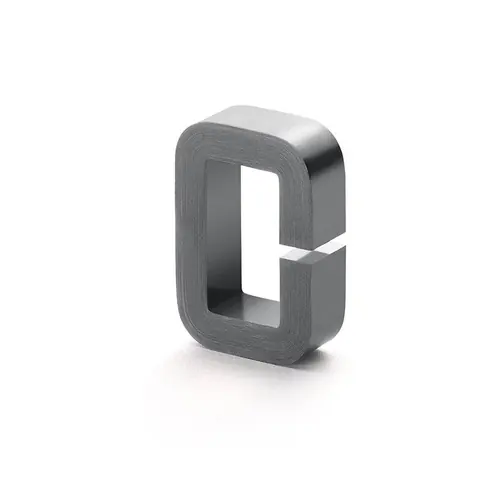
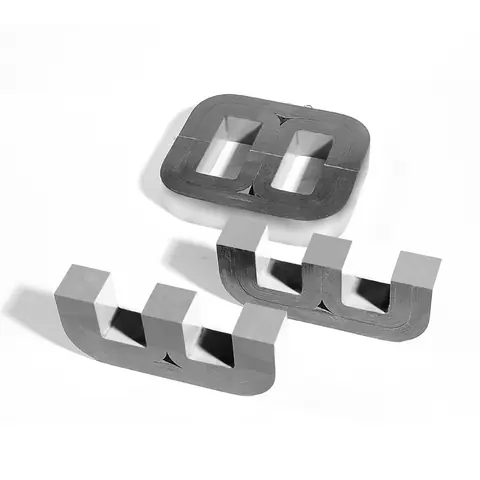
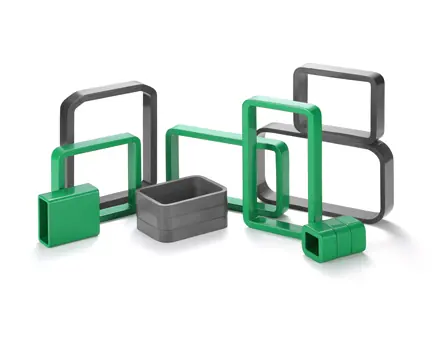
- Super Core meets diverse needs of customers. It can be formed into wound cores in various shapes, such as C-Cores and toroidal cores, as well as into lamination cores, glued block cores by cutting or pressing.
Product Overview
Characteristics ■ Low Core Loss Low core loss at high frequencies improves equipment efficiency and reduce energy consumption of reactors and transformers.
It belongs to the silicon steel cores range, which holds 8 published part numbers. Tape wound cores in silicon steel, amorphous and nanocrystalline alloy, in toroidal, C core and cut core shapes.
Materials
Read the material guide for how thermoset and thermoplastic bodies behave in soldering.
Why Engineers Specify This Part
Every point below is taken from the published data for this part number rather than from a general claim.
Part of a 8 item Silicon Steel Cores range
Changing size later stays inside the same catalogue and the same tooling shop rather than becoming a new supplier search.
RoHS compliant
All products from CB Magnetics are RoHS compliant, which keeps the part usable in EU bound assemblies.
How It Is Made
Tool design, moulding, terminal insertion, assembly, electrical and dimensional test, then packing. The same route applies whether the part is a stock item or a new tool.
- Drawing review and tool design
- Steel cutting on the wire EDM and CNC machines in the tool room
- Injection moulding
- Terminal insertion and assembly
- Dimensional check in the measuring room
- Packing and shipping
Use Guide
Three checks before you commit a board layout or a winding programme to this part.
- Footprint. Match the published pin distance and row distance to your land pattern, then confirm both on the dimensioned drawing.
- Thermal. Check the stated plastic against your soldering profile. Thermoset bodies tolerate solder pot temperatures that melt many thermoplastics.
- Winding window. Confirm the section arrangement and the number of turns your wire gauge needs before ordering the tool or the first batch.
Where This Part Is Used
Application pages that cover this kind of component.
Related Reading
Selection and material notes from the knowledge center.
Questions Buyers Ask About This Part
What is the pin pitch and row spacing
The pin geometry for this part is on the drawing rather than in the published summary. Ask for the drawing and it will be sent as a PDF.
Can I get a drawing or a 3D model
Yes. Dimensioned drawings are sent as PDF and CAD files are released on request rather than as an open download. Ask for CAD on WhatsApp.
Are the parts RoHS compliant
Yes. All products from CB Magnetics are RoHS compliant.
Can this part be modified
Custom tooling design and injection moulding is one of our standing services, so pin count section splits and mounting features can be changed on a new tool. See how the tooling service works.
How do I get a price and lead time
Send the part number and the annual quantity. Price and lead time are quoted per part and per quantity rather than published, because both move with the material and the pin count. Send the quantity on WhatsApp.
Send The Part Number And Quantity
Quotes go out against a part number and an annual volume. If you have a drawing instead of a part number send that and it will be checked against existing tooling first.