
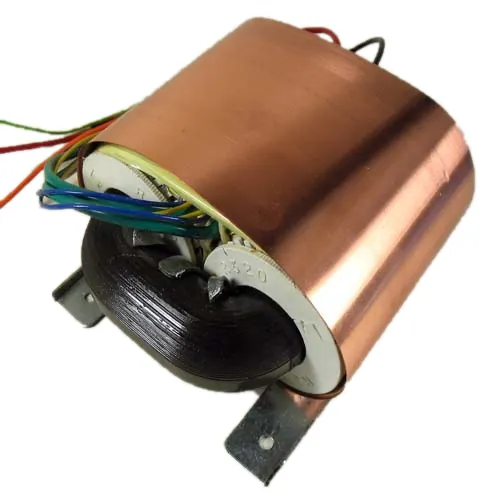
R-transformer, R-core power transformer
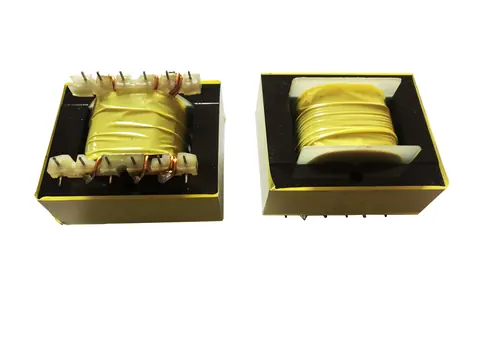
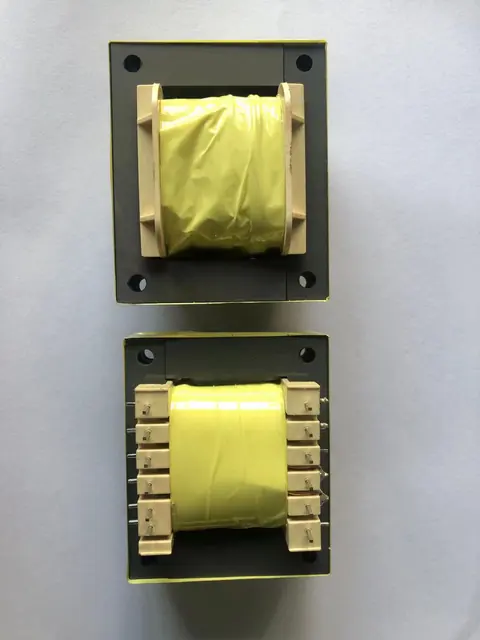
R-Core Transformers are manufactured using a unique rectangular core with a round cross section known as an R-Core. These special cores feature a continuous strip of grain-oriented silicon steel with no air-gap. The winding is done on special round bobbins on the two parallel legs of the core. R-Core Transformers can be designed so that coil windings mutually cancel each other’s magnetic flux by means of balanced, symmetrical winding on the two legs. With this winding method the leakage flux can be kept to a minimum. The R-Core with its low-leakage, low-noise characteristics is well suited for medical equipment, audio & video amplifiers, and other noise sensitive equipment. Circuit designers are able to place the transformer closer to other critical electronic components.
Have a drawing already? Send the PDF or DXF on WhatsApp or by email and it will be checked against an existing tool first.
Specifications
As published by CB Magnetics for this part number. Confirm against the current drawing before releasing tooling or a PCB.
| Published data | R-Core Transformers are manufactured using a unique rectangular core with a round cross section known as an R-Core. These special cores feature a continuous strip of grain-oriented silicon steel with no air-gap. The winding is done on special round bobbins on the two parallel legs of the core. / R-Core Transformers can be designed so that coil windings mutually cancel each other’s magnetic flux by means of balanced, symmetrical winding on the two legs. With this winding method the leakage flux can be kept to a minimum. / The R-Core with its low-leakage, low-noise characteristics is well suited for medical equipment, audio & video amplifiers, and other noise sensitive equipment. Circuit designers are able to place the transformer closer to other critical electronic components. / Another unique feature of the R-Core is the use of two part bobbins. The primary winding and secondary winding are done on separate concentric bobbins thus ensuring complete isolation. This allows meeting of any safety standards requirement. |
|---|
Published Notes
- The R-Core with its low-leakage, low-noise characteristics is well suited for medical equipment, audio & video amplifiers, and other noise sensitive equipment. Circuit designers are able to place the transformer closer to other critical electronic components.
- Another unique feature of the R-Core is the use of two part bobbins. The primary winding and secondary winding are done on separate concentric bobbins thus ensuring complete isolation. This allows meeting of any safety standards requirement.
Product Overview
R-Core Transformers are manufactured using a unique rectangular core with a round cross section known as an R-Core. These special cores feature a continuous strip of grain-oriented silicon steel with no air-gap. The winding is done on special round bobbins on the two parallel legs of the core. R-Core Transformers can be designed so that coil windings mutually cancel each other’s magnetic flux by means of balanced, symmetrical winding on the two legs. With this winding method the leakage flux can be kept to a minimum. The R-Core with its low-leakage, low-noise characteristics is well suited for medical equipment, audio & video amplifiers, and other noise sensitive equipment. Circuit designers are able to place the transformer closer to other critical electronic components.
It belongs to the transformers range, which holds 12 published part numbers. Complete transformers wound and tested to a customer electrical specification: inductance, leakage inductance, turns ratio and hipot are stated per part.
Materials
Read the material guide for how thermoset and thermoplastic bodies behave in soldering.
Why Engineers Specify This Part
Every point below is taken from the published data for this part number rather than from a general claim.
Part of a 12 item Transformers range
Changing size later stays inside the same catalogue and the same tooling shop rather than becoming a new supplier search.
RoHS compliant
All products from CB Magnetics are RoHS compliant, which keeps the part usable in EU bound assemblies.
How It Is Made
Tool design, moulding, terminal insertion, assembly, electrical and dimensional test, then packing. The same route applies whether the part is a stock item or a new tool.
- Drawing review and tool design
- Steel cutting on the wire EDM and CNC machines in the tool room
- Injection moulding
- Terminal insertion and assembly
- Dimensional check in the measuring room
- Packing and shipping
Use Guide
Three checks before you commit a board layout or a winding programme to this part.
- Footprint. Match the published pin distance and row distance to your land pattern, then confirm both on the dimensioned drawing.
- Thermal. Check the stated plastic against your soldering profile. Thermoset bodies tolerate solder pot temperatures that melt many thermoplastics.
- Winding window. Confirm the section arrangement and the number of turns your wire gauge needs before ordering the tool or the first batch.
Where This Part Is Used
Application pages that cover this kind of component.
Related Reading
Selection and material notes from the knowledge center.
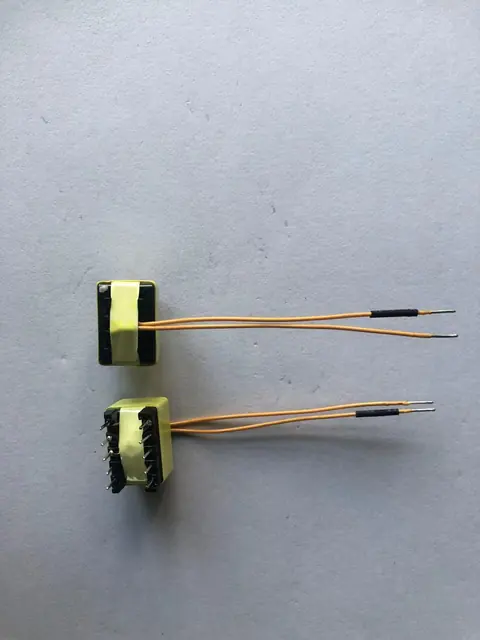
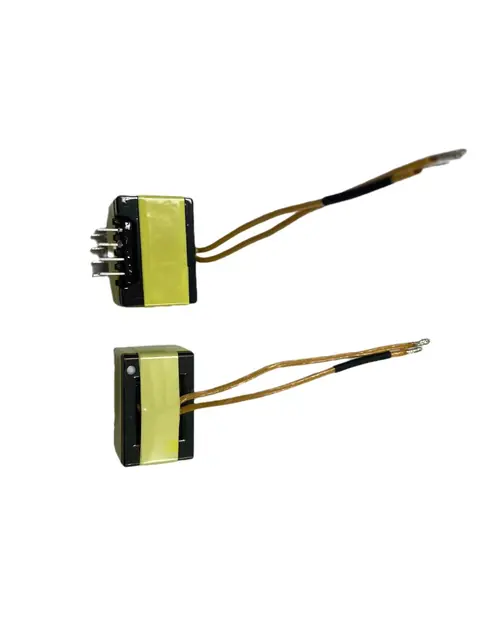
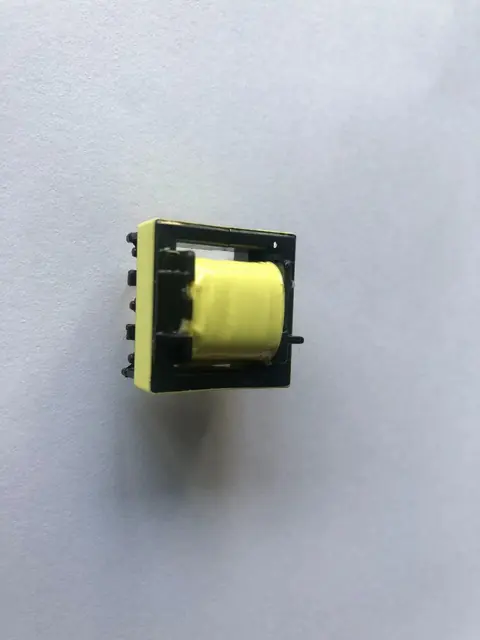
Questions Buyers Ask About This Part
What is the pin pitch and row spacing
The pin geometry for this part is on the drawing rather than in the published summary. Ask for the drawing and it will be sent as a PDF.
Can I get a drawing or a 3D model
Yes. Dimensioned drawings are sent as PDF and CAD files are released on request rather than as an open download. Ask for CAD on WhatsApp.
Are the parts RoHS compliant
Yes. All products from CB Magnetics are RoHS compliant.
Can this part be modified
Custom tooling design and injection moulding is one of our standing services, so pin count section splits and mounting features can be changed on a new tool. See how the tooling service works.
How do I get a price and lead time
Send the part number and the annual quantity. Price and lead time are quoted per part and per quantity rather than published, because both move with the material and the pin count. Send the quantity on WhatsApp.
Send The Part Number And Quantity
Quotes go out against a part number and an annual volume. If you have a drawing instead of a part number send that and it will be checked against existing tooling first.