
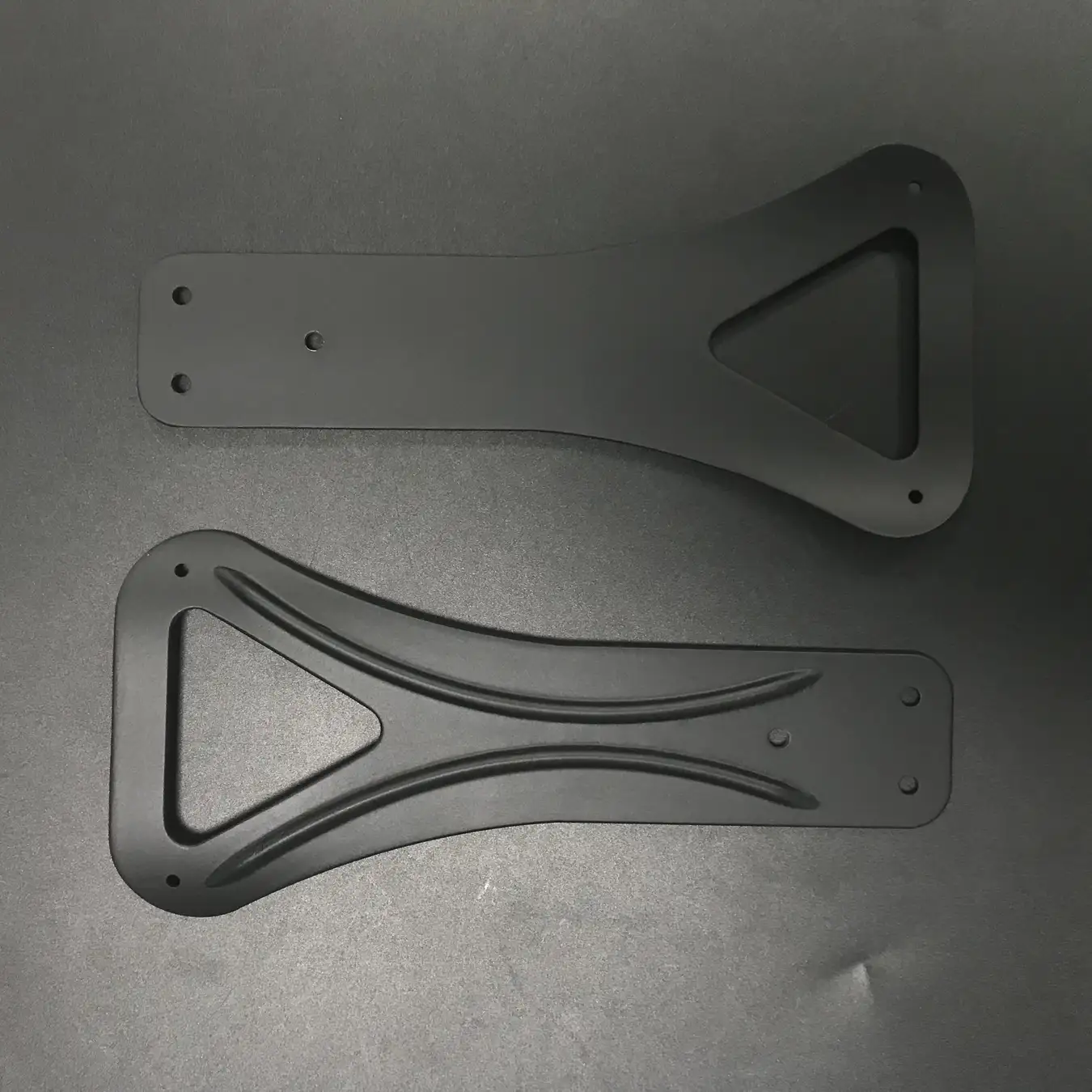
Carbon Fiber Parts for Robotics and Automation
A variety of high strength structural parts are made from carbon fiber composite combined with traditional metal materials. In automation the argument is cycle time: less moving mass means faster acceleration and less residual vibration.
What Goes Wrong in Robotics and Automation Programmes
Cycle time limited by inertia
Heavy moving members force lower acceleration and longer settling.
Settling time after a move
A flexible arm rings after every stop, and the machine has to wait for it.
Deflection over long spans
Long metal members sag under their own weight before any payload is added.
Requirements That Come Up Every Time
- Structural members with high stiffness per gram
- Metal interfaces machined and bonded to composite spans
- Plate stock with a balanced 0/90 core for predictable behaviour
- Verification samples in the real material before series build
Where the Parts End Up
- Robot arm links and gantry members
- End effector plates and tool mounting frames
- Rollers and shafts where rotating inertia costs power
- Machine guards and structural panels
How a Robotics and Automation Part Moves From Enquiry to Despatch
Requirement Review
Load case, weight target and environment reviewed against the geometry you send.
Material and Process
Reinforcement and moulding route chosen from five materials and nine processes.
Sample
A structural sample in the real material, despatched within one week for sample orders.
Production
Normal production orders complete in 15 to 25 days, packed for the shipping route chosen.
Parts Specified Most Often in Robotics and Automation
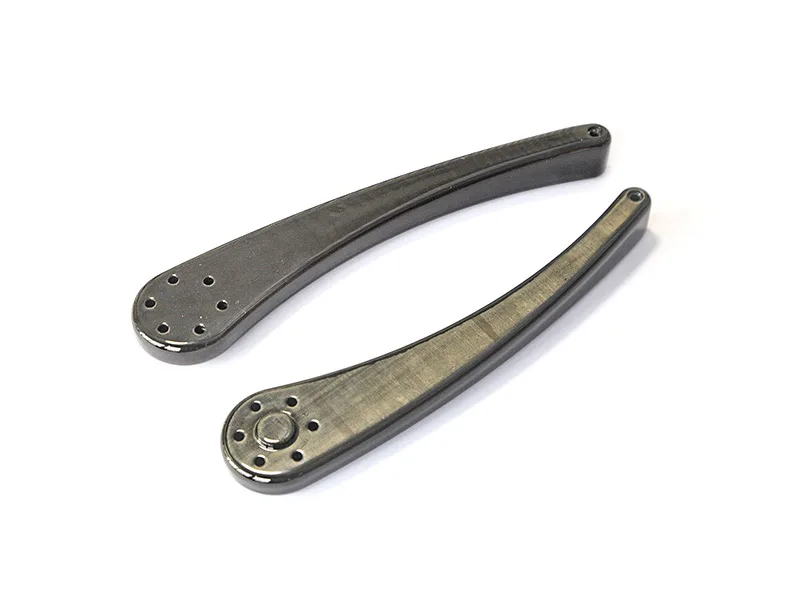
Carbon Fiber Structural Arm
A full carbon fiber arm made as a verification sample, carrying the strength and stiffness of a production composite part so the structure can be tested before a mould is cut.
View details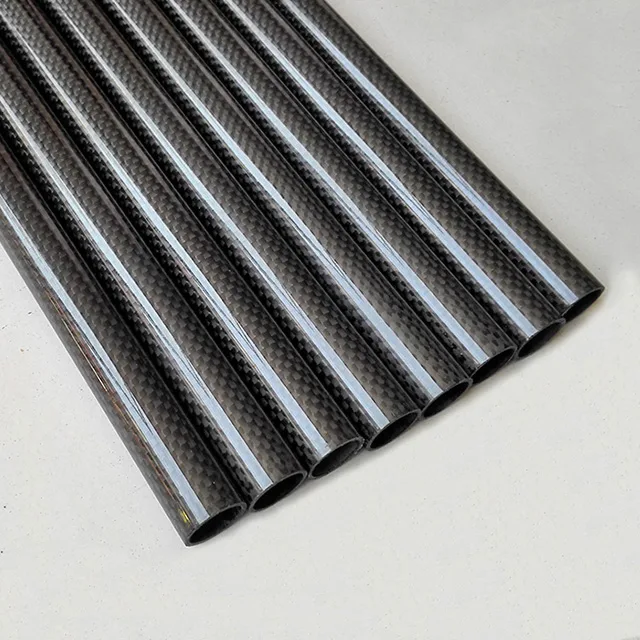
Carbon Fiber Tube
High strength carbon fiber tubing fabricated with unidirectional prepreg and wrapped in 3K plain or twill fabric, in fifteen stock part numbers from 5.0 mm to 242.0 mm nominal inside diameter.
View details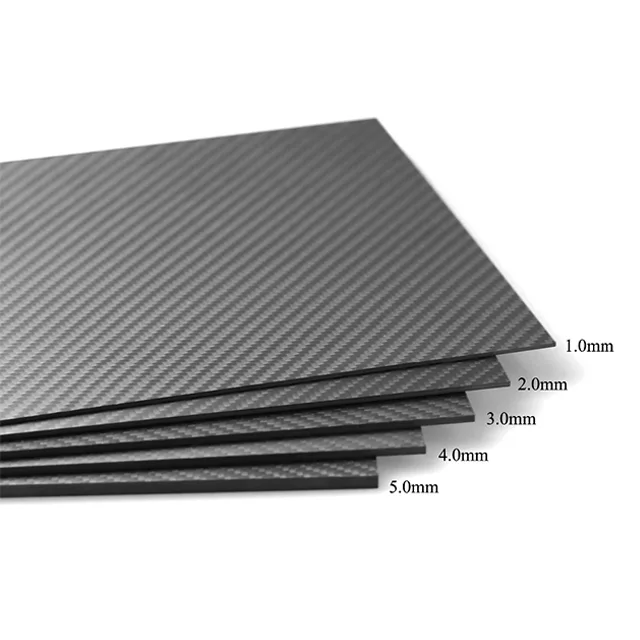
Carbon Fiber Sheet
Stock carbon fiber plates fabricated from multiple layers of high strength prepreg under high pressure moulding, in ten thicknesses from 0.5 mm to 5.0 mm at 500 x 400 mm.
View details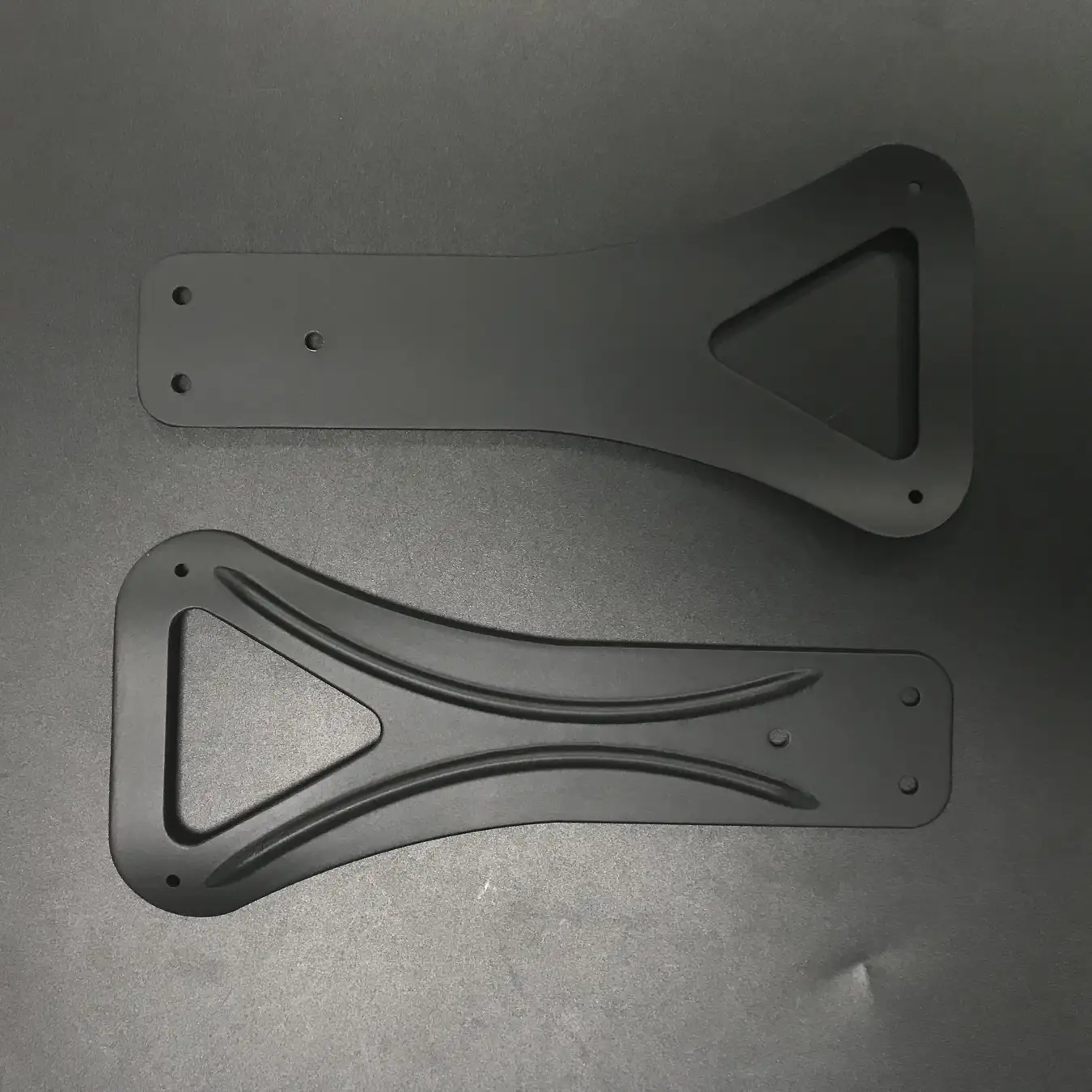
Carbon Fiber Gasket
A real carbon fiber gasket produced to a dimensional tolerance of plus or minus 0.01 mm, so it can form part of a small high-precision assembly rather than a loose fit-check.
View detailsProjects and Reading for This Sector
Industrial and Electronics Parts
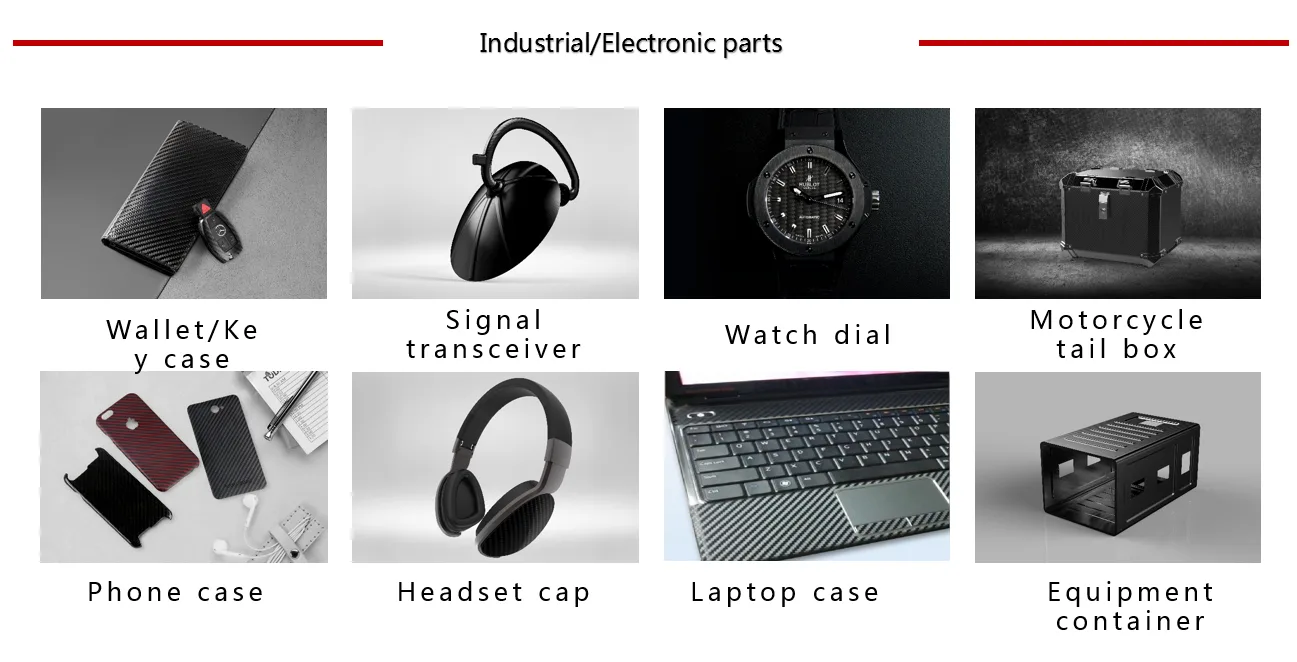
Industrial and electronics parts is one of the success case areas developed by the CarbonWizer team, covering wallets and key cases, signal transceivers, watch dials, motorcycle tail boxes, phone cases, headset caps, laptop cases and equipment containers.
Read the case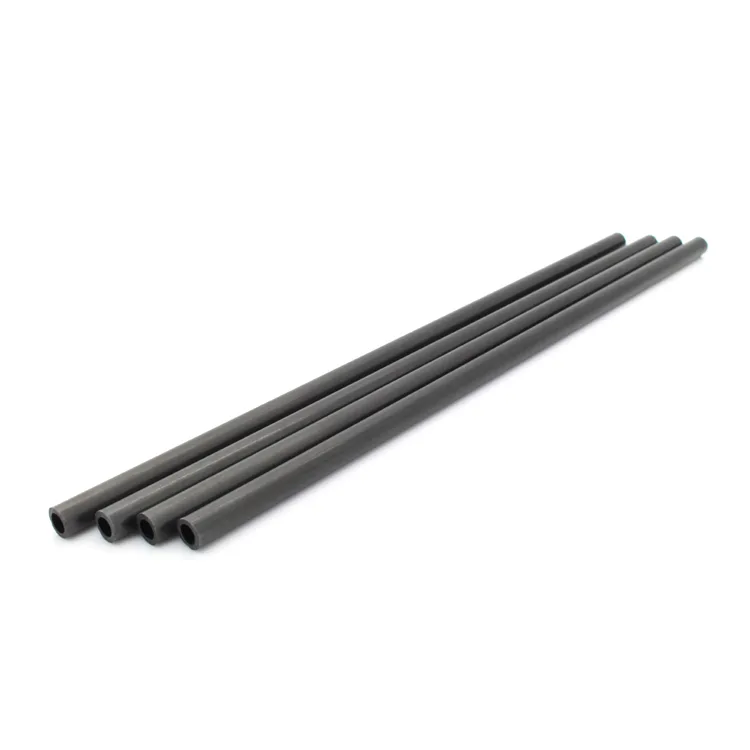
Carbon Fiber Tube or Plate for a Structural Member
Tube is far more efficient in bending and torsion. Plate is easier to attach to and cheaper to machine. The choice usually comes down to how the member is loaded and how it connects.
Read the guide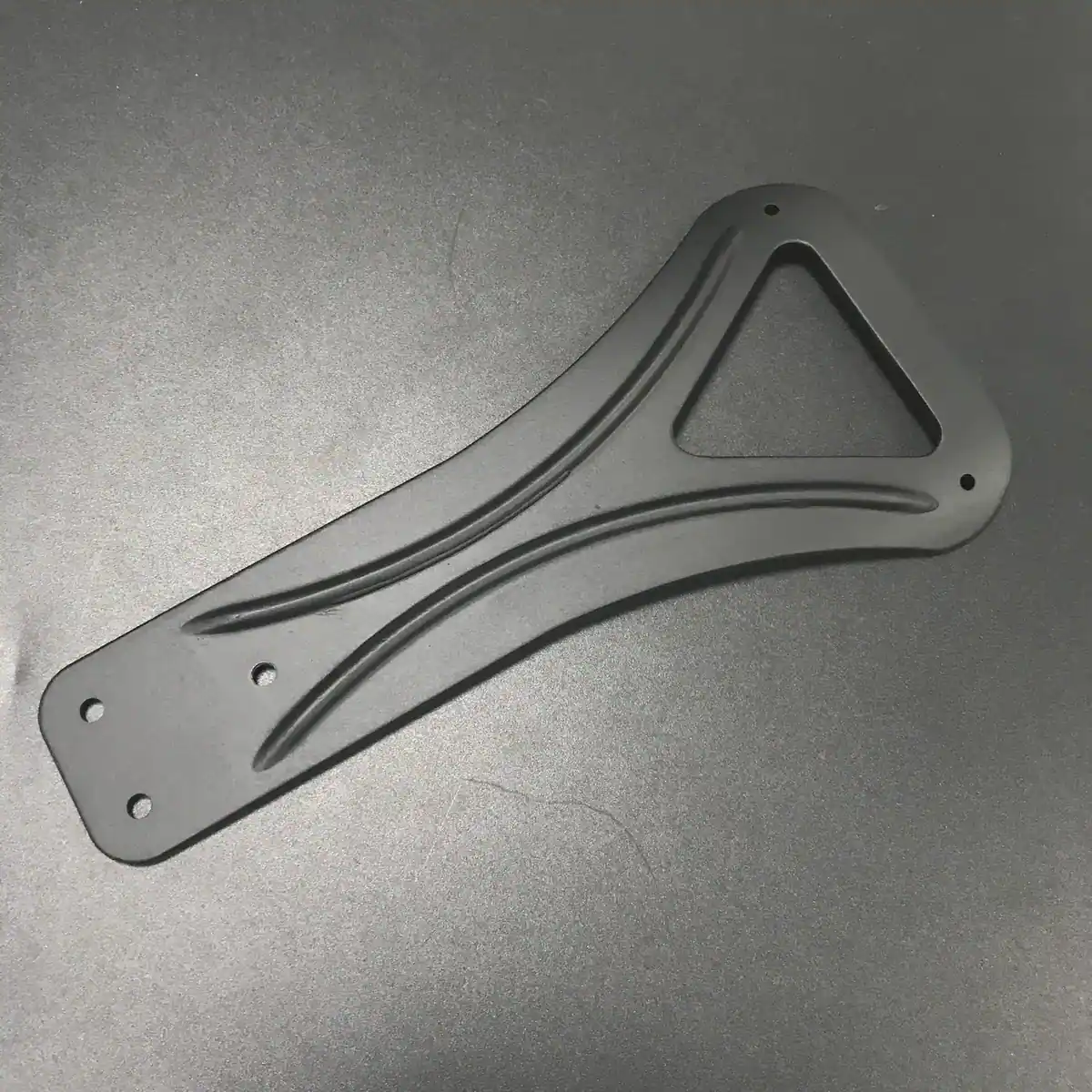
Carbon Fiber or Aluminium for a Structural Part
Aluminium is predictable, machinable and cheap to buy. Carbon fiber is lighter and stiffer per gram and lets you place fibre where the load is. Which wins depends on three questions.
Read the guideQuestions From Robotics and Automation Buyers
Can composite members take metal fittings?
Yes. High strength structural parts are made from carbon fiber composite combined with traditional metal materials, and CarbonWizer machines the metal parts in house.
How tight a tolerance can you hold?
Where the drawing calls for it, assembly parts are produced to a dimensional tolerance of plus or minus 0.01 mm.
Do I need a mould for a one-off machine part?
Not necessarily. Flat and tubular geometry can be machined from stock plate and tube, and structural samples can be produced without opening a mould.
Talk to Us About Your Robotics and Automation Project
Email the drawing with the weight target, the load case and the quantity. Samples normally ship within one week.