
Nine Composite Processes and Five Reinforcement Materials
Can my metal part be made out of carbon fiber? Will it be strong or stiff enough? What is the best way to make a carbon fiber part? These are the questions the CarbonWizer engineering team answers daily, and the answer always starts from the same two tables.
Designing Composite Products for a Range of Needs
CarbonWizer designs composite products for a variety of needs, from consumer products and sporting goods through to robotic equipment and industrial applications. Whether the part is a carbon fiber tube, a plate, or a complex shaped component, the composites team works from the requirement back to the process rather than from a fixed catalogue forward.
The carbon fiber manufacturing department was established to answer a growing customer demand for composite components, and focuses on custom carbon fiber parts manufacturing from prototyping through to volume production. Carbon fiber plate CNC machining, carbon fiber tube customisation and custom structural or decorative parts to customer design are all produced for customers worldwide.
Nine Composite Processing Routes
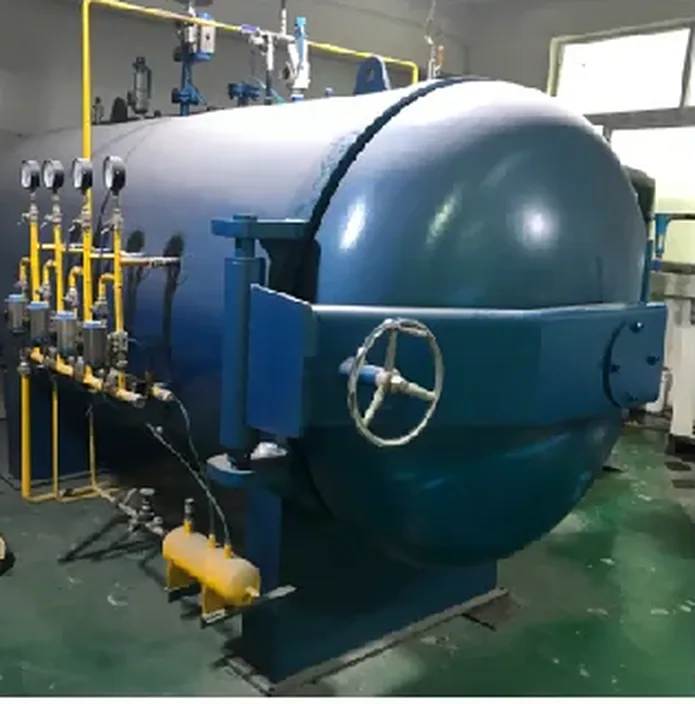
Carbon fiber processing technology at CarbonWizer mainly includes compression moulding, autoclave, roll wrapping and vacuum infusion, which can satisfy almost any requirement for carbon fiber component manufacturing. Five further routes cover the cases those four do not.
| Process | What It Does | Typical Parts |
|---|---|---|
| Compression Moulding | Prepreg pressed between matched tools under heat and pressure. The route behind consistent cosmetic parts and repeatable wall thickness. | Automotive trim, watch cases, consumer items |
| Autoclave Cure | Vacuum bagged lay-ups cured under pressure in the autoclave, which is how void content is driven down on structural parts. | Structural arms, aerospace-grade panels, high-load brackets |
| Roll Wrapping | Unidirectional prepreg wrapped around a mandrel with the fibre angles chosen for the load, then cured and ground. | Tubes, booms, shafts and rollers |
| Vacuum Infusion | Dry fabric laid into a tool and infused with resin under vacuum. Efficient on larger panels and shells. | Large covers, shells and panels |
| Hot Press With Vacuum Forming | Heat and press forming combined with vacuum, used where a formed skin has to follow a contour cleanly. | Formed skins and contoured covers |
| Air Bag High Pressure Moulding | Internal bladder pressure consolidates a closed hollow section from the inside out. | Hollow structures and closed sections |
| Resin Transfer Moulding | Resin injected into a closed tool over dry preform, giving two finished faces. | Parts needing a finished surface on both sides |
| Hand Lay-up Moulding | Manual lay-up for low volumes and large or one-off geometry. | Prototypes, one-off shells, large parts |
| Pultrusion Moulding | Continuous profile pulled through a heated die for constant cross-section stock. | Constant-section profiles and stock bar |
Five Reinforcement Materials
Carbon fiber is the default, but it is not always the right answer. Kevlar passes RF, PET brings colour and temperature tolerance, fiberglass brings toughness at lower cost, and hemp brings sustainability.
Carbon Fiber
High tensile strength, low weight, high chemical resistance, high temperature tolerance and low thermal expansion. That combination is what makes it desirable in aerospace, civil engineering, military and competition sports equipment manufacturing.
Kevlar
Thin, light and five times stronger than steel at the same weight. It has no metal content, so it does not block RF - useful wherever an antenna sits behind a structural part.
PET Fiber
A rigid material usable in high temperature applications. It can be engineered for softness or rigidity as the end use requires, offers excellent tensile strength and comes in many colours.
Fiberglass
Lightweight, extremely strong and robust. Its bulk strength and weight properties compare favourably with metals, and it forms easily using the same moulding processes.
Organic Eco Hemp
An abundant sustainable material that can be used to make many types of product in the same facility.
Weave and Finish Are Decided Separately From Structure
Exterior fabric on stock tube is available as 3K plain fabric or 3K twill fabric, in matte or glossy, with unidirectional surfaces offered in both finishes as well. Stock plate is supplied matte on matte over a 2 x 2 twill skin.
On custom parts the appearance can be painted to the customer's choice. Forged carbon is available where a marbled random pattern is wanted instead of a weave, and it fills complex shapes that woven fabric cannot drape into cleanly.
Read the finish guide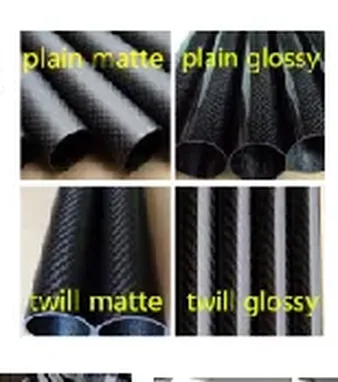
Five Services in One Facility
- Custom carbon fiber and glass fiber composite parts manufacturing
- CNC machining
- Metal parts fabrication
- Rapid plastic prototyping and small volume production
- Sheet metal stamping
Ten Markets
Aerospace Defence Science Research Energy Marine Medical devices Sporting goods Consumer goods Industrial applications
Plate and Tube Held to Published Part Numbers
Where the geometry is flat or tubular, stock material plus machining avoids the mould entirely. Both stock tables are published in full on the product pages.
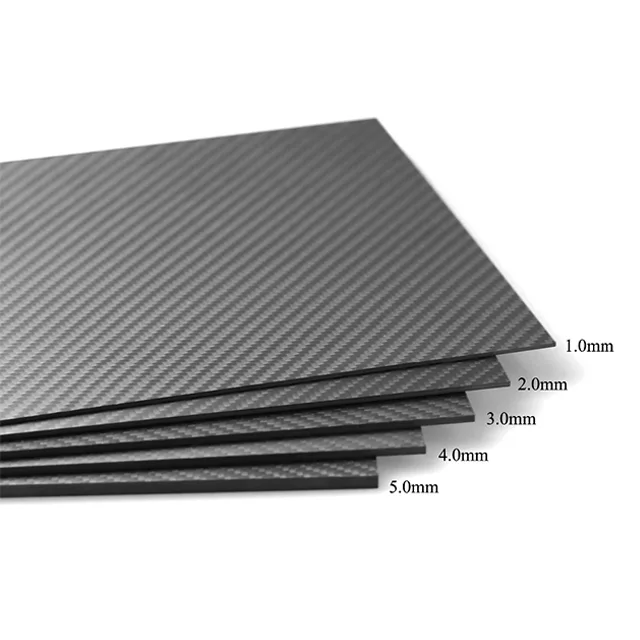
Carbon Fiber Sheet
Stock carbon fiber plates fabricated from multiple layers of high strength prepreg under high pressure moulding, in ten thicknesses from 0.5 mm to 5.0 mm at 500 x 400 mm.
View the part number table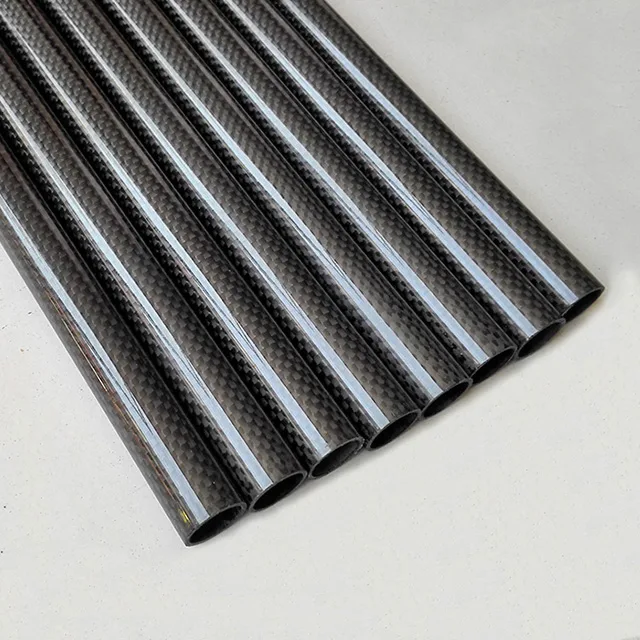
Carbon Fiber Tube
High strength carbon fiber tubing fabricated with unidirectional prepreg and wrapped in 3K plain or twill fabric, in fifteen stock part numbers from 5.0 mm to 242.0 mm nominal inside diameter.
View the part number tableQuestions Our Engineers Answer Daily
Can my metal part be made out of carbon fiber?
Usually the question is whether it should be. If weight costs you something - flight time, cycle time, handling effort - then yes. If the part is a heat path or needs threaded and bearing interfaces, a hybrid of composite and machined metal is often the better answer.
Will a composite part be strong or stiff enough?
Stiffness is usually the governing requirement rather than strength. Carbon fiber has high tensile strength at low weight with low thermal expansion, and the fibre can be placed at the angles the load actually needs.
What is the best way to make a carbon fiber part?
It depends on the part. Nine processing routes are available, from compression moulding and autoclave cure through roll wrapping, vacuum infusion, resin transfer moulding and pultrusion.
Do you work with materials other than carbon fiber?
Yes. Kevlar, PET fiber, fiberglass and organic eco hemp are all part of the composite capability, alongside metal fabrication and plastic prototyping.
Bring Us the Hard Question
Whether a part should be composite at all is a question worth asking before the drawing is finished. Email the geometry and the load case.