
LCMOS USB2.0 Stereo Biological C-mount Microscope Camera
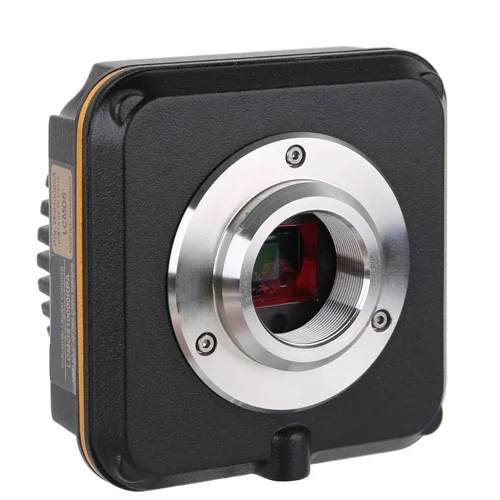
The LCMOS USB2.0 C-mount microscope camera is a component-level digital imaging device designed for integration into stereo, biological, and other optical microscope systems.
Product Overview
The LCMOS USB2.0 C-mount microscope camera is a component-level digital imaging device designed for integration into stereo, biological, and other optical microscope systems. It connects via USB2.0 to a PC and delivers live video and still images with adjustable frame rates and exposure settings. The camera supports multiple sensor sizes from 1.3M to 14M pixels, with options for color or monochrome output. It is suitable for inspection, documentation, and automated measurement tasks in industrial and laboratory environments.
- SensorMT9F002, MT9J003, Special, MT9P001, MT9T001, IMX036, AR0130, MT9M111
- Sensor Size1/2.3", 1/2.4", 1/2.5", 1/2.8", 1/3"
- Resolution14M, 10M, 9M, 8M, 5.1M, 3.1M, 2.0M, 1.3M, 1.2M
- Pixel Size1.4x1.4μm, 1.67x1.67μm, 2.2x2.2μm, 3.2x3.2μm, 3.6x3.6μm, 3.75x3.75μm
- Responsivity0.724v/lux-sec, 0.31v/lux-sec, 0.53V/lux-sec, 1.0V/lux-sec, 2.1V/lux-sec, 5.5v/lux-sec
- Dynamic Range65.3dB, 65.2dB, 66.5dB, 61dB, 85.3dB
Key Benefits
- USB2.0 interface powers the camera and transfers data over a single cable
- Multiple sensor sizes from 1.3M to 14M pixels allow selection by application need
- Adjustable exposure from 0.14ms to 2000ms supports low-light and high-speed imaging
- Binning modes (1x1, 2x2, 3x3, 4x4) increase frame rate at lower resolution
- Supports still and movie capture with software SDKs for Windows, Linux, macOS, and Android
- IR-cut filter enables visible light imaging with minimal infrared interference
- Wide dynamic range and high SNR improve image clarity in variable lighting
Application Scenarios
- Automated inspection of PCBs and SMD components using a microscope with a C-mount camera
- Documentation of biological specimens in teaching labs with high-resolution stills
- Quality control of small mechanical parts in precision assembly lines
- Microscopic imaging in metallurgy and material science with adjustable exposure
- Integration into a custom microscope stand for research or process monitoring
Who It Is For
- Electronics manufacturers doing PCB and SMD inspection
- Teaching and research laboratories in biology and materials science
- Quality control departments in precision manufacturing
- Microscopy system integrators building custom inspection setups
- Research labs requiring high dynamic range and low-light imaging
Problems It Solves
- A standalone microscope without a digital camera forces manual documentation or photo capture with a separate device
- Fixed frame rate cameras limit the ability to capture fast-moving processes or low-light details
- Lack of exposure control leads to overexposed or underexposed images in variable lighting
- No software SDKs prevent integration into automated inspection or measurement systems
- Incompatible interfaces require adapters or additional power supplies
Technical Features
- C-mount interface for direct attachment to microscope tubes
- USB2.0 interface provides both data and power from a single connection
- Exposure time adjustable from 0.14ms to 2000ms for high-speed and low-light use
- Binning modes (1x1, 2x2, 3x3, 4x4) to increase frame rate at reduced resolution
- Supports still image and movie recording with software SDKs
- IR-cut filter blocks infrared light for accurate color reproduction
- White balance adjustment available for color sensors; manual control for monochrome
- Operating temperature range from -10 degC to 50 degC for stable performance in lab and shop environments
Specifications
| Sensor | MT9F002, MT9J003, Special, MT9P001, MT9T001, IMX036, AR0130, MT9M111 |
|---|---|
| Sensor Size | 1/2.3", 1/2.4", 1/2.5", 1/2.8", 1/3" |
| Resolution | 14M, 10M, 9M, 8M, 5.1M, 3.1M, 2.0M, 1.3M, 1.2M |
| Pixel Size | 1.4x1.4μm, 1.67x1.67μm, 2.2x2.2μm, 3.2x3.2μm, 3.6x3.6μm, 3.75x3.75μm |
| Responsivity | 0.724v/lux-sec, 0.31v/lux-sec, 0.53V/lux-sec, 1.0V/lux-sec, 2.1V/lux-sec, 5.5v/lux-sec |
| Dynamic Range | 65.3dB, 65.2dB, 66.5dB, 61dB, 85.3dB |
| SNRmax | 35.5dB, 34dB, 40.5dB, 43dB, 45dB, 44dB |
| Frame Rate | 2.7@4096x3288, 3.7@3584x2748, 3.9@3488x2616, 4.4@3264x2448, 6.8@2592x1944, 11.5@2048x1536, 12@2048x1536, 16@1600x1200, 15@1280x1024, 28@1280x960 |
| Binning | 1x1, 2x2, 3x3, 4x4 |
| Exposure Time | 0.14ms~2000ms |
| Interface | USB2.0 |
| Power Supply | DC 5V over PC USB Port |
| Operating Temperature | 10 degC to 50 degC |
| Storage Temperature | 20 degC to 60 degC |
| Operating Humidity | 30%~80%RH |
| Storage Humidity | 10%~60%RH |
| Spectral Range | 380-650nm (with IR-cut Filter) |
| White Balance | Auto / Manual Temp Tint Adjustment |
| Color Technique | Ultra-Fine TM Color Engine |
| SDK Support | Windows, Linux, macOS, Android |
| Capture Format | Still Picture and Movie |
| Cooling System | Natural with High Performance Cooling Structure |
Specifications are taken from the AMADA product data for this item. Confirm critical dimensions with us in writing before ordering.
Customization Options
- Choose between color (C) and monochrome (M) sensor variants
- Select from nine sensor models with different pixel sizes and resolutions
- Integrate into a custom microscope system using the C-mount interface
- Use SDKs to develop application-specific control and capture software
- Adjust exposure, frame rate, and binning settings via software
Comparison With Other Options
| C-mount camera with USB3.0 interface | The LCMOS USB2.0 camera offers lower data transfer speed but uses standard USB2.0 ports, reducing the need for high-speed USB3.0 ports or additional hardware. |
|---|---|
| Camera with no exposure control | The LCMOS camera supports exposure times from 0.14ms to 2000ms, enabling use in both bright and low-light conditions. |
| Camera without SDK support | The LCMOS camera includes SDKs for Windows, Linux, macOS, and Android, enabling integration into automated systems. |
Use Guide
- Connect the camera to a USB2.0 port on a PC; no external power supply is required
- Use the C-mount adapter to attach the camera to the microscope's tube or eyepiece
- Adjust exposure time to prevent overexposure in bright lighting or underexposure in dim areas
- Use binning (2x2 or 4x4) to increase frame rate when real-time viewing is needed
- Use the SDK to control white balance, ROI, and capture settings for consistent results
- Ensure the IR-cut filter is active to avoid color distortion from infrared light
More From USB2.0 CMOS Microscope Camera
2M 5M 12M Graphics Accelerated SONY Microscope Camera
View Details
WUCAM WiFi +USB Biological Stereo Microscope Camera
View Details
WCAM C-mount WiFi Biological Stereo Microscope Camera
View Details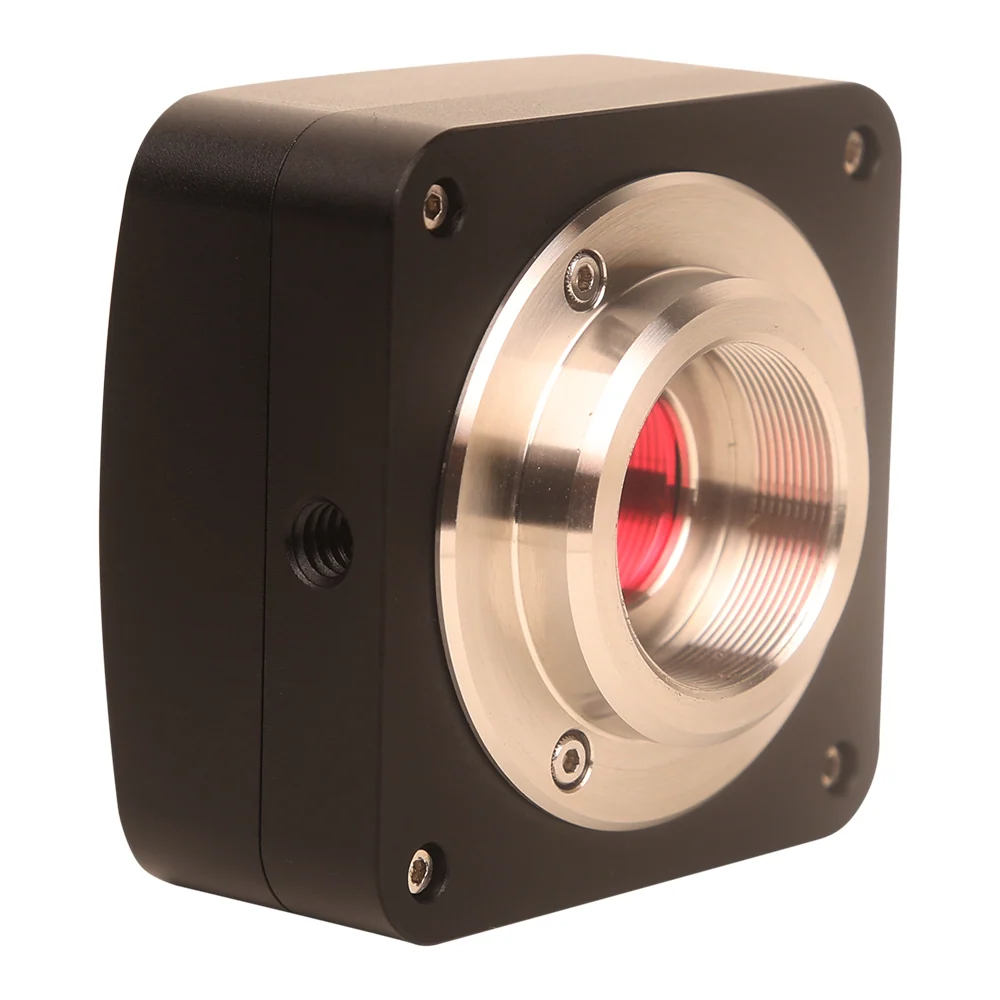
C2CMOS USB2.0 SONY C-mount Stereo Microscope Camera
View Details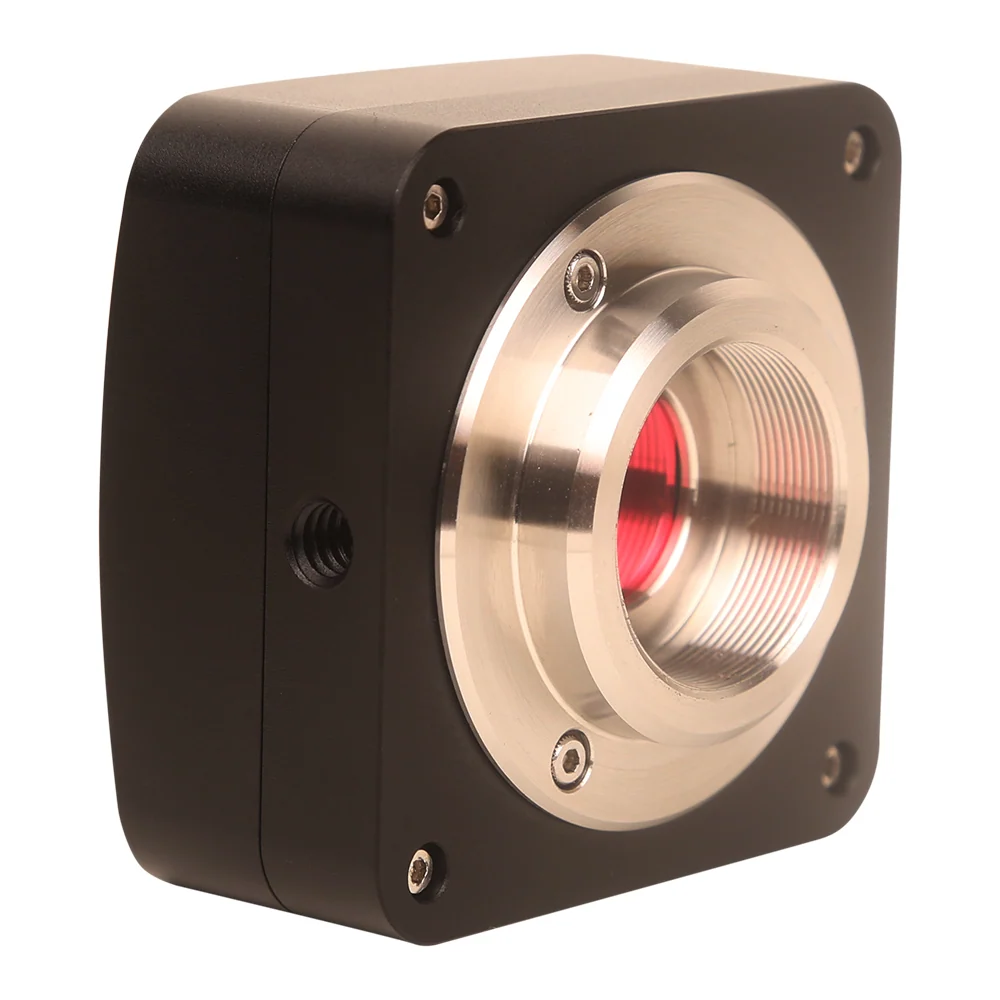
ECMOS USB2.0 SONY Biological Stereo Microscope Camera
View Details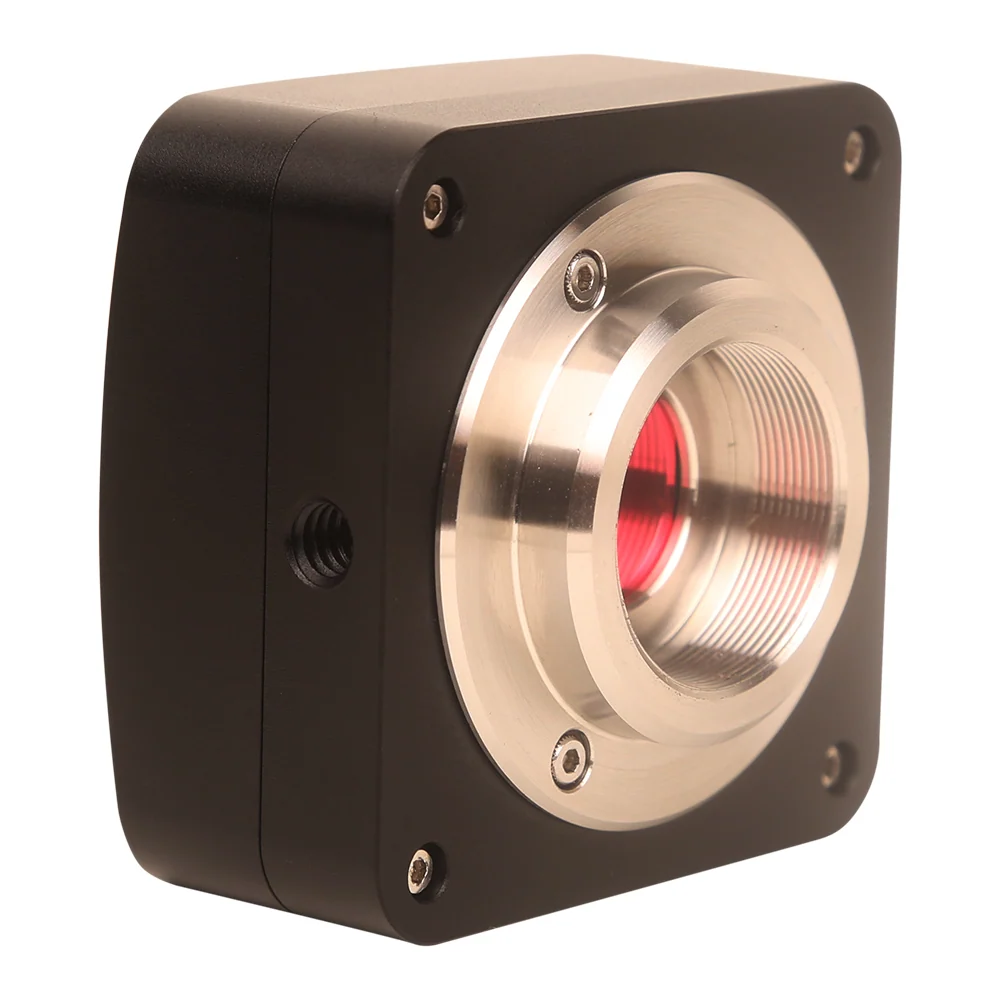
UCMOS USB2.0 C-mount Stereo Biological Microscope Camera
View Details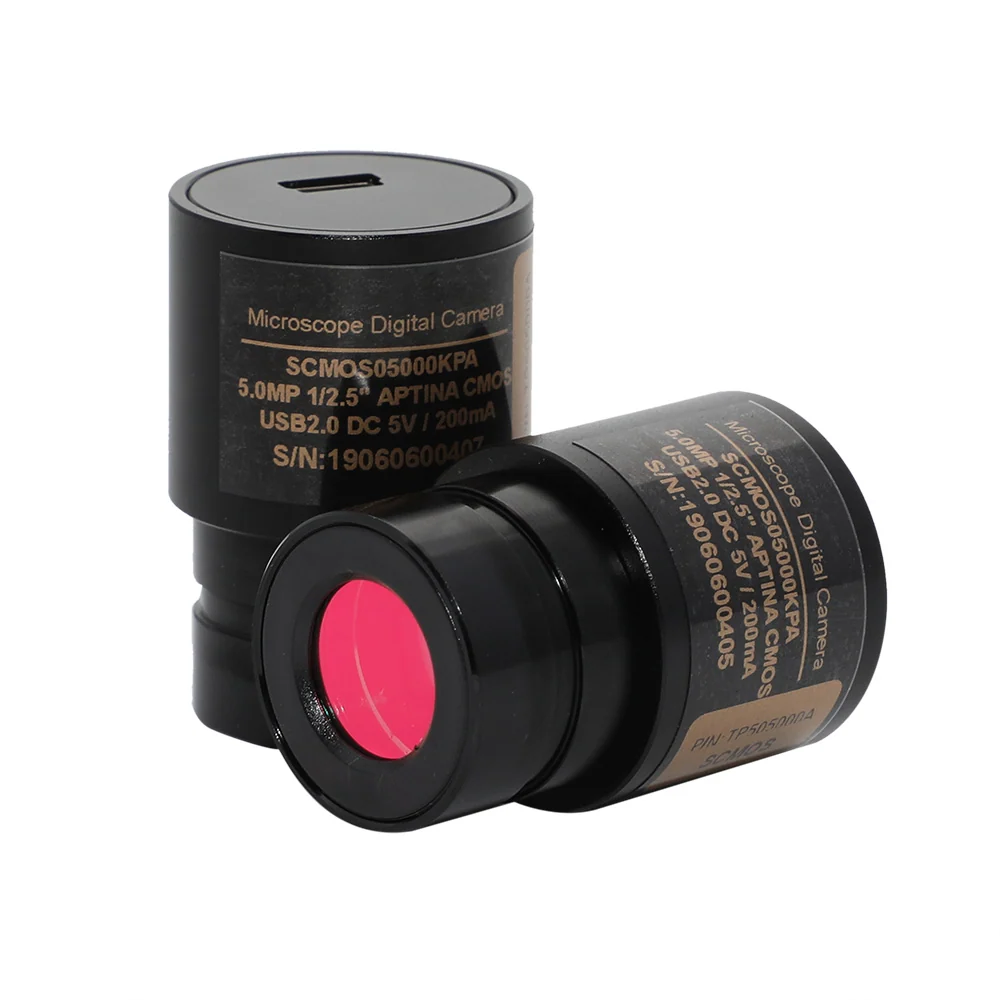
SCMOS USB2.0 Digital Biological Microscope Eyepiece Camera
View DetailsFrequently Asked Questions
Does this camera require external power?
No. The camera draws power from the USB2.0 port on the PC.
What is the maximum frame rate available?
Up to 28 frames per second at 1280x960 resolution with the 1.2M sensor.
Can I use this camera with a microscope that has a 1.25-inch tube?
Yes, if the microscope has a C-mount adapter or a compatible tube diameter. The camera uses a standard C-mount interface.
Which operating systems are supported?
Windows XP, Vista, 7, 8, 10 (32 & 64 bit), macOS, Linux, and Android via SDK.
Can I use this camera for live video in a low-light environment?
Yes. The camera supports exposure times up to 2000ms and has high SNR and dynamic range for low-light imaging.
Is the camera compatible with microscope software like ImageJ or MATLAB?
Yes. The SDKs support C/C++, C#, VB.NET, Python, Java, DirectShow, and Twain, enabling integration with third-party software.
Request A Price On The LCMOS USB2.0 Stereo Biological C-mount Microscope Camera
Send quantity, destination and the application. We will confirm the configuration, the price and the lead time.