Classification
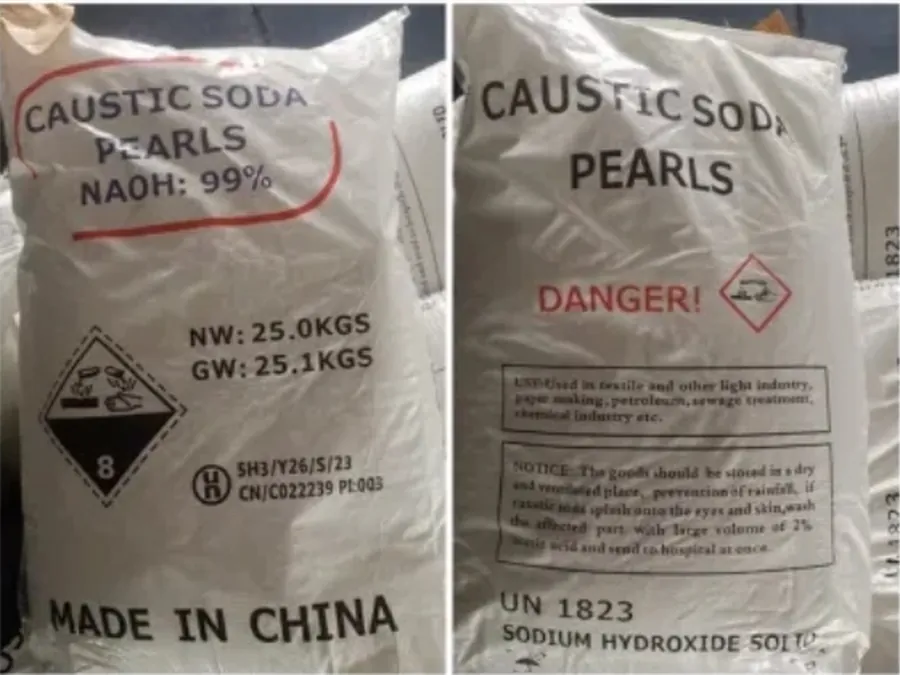
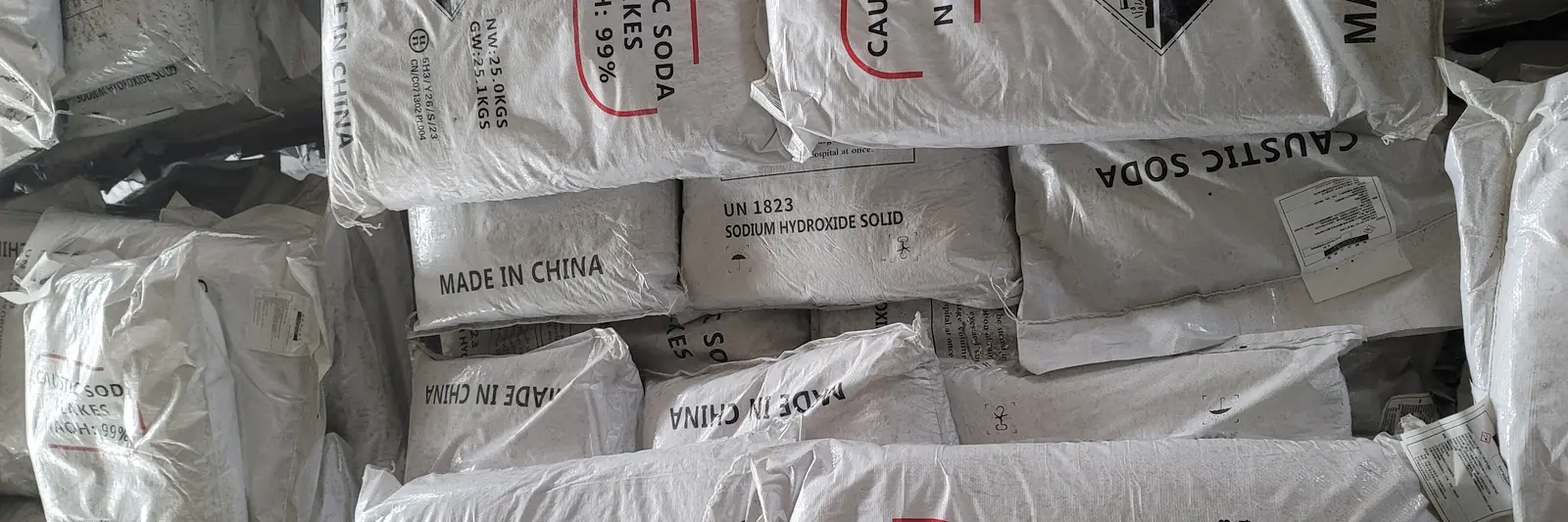
Solid sodium hydroxide is UN 1823, class 8, corrosive. Our bags carry the class 8 diamond label along with the product name, purity, net weight and gross weight. The dangerous goods documentation travels with the shipment.
Personal Protective Equipment
- Chemical splash goggles, and a face shield over them when charging or making up solution
- Chemical resistant gloves with a cuff long enough to cover the wrist
- A long sleeved chemical resistant apron or suit
- Closed chemical resistant footwear
- Respiratory protection where dust is generated and cannot be controlled at source
The One Rule That Matters Most
Always add caustic soda to water. Never add water to caustic soda. Dissolution releases a large amount of heat. Water poured onto a mass of solid alkali can flash to steam and eject caustic material out of the vessel. Adding the solid slowly into a stirred body of cold water spreads that heat through the whole volume instead of concentrating it.
Storage And Segregation
- Store in a dry, covered, well ventilated area
- Keep containers closed and reseal opened bags immediately
- Segregate from acids — the reaction is violent
- Segregate from aluminium and zinc — caustic soda attacks both and releases hydrogen
- Segregate from organic materials
- Keep the store free of standing water and protected from rain
Spill Response
For a dry spill, keep it dry. Sweep or scoop the solid carefully into a labelled container without raising dust, and do not wash it down a drain where it can meet an acid stream. For a solution spill, contain it, and neutralise only with a procedure that your site has planned in advance and with the correct protective equipment. Ventilate the area and keep people without protective equipment out of it.
First Aid Basics
Skin or eye contact requires immediate and prolonged flushing with running water, and eye contact requires medical attention. Alkali burns are deceptive: they penetrate progressively and can look mild for some time while damage continues underneath. Treat every contact seriously and never wait to see whether it develops.
These are general handling notes and not a substitute for the safety data sheet, your national regulations or your site's own risk assessment. Ask us for the documentation you need for your jurisdiction before the first shipment.
Training The Charging Team
Most incidents happen at the charging point rather than in the warehouse. Make sure the people who cut bags know the order of addition, know where the eye wash is, know that the solution stays hot for a while after mixing, and know not to leave a part used bag open.