
The Exotherm Is The Whole Problem
Dissolving sodium hydroxide releases a lot of heat. A concentrated make up in a small tank can climb far above ambient very quickly. Three controls keep that manageable: start with cold water, add the solid slowly in small portions, and keep the water moving so the heat is carried away rather than building up around undissolved material.
Order Of Addition
Solid into water. Always. This is not a preference, it is the single most important rule in the operation. Water added onto solid alkali can boil violently at the point of contact.
A Workable Make Up Sequence
- Confirm the tank is clean, empty of acid residues and fitted with working agitation.
- Charge the calculated volume of cold water first.
- Start the agitator and confirm it is actually turning.
- Add the solid in small portions, allowing each to disperse before the next goes in.
- Watch the temperature. If it climbs faster than expected, stop adding and let it settle.
- Continue stirring until the solution is clear and no solid remains on the bottom.
- Allow the solution to cool before transferring, dosing or topping up to final volume.
Calculating The Charge
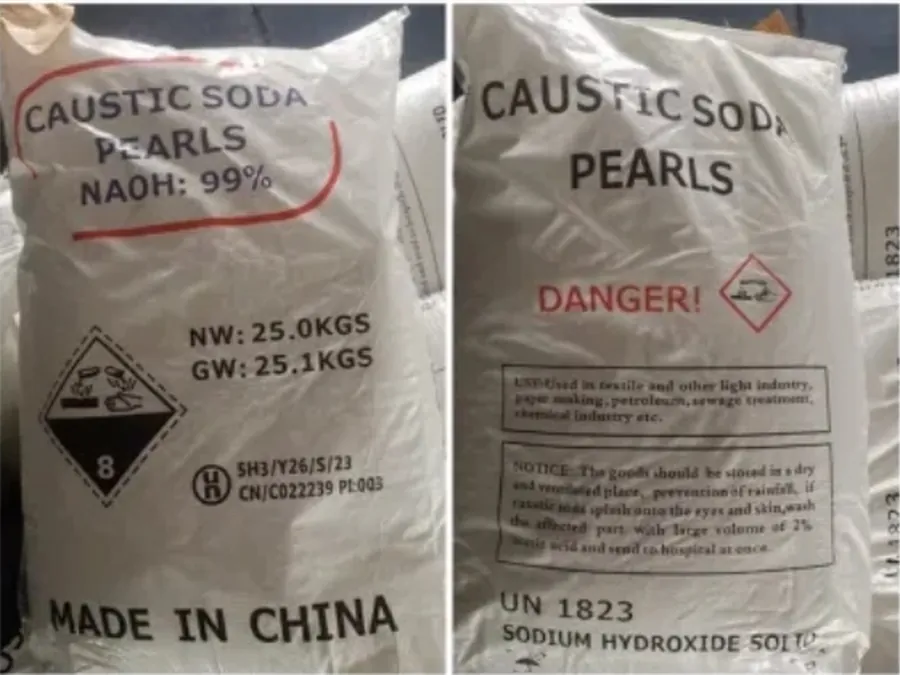
Work from the active alkali, not from the bag weight. At 99.0% NaOH minimum, 100 kg of our product delivers at least 99 kg of sodium hydroxide. If your recipe calls for a given mass of NaOH, dividing by 0.99 gives you the product mass to weigh out. Always verify the final strength by titration rather than assuming it.
Materials Of Construction
Caustic soda solution attacks aluminium and zinc and will strip most paints. Carbon steel is commonly used for storage of caustic solutions within its temperature limits, and appropriate plastics are used for lines and tanks. Chloride content matters where stainless steel is involved, which is one reason our flake grade is held to 0.03% maximum chlorides. Confirm the materials with your own engineering standard before you build the system.
Thinking About Dose Rate
Dose rate is set by your process, not by us. In water treatment it depends on the incoming acidity and the pH target. In pulping it is set by the cook. In saponification it is set by the saponification value of the fat or oil. What we can guarantee is that the alkali strength you are dosing does not move between shipments, because purity is held at 99.0% minimum on every lot.
What To Check When Results Drift
- Has a part used bag been left open, allowing carbonate to form at the surface?
- Is the make up tank reaching full dissolution, or is solid settling out?
- Has the solution been diluted by rinse water or condensate?
- Is the dosing pump calibrated for the solution strength you are actually running?