
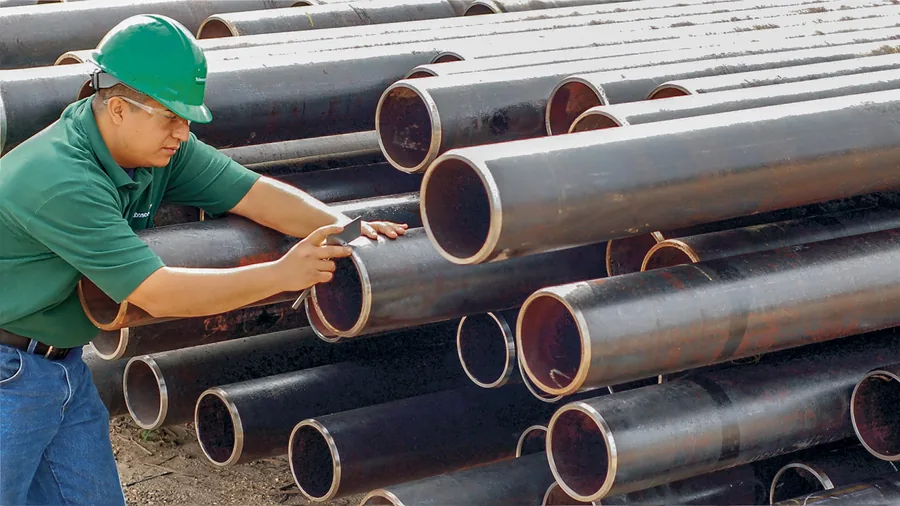
How Pipe Ends and Wall Thickness Are Inspected After Rolling
Uneven wall thickness exists at both ends of a pipe after rolling, which is why each pipe has part of both ends removed. Knowing how the defective part is identified tells you what a mill certificate is actually reporting.
Why Pipe Ends Are Cropped
Defects such as uneven wall thickness can exist at both ends of a pipe once rolling is complete, so each pipe has part of both ends removed. The quality of the pipe end is data that has to be tested, and an unqualified pipe end has to be cut off before the pipe is released.
What Can Go Wrong at the End
After the pipe passes through the sizing machine, part of the pipe end can show wall wrinkling and inward collapse. That collapse prevents the laser probe of a wall thickness measuring device from reaching into the bore, so the end has to be assessed before thickness can be measured at all.
Related product: 310S Stainless Steel Pipe
Detecting the Collapse
Industrial camera photography with image processing is used to detect pipe end defects. Image processing identifies whether a collapsed pipe wall cross section is present in the bore under a statistical model, and how large the collapse is, which then determines whether the pipe end needs to be sawn off.
Measuring the Wall
Once the end is confirmed clear, the measuring end of the laser thickness gauge can pass through the port of the pipe under test, which makes wall thickness defect detection possible along the length.
How Pipe Is Classified
Steel pipe has a hollow cross section whose length is far greater than its diameter. It is classified by material into carbon structural, low alloy structural, alloy and composite steel pipe, by use into pipeline, engineering structure, thermal equipment, petrochemical, machinery manufacturing, geological drilling and high pressure equipment pipe, and by production process into seamless and welded, with seamless split into hot rolled and cold drawn and welded split into straight seam and spiral.
Products Covered in This Guide
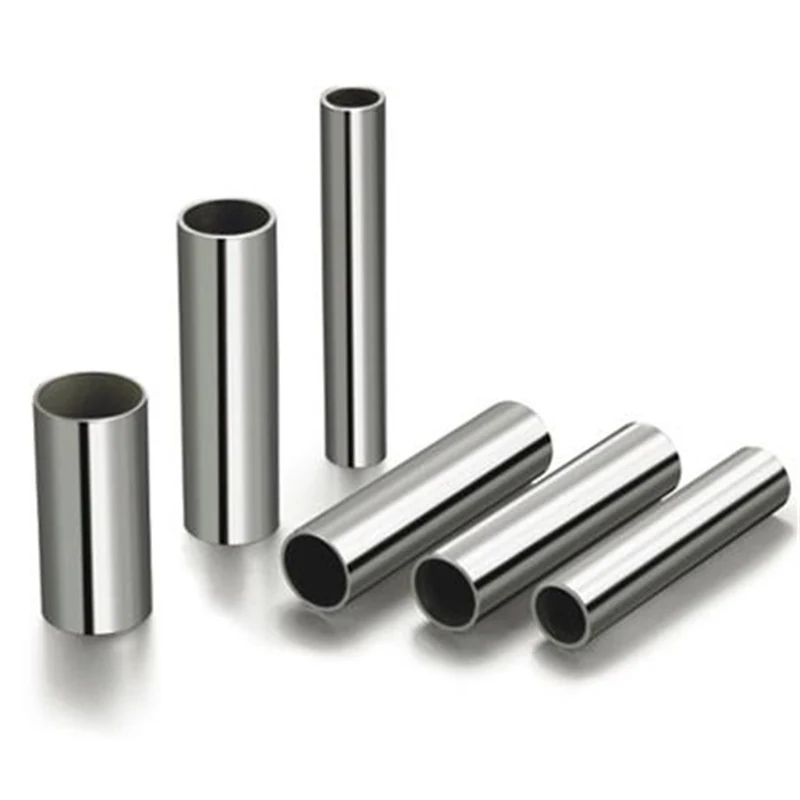
310S Stainless Steel Pipe
310S, also known as 1.4845 or X8CrNi25-21 under EN and UNS S31008, is the grade used in very high temperature environments.…
View specifications →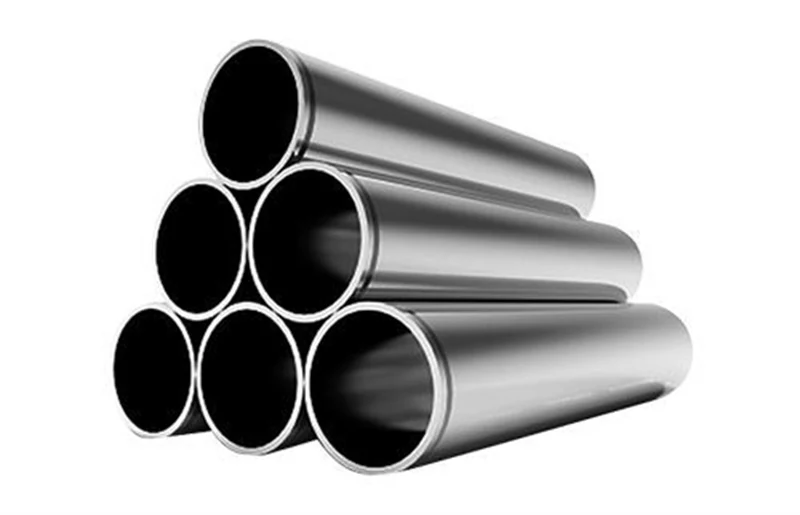
904L Stainless Steel Pipe
904L is one of the strongest stainless grades for corrosion resistance, written as 1.4539 or X1NiCrMoCu25-20-5 under EN and as UNS…
View specifications →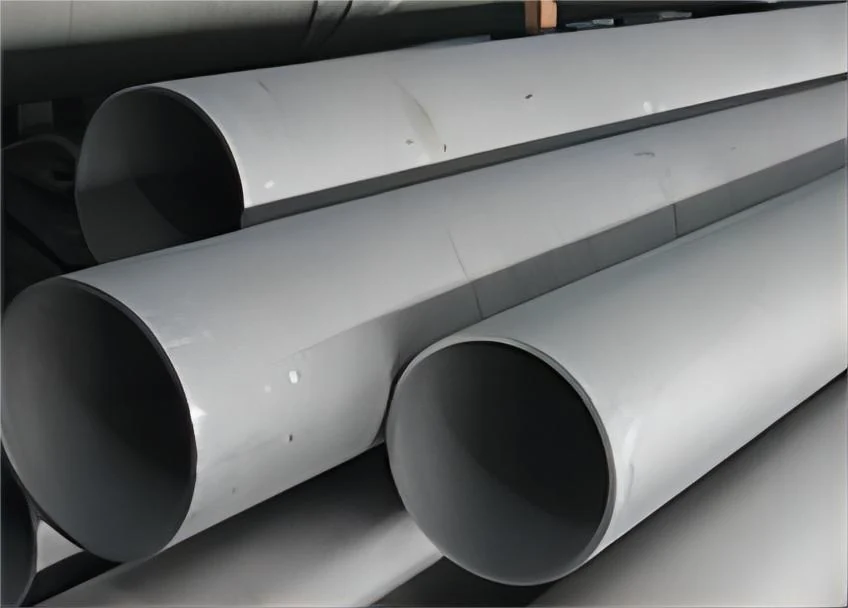
ASTM A213 TP347 Cold Finished Seamless Pipe 168.3 x 4.2 x 8000 mm
This is a cold finished TP347 seamless pipe supplied to ASME B36.19 dimensions and ASTM A213 material requirements, in a fixed size…
View specifications →Frequently Asked Questions
Why are both ends of a pipe cut off
How is a collapsed pipe end detected
How is wall thickness measured
Does a mill test certificate cover wall thickness
Apply This to Your Own Specification
Send the service conditions and the grade recommendation comes back with a quotation for the sizes you need.