Machine loops, side loops, extended hooks and swivel ends, and which one your anchor point actually needs.
See Tension Springs
The body of an extension spring shares load across every coil. The hook carries all of it in one bend. This is why hooks, not bodies, are what break, and why hook geometry deserves as much attention as the spring rate.
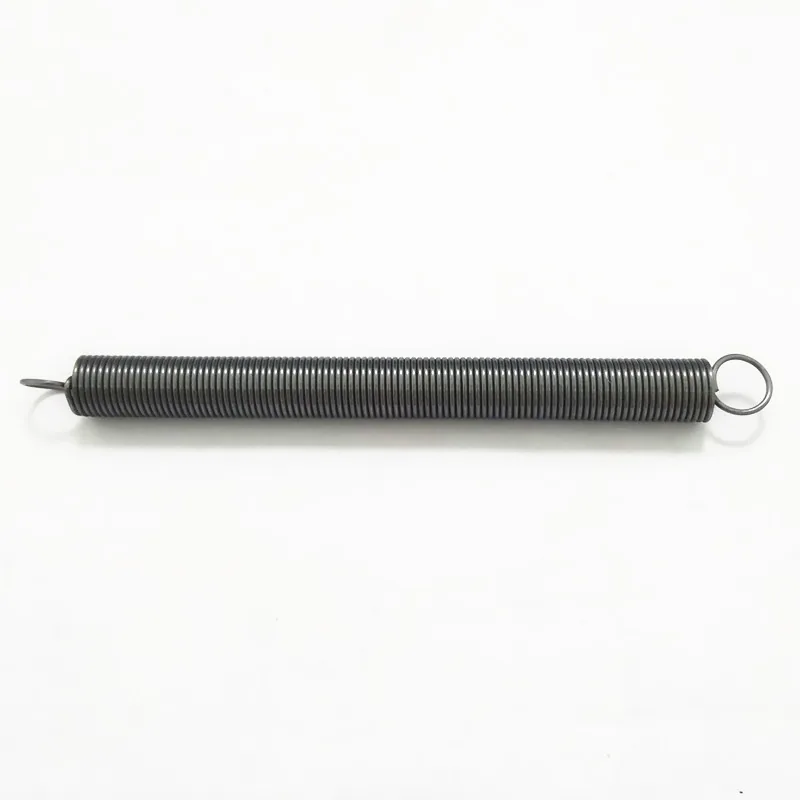
A full loop formed from the last coil, in line with the body. The standard, lowest cost option, suitable wherever the spring hangs on a pin and the load is in line with the axis.
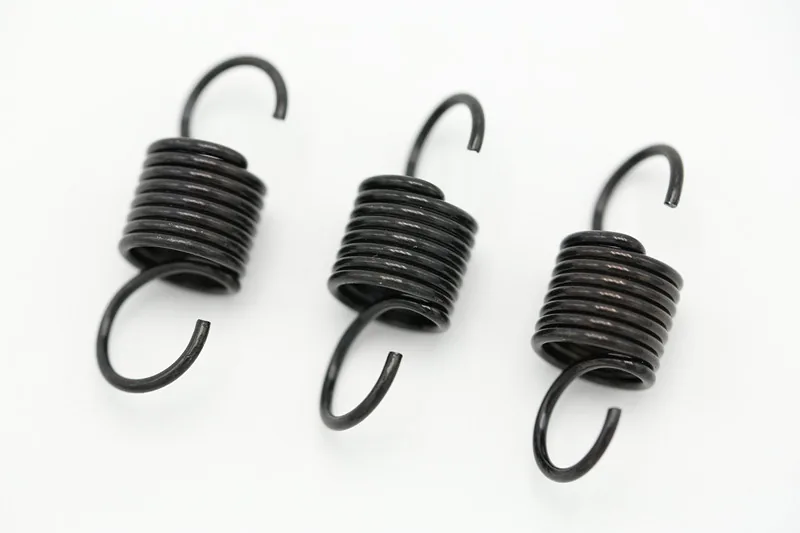
The loop is positioned to one side or across the centre of the body, used when the anchor sits off the spring's axis. Choosing a side loop instead of bending a machine loop sideways on assembly avoids putting a twist into the last coil.
The wire is drawn out beyond the body before the hook is formed, which gives reach into a recessed anchor. It adds length and cost but avoids a bracket.
Extension springs are coiled with the coils pressed together, which creates an initial tension that has to be overcome before the spring extends at all. State whether your mechanism needs the spring to stay closed until a threshold force is reached, because that threshold is set during coiling.
Yes, and it is common. A machine loop at the fixed end and an extended hook at the moving end is a frequent combination.
Only to the maximum extension quoted for that design. Past it the coils take a permanent set and the spring no longer returns to its free length.
Send the part, the load and the environment. A short email usually settles a specification faster than any guide can.