
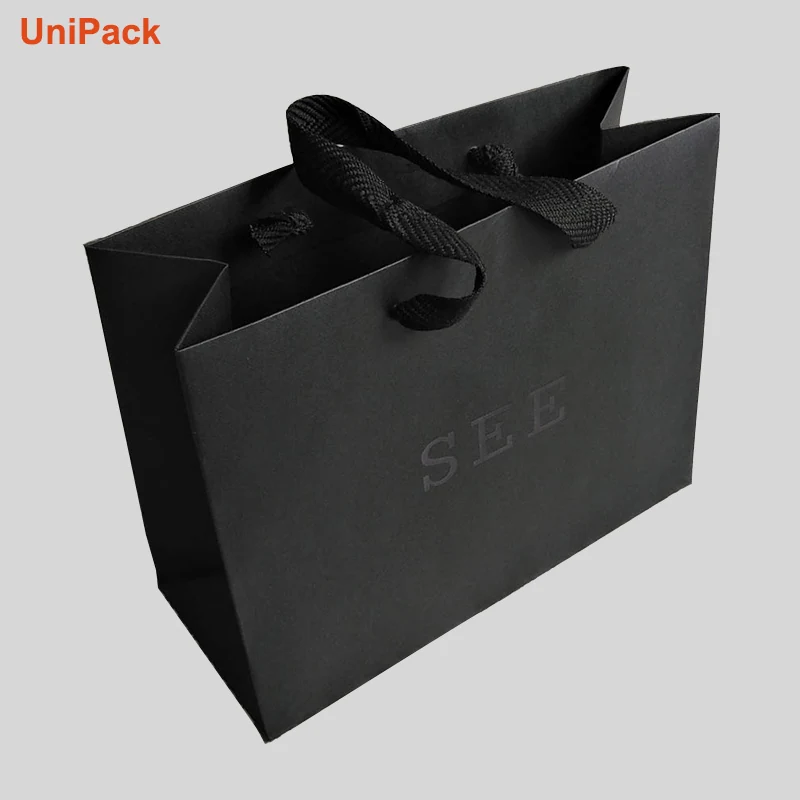
Designing a Shopping Bag That Works as Marketing
A carrier bag is the one piece of packaging that leaves the shop in public view. Treated as a design object rather than a cost line, it does more promotional work than most printed material.
Why the bag is worth the investment
Walking out of a shop with a well-made bag is part of the experience of buying in person. The bag travels through streets, onto public transport and into homes, where it is often reused for weeks.
Thoughtful design lets the bag echo the product inside. A restrained, heavy bag suits tailoring; a bright, playful one suits a children's range. Either way the customer reads the bag as a statement about what they just bought.
The single most reliable premium signal is substance. A bag that feels thin undercuts an expensive product no matter how good the artwork is, which is why board weight is the first thing to settle.
Construction details that read as quality
Embossing adds texture without ink and gives a tactile surface that survives handling. Combined with a deep base and a wide gusset it makes a bag feel engineered rather than folded.
Handle choice changes the whole impression. Ribbon ties and knotted rope handles signal care, cotton handles feel soft in the hand, and twisted paper handles keep the bag single-material and easier to recycle.
Small alignment details matter more than most buyers expect: handle colour matched to the panel, the turnover depth consistent, the logo centred on the true panel rather than on the flat sheet before folding.
Stitched or riveted handle reinforcement is worth considering on larger sizes. Bags carrying bottles, books or shoes put load on a small area, and a patched anchor point costs very little compared with a bag that fails in the street.
Colour and print approach
Soft, restrained colour with one metallic or foil-stamped accent generally reads as more upscale than full-coverage print. Minimal branding on a strong colour is a reliable formula.
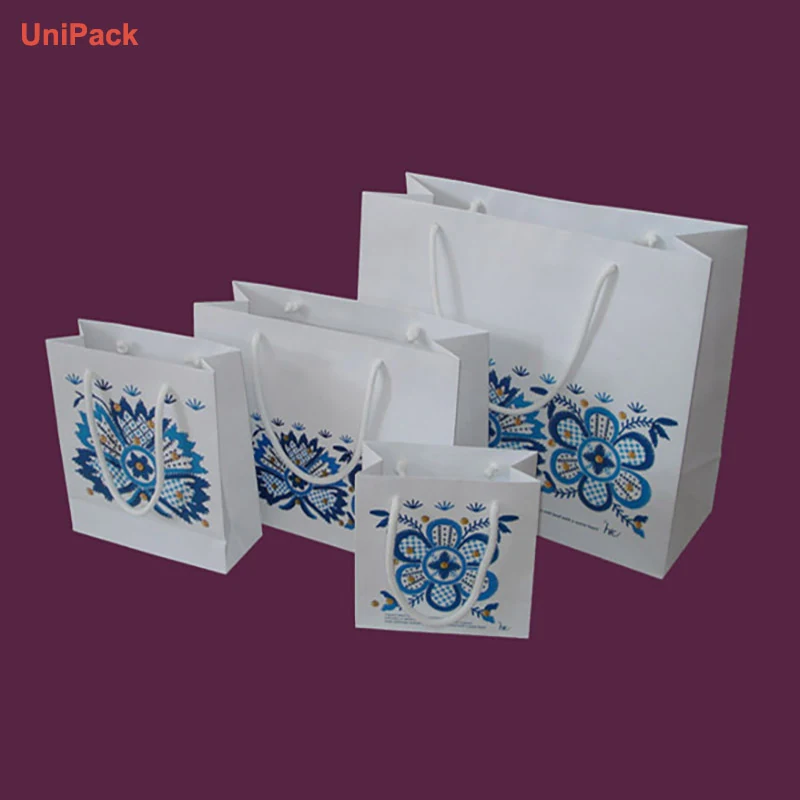
A bag can also carry artwork. An image lifted from a painting or an illustration used throughout a store gives the bag a point of interest that a logo alone cannot, and makes it more likely to be kept.
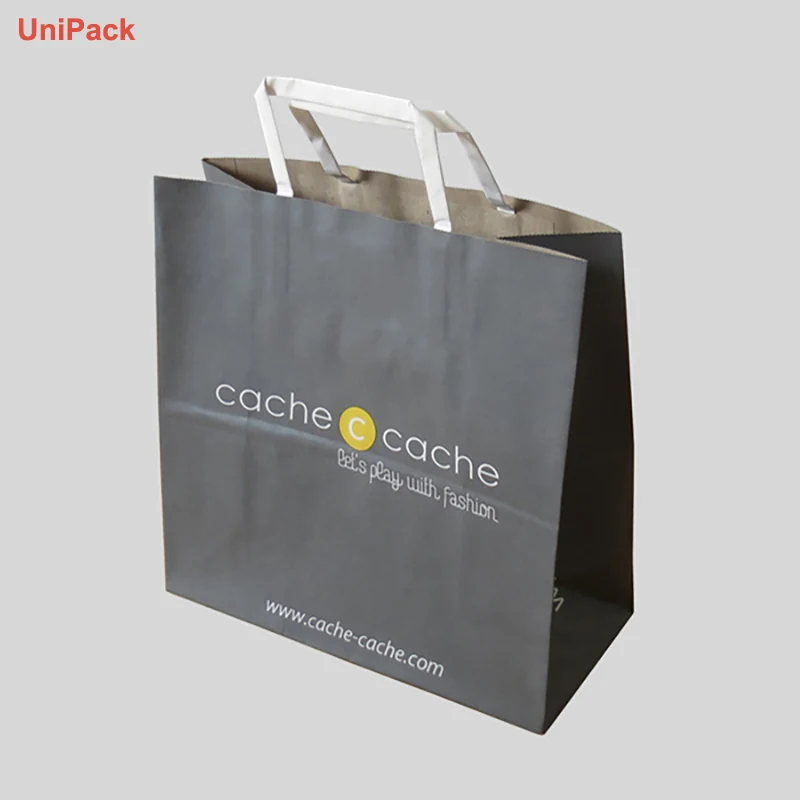
Whatever the approach, approve the colour on the actual board. Uncoated and kraft stocks pull colour down noticeably compared with a coated white sheet.
Recycling and messaging
Paper shopping bags can be made from recycled paper and are widely accepted in kerbside collection, which makes them an easy win when customers ask about packaging.
Rope and fabric handles should be removed before the bag is recycled. That instruction can be printed on the inside of the bag, where it does not interfere with the design but is seen when the bag is emptied.
Keep any environmental statement factual and short. A single clear line about recycled content or handle removal is more credible than a paragraph of general claims.
Specification checklist
Fix the finished size against a real product, then confirm paper weight, base card, gusset depth, handle type and length, print method and finishing in one written specification.
Test a sample loaded to the weight it will actually carry, and check the handle anchor and base fold after carrying it, not just after filling it.
Paper bags normally start at around 3,000 pieces per design. Running one construction in several colourways is usually cheaper than several constructions, because the die and setup are shared.
Takeaways
- Board weight is the clearest premium signal; thin bags undercut expensive products.
- Emboss plus one accent colour often outperforms full-coverage print.
- Print handle-removal instructions inside the bag for recycling.
- Approve colour on the real stock, especially on kraft.
- Paper bags usually start at about 3,000 pcs per design.
Ranges Mentioned in This Article
Questions Readers Ask
What paper weight should a retail bag be?
It depends on load and size. Light apparel bags work at lower weights, while bags carrying bottles or books need heavier paper plus reinforced base card. Decide from a loaded sample, not a table.
Are rope handles recyclable with the bag?
Usually not. Cotton and PP rope handles should be pulled out before the bag goes into kerbside recycling. Twisted paper handles avoid the issue entirely, because the bag then stays a single material.
Can I run several colours of one bag?
Yes, and it is normally the economical route. The structural die and the setup are shared across colourways, so you extend the range on the shelf without paying for a second construction.
Other Articles
Turn This Into a Quotation
Send your dimensions and quantity and we will apply what is in this article to your own specification.