
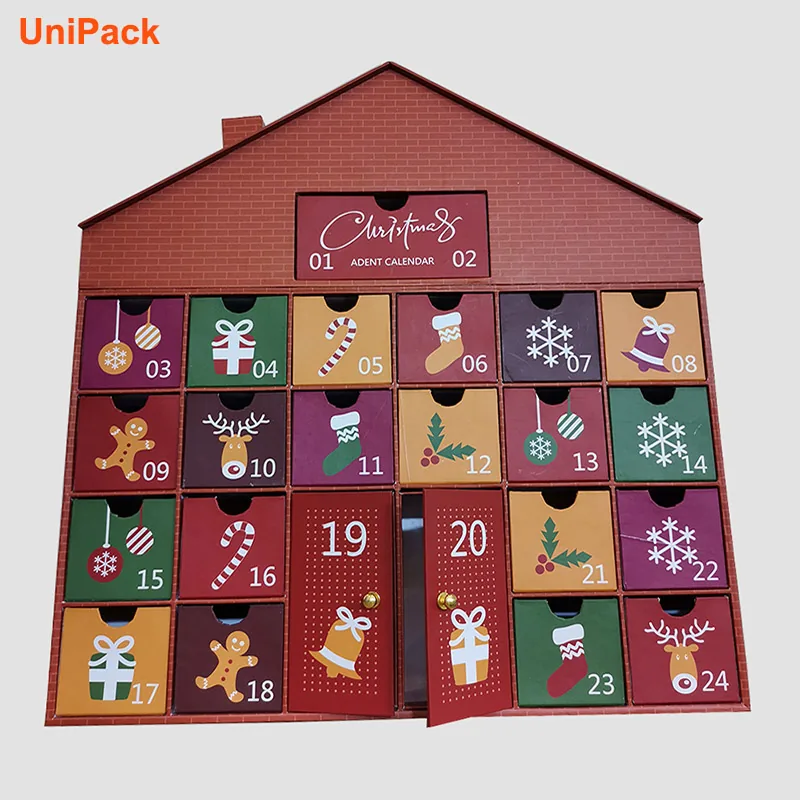
Rigid Boxes: When They Are Worth the Cost
Rigid boxes cost more than folding cartons and ship in their finished shape. For the right product that trade-off pays back; for the wrong one it wastes budget and warehouse space.
How a rigid box is built
A rigid box uses thicker board than everyday cartons, with four solid walls, a strong base and a dense top. It cannot be folded flat, so it is shipped already assembled.
Lid styles vary. Some boxes have a separate removable lid, others a hinged cover attached to the base. Magnets concealed inside the board of the flap and the front panel give a secure, satisfying close.
Because the board keeps its shape, the box protects its contents from crushing and holds its appearance through handling, which is the main reason retailers choose it for higher-value goods.
Which products justify one
Rigid packaging suits items that need a secure container and an impression of value: jewellery, watches, fountain pens, perfume, chocolates and mobile phones are typical examples.
It also suits products bought as gifts, where the box is part of the present and is often kept afterwards. A box that is kept keeps working for the brand.
For low-value, high-turnover goods a folding carton is the better economic choice. Paying rigid prices for a product the customer unpacks and discards is hard to justify.
Surfaces and finishing
Rigid boxes are usually covered with a printed or plain wrap glued over the board, which means the wrap can carry a different texture and finish from anything achievable on plain board.
Matt lamination gives a soft, understated surface that hides fingerprints less well on dark colours than buyers expect; gloss lamination lifts colour and photography but shows handling marks.
Foil stamping, embossing and spot UV all work on rigid wraps. Combining two of them is usually enough; stacking three tends to look busy and raises the unit price quickly.
Inserts, fit and protection
The insert does most of the protective work. Die-cut card, foam, moulded pulp and fabric-covered trays each hold the product differently, and each changes the opening experience.
Specify the insert against the real product with its tolerances. A cavity cut to a nominal dimension will either grip too tightly or let the item shift.
Rigid boxes are presentation packaging, not shipping packaging. For e-commerce, plan an outer corrugated shipper so corners and edges are not damaged in transit.
Design support and proofing
Many buyers arrive with a rough idea rather than a finished drawing. Working from dimensions, product photographs and a reference pack, a structural drawing and a dieline can be developed before any tooling is cut.
Ask for a plain white mock-up first to confirm size, fit and lid action, then a printed sample to confirm colour and finishing. Splitting the two keeps the review focused.
Approve colour on the actual wrap material. Paper texture changes how ink sits, and a shade approved on a proof sheet can look different once wrapped.
Quantities, cost and lead time
Gift box programmes of this type normally begin at about 3,000 pieces for a single design. Rigid construction involves more hand assembly than a folding carton, so both price per unit and lead time are higher.
Shipping assembled boxes costs more than shipping flat blanks, and the difference grows with box size. Factor freight into the comparison rather than judging on unit price alone.
Where budget is tight, a well-designed folding carton with a fitted insert and good finishing can deliver much of the same impression at a materially lower landed cost.
Takeaways
- Rigid boxes ship assembled, so freight and storage cost more than flat cartons.
- Best suited to jewellery, watches, perfume, chocolates and other gift-bought items.
- The insert, not the box, does most of the protecting.
- Add an outer shipper for e-commerce; rigid boxes are presentation packaging.
- Confirm size with a white mock-up before approving a printed sample.
Ranges Mentioned in This Article

Questions Readers Ask
Why are rigid boxes more expensive?
They use thicker board, require a glued outer wrap and involve far more hand assembly than folding cartons do. They also ship assembled rather than flat, which raises freight and storage costs.
Can rigid boxes be shipped as the outer pack?
It is not advisable. They are designed for presentation, and courier handling quickly marks the corners and edges. Use an outer corrugated shipper with void fill for any e-commerce order.
Do you help with structural design?
Yes. From dimensions, product photos and a reference pack a structural drawing and dieline can be prepared, followed by a white mock-up to confirm fit before any printed sample is made.
Other Articles
Turn This Into a Quotation
Send your dimensions and quantity and we will apply what is in this article to your own specification.