
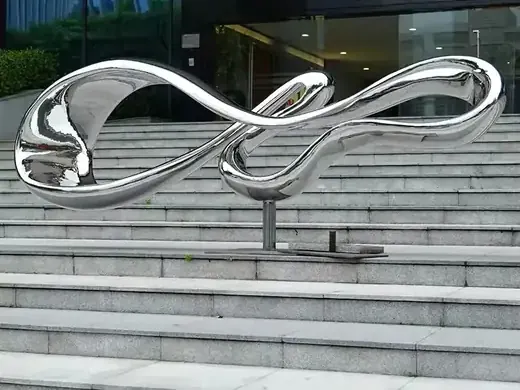
How to Choose the Right Size for a Garden Sculpture
The single most common regret is a piece that is too small. Here is how to get the scale right before anything is fabricated.
The full route from a sketch on a napkin to a crated piece with an anchor pattern drawing. This is how most projects here actually run.
Each stage lists what normally goes wrong at that point, then how it is handled here.
Most enquiries start with a photograph of a space and a rough idea of height. That is genuinely enough to begin, but it is not enough to price.
We ask for three things: where it goes, how tall you want it, and any image you already have. From that we can say what is realistic in which material.
Designers lose weeks waiting for a supplier to turn a reference into something buildable.
Our 5 in house designers develop the form and return views for approval. Changes at this stage cost nothing, which is why we push to settle the design fully before cutting.
The wrong grade near salt air or chlorinated water fails quietly and expensively.
Grade is chosen against the position: 304 inland, 316 or 316L near the coast or over water, Corten where a warm unpainted mass is wanted, fiberglass where the form is modelled rather than fabricated.
The base plate, the anchor pattern and the foundation are the most common cause of a delay on site.
The base plate and anchor pattern are issued as a drawing before fabrication finishes, so the foundation can be poured while the piece is still being built.
Cutting, forming, welding and polishing split across subcontractors means nobody owns the surface.
All of it happens in the same 12,000 square metre workshop with 87 sculptors on staff. Seam dressing and polishing are done by the same people who welded the seam.
The first time a client sees a piece should not be when the crate is opened.
The finished piece is stood up in the workshop and photographed from every side for written approval before anything is packed.
More sculpture is damaged in transit than in service.
A plywood crate is built around the finished geometry with foam contact on every finished face. Large pieces ship in marked sections.
A piece that arrives without fixings or instructions stalls on site.
Fixings are supplied with the piece, sections are marked in assembly order, and the care routine for that specific finish is sent with the delivery.
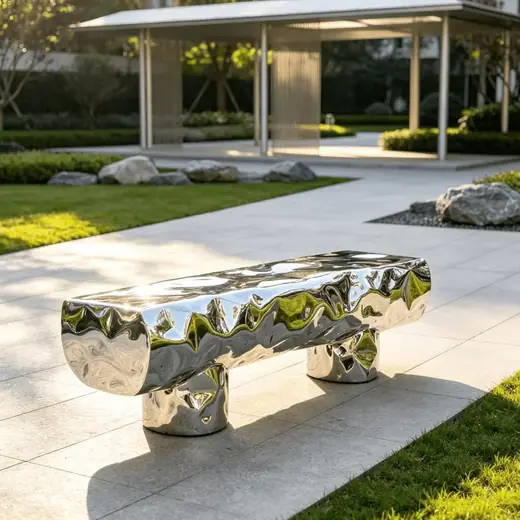
Stainless Steel Mirror Creative Leisure Seat Design A
View details
Large Stainless Steel Love Shaped Sculpture
View details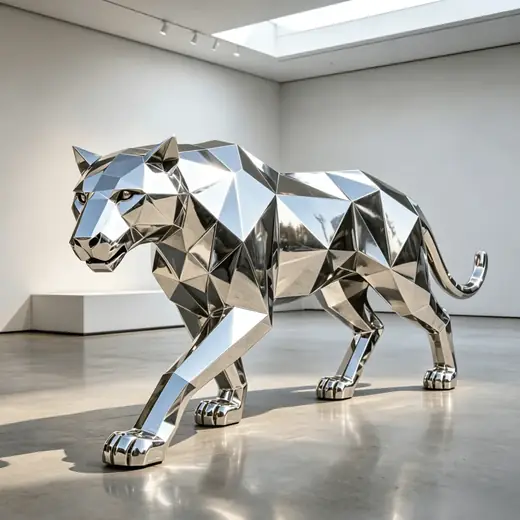
Stainless Steel Mirror Geometry Block Face Leopard Large Metal
View details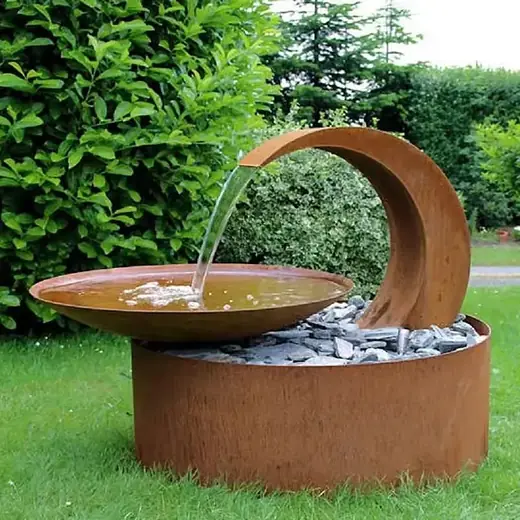
CORTEN Steel Water Bowl
View details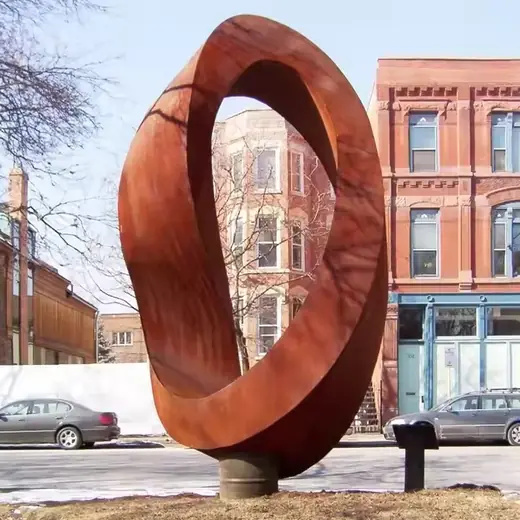
Modern Garden Outdoor Decoration Abstract Art Metal Statue
View details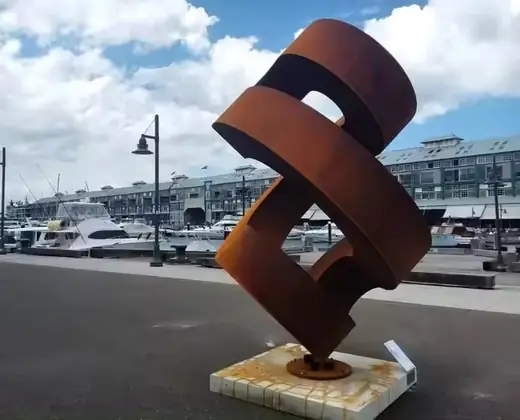
Modern Large Outdoor Garden Courtyard Rusty Art Statue
View details
The single most common regret is a piece that is too small. Here is how to get the scale right before anything is fabricated.
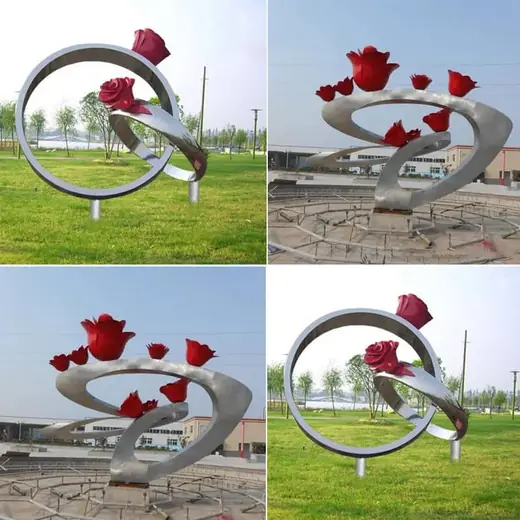
The base plate and the anchor pattern cause more delays on site than anything else. They are also the easiest part to get right in advance.
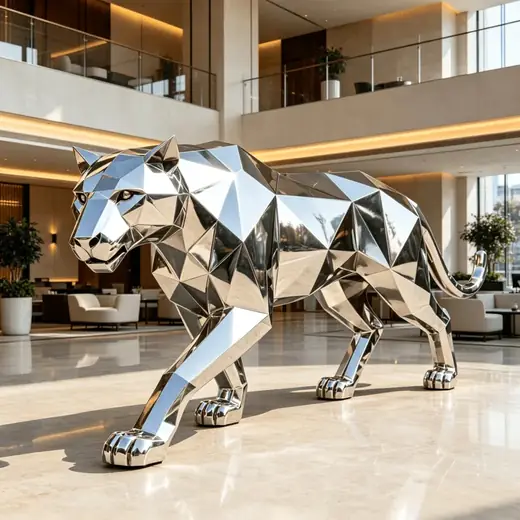
Two completely different routes to a large sculpture, each with a form language it suits and one it fights.
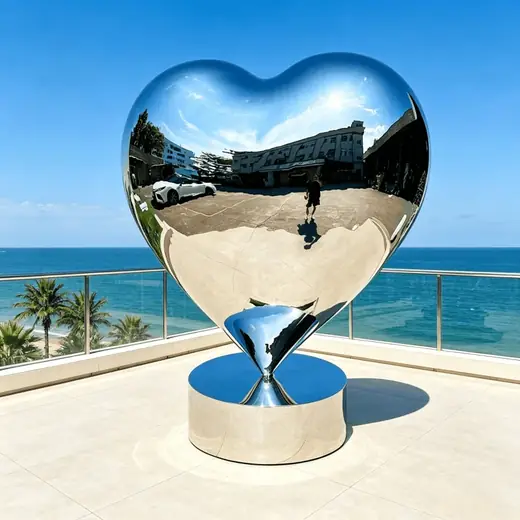
Every stage of a commission, what can still change at each point, and what is locked once it passes.
When the design is signed off. Before that a price is indicative, because the material, the structure and the finish are still moving.
All of the fabrication and finishing. Cutting, forming, welding, seam dressing, polishing and packing are done in the same 12,000 square metre building in Shenzhen.
Progress photographs are sent through the build, and the finished piece is stood up and photographed from every side for written approval before it is crated. Workshop visits can be arranged.
Design approval, followed by the foundation. Both are inside the client's control, which is why the base plate and anchor pattern are issued early enough to pour while fabrication is still running.
The cheapest place to solve a fabrication problem is on the drawing. Send what you have and we will tell you what it will cost you later if it stays as it is.