
Planning a Sculptural Water Feature
Water turns a sculpture into a system. Decide the effect, the grade and the plant room before the form is finalised.
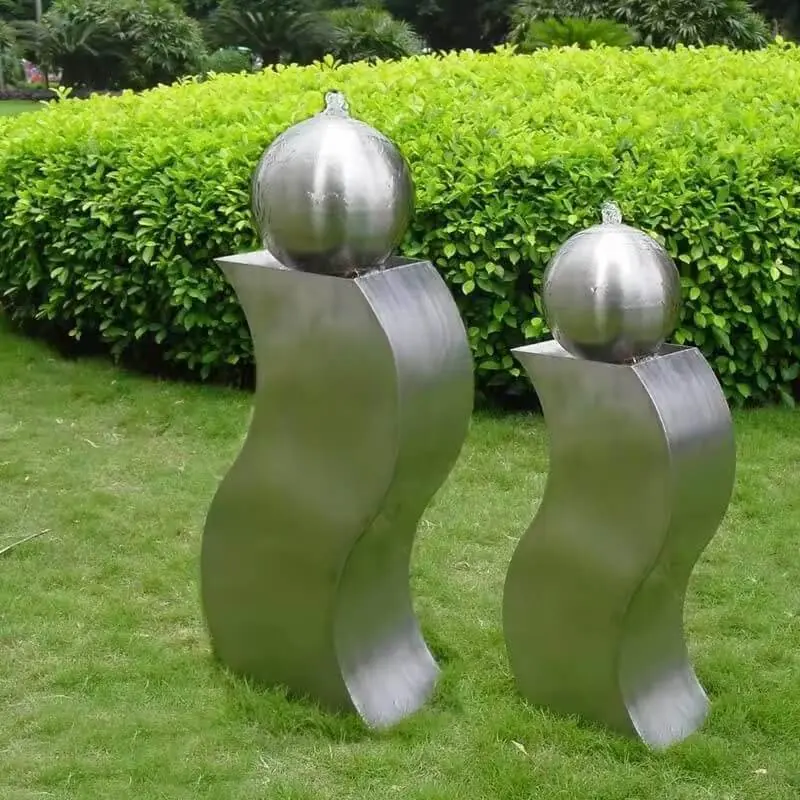
Sculpture that carries moving water needs the pipework, the pump chamber and the grade decided at design stage, not bolted on afterwards.
Each stage lists what normally goes wrong at that point, then how it is handled here.
A sheet, a film and a spill all look similar in a render and behave completely differently in wind.
The effect is agreed first, because it sets the edge detail, the flow rate and how sheltered the position needs to be.
Constantly wetted steel in a chlorinated or coastal setting is the hardest duty a sculpture faces.
316 or 316L is specified where water is treated or salt is in the air, rather than defaulting to 304 to save on the quotation.
Pipework added after the form is built is always visible and always awkward to service.
Feed pipework, the pump chamber and the access point are drawn into the form before fabrication.
A weir edge that is a millimetre out of level makes the water run to one side.
Weir and spill edges are machined and checked level during trial assembly in the workshop.
A fountain that has never been run before it ships arrives as a set of unknowns.
The piece is water tested in the workshop and the flow is set before it is drained and crated.
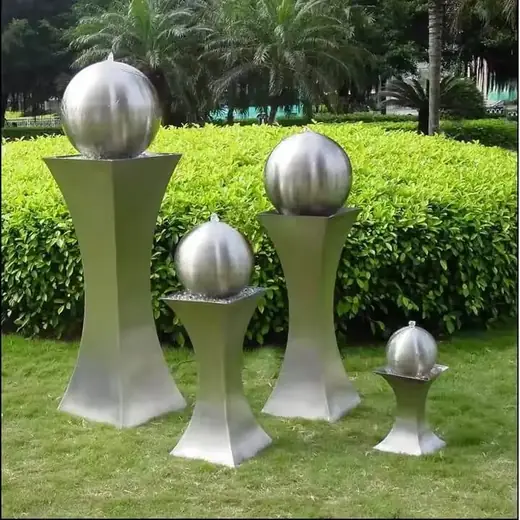
Modern 304 316 Mirror
View details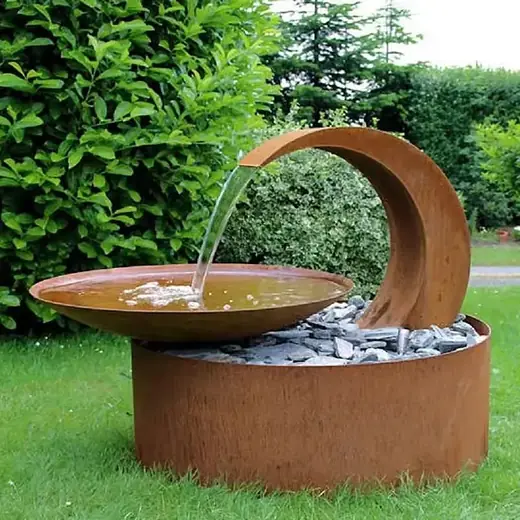
CORTEN Steel Water Bowl
View details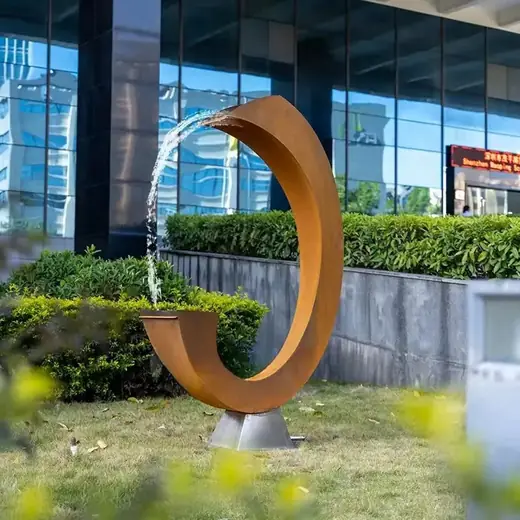
Large Sculpture Courtyard Decoration Water Fountain Garden Metal Art
View details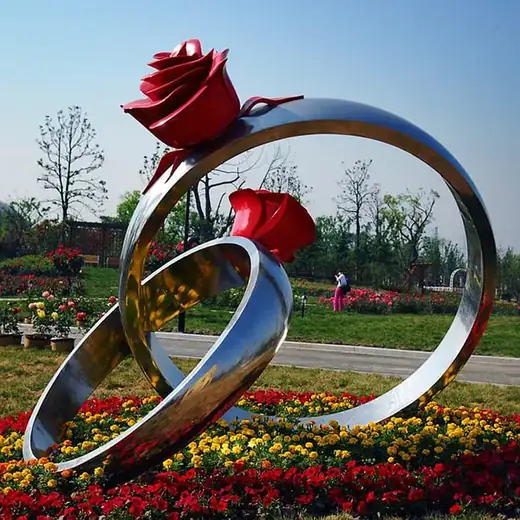
Stainless Steel Ring Sculpture Ornament
View details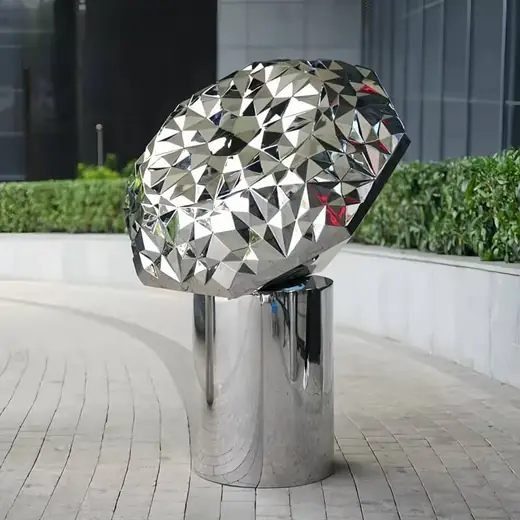
Stainless Steel Diamond Sculpture Ornament
View details
Stainless Steel Irregular-Shaped Stones Sculpture Ornament
View detailsWhen the design is signed off. Before that a price is indicative, because the material, the structure and the finish are still moving.
All of the fabrication and finishing. Cutting, forming, welding, seam dressing, polishing and packing are done in the same 12,000 square metre building in Shenzhen.
Progress photographs are sent through the build, and the finished piece is stood up and photographed from every side for written approval before it is crated. Workshop visits can be arranged.
Design approval, followed by the foundation. Both are inside the client's control, which is why the base plate and anchor pattern are issued early enough to pour while fabrication is still running.
The cheapest place to solve a fabrication problem is on the drawing. Send what you have and we will tell you what it will cost you later if it stays as it is.