
304 vs 316 Stainless Steel for Outdoor Sculpture
The grade decision costs little at the quotation stage and a great deal once a piece starts pitting. Here is how to make it properly.
Every stage of a commission, what can still change at each point, and what is locked once it passes.
Where the piece goes, roughly how tall you want it, and any image you already have. A photograph of the space, a sketch, a render or a magazine tear sheet all work. What that cannot produce yet is a firm price, because the material and the structure are not settled.
Our designers develop the form and return views for approval. Changes here cost nothing. Changes after cutting cost material and time, and changes after welding often cost the panel. This is why we push to settle the design fully before anything is cut, even when a programme is tight.
304 inland, 316 or 316L near the coast or in contact with treated water, Corten where a warm unpainted mass suits the landscape, fiberglass where the form is modelled rather than fabricated. The position drives this, not the preference.
The internal frame is sized to the piece, and the base plate and anchor pattern are issued as a drawing before fabrication finishes. That single document lets the foundation be cast and cured in parallel instead of after delivery.
Flat patterns are developed and cut, panels are formed over shaped bucks in stages, and seams are welded with matched filler, staged to spread the heat. All of it happens in the same workshop as the finishing, which is what keeps responsibility for the surface in one place.
Seam dressing and polishing account for a large share of the labour on a mirror piece. Every seam is ground level before polishing starts, and polishing runs through successive grits with checks under raking light between stages.
The finished piece is stood up in the workshop and photographed from every side for written approval. The first time a client sees a sculpture should never be when the crate is opened on site.
A plywood crate is built around the finished geometry with foam contact on every finished face. Large pieces ship in marked sections with a packing list, dimensions and weights so a forwarder can book accurately.
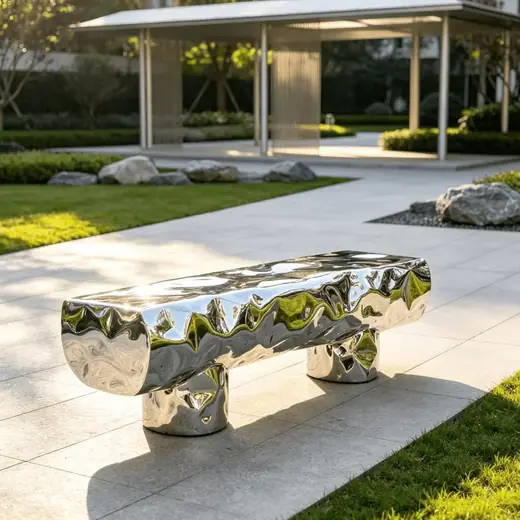
Stainless Steel Mirror Creative Leisure Seat Design A
View details
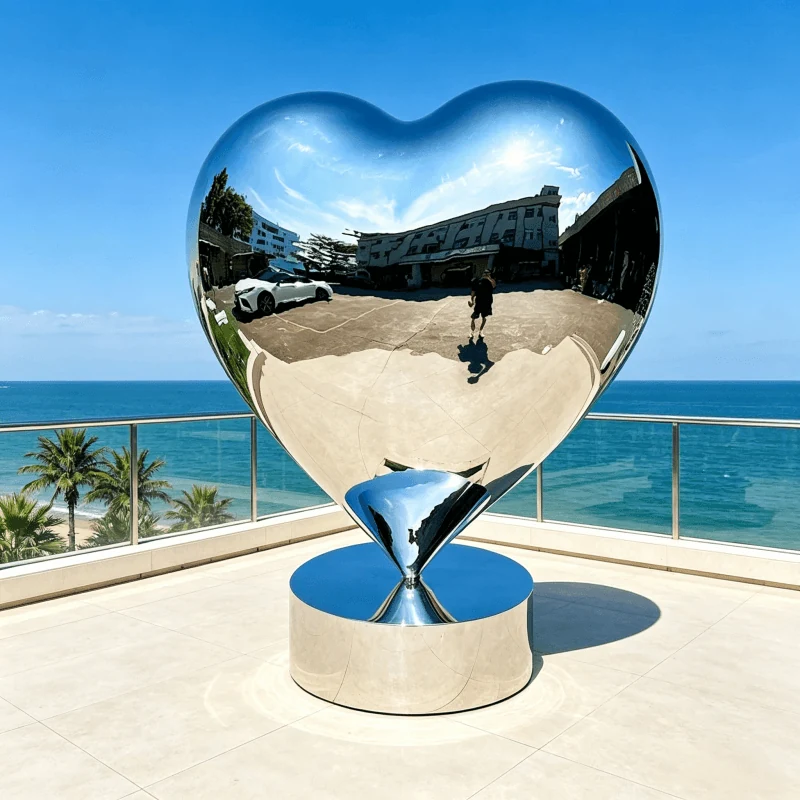
Large Stainless Steel Love Shaped Sculpture
View details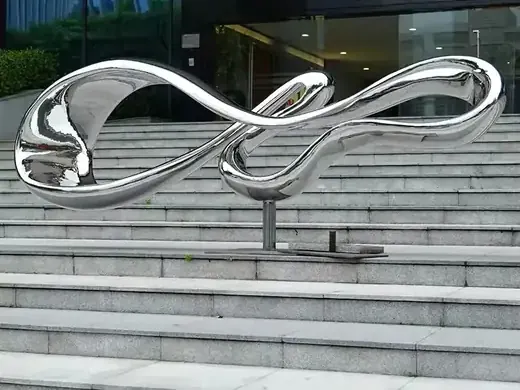
Modern Stainless Steel Infinity Sculpture
View details
Stainless Steel Starburst Meteor Hammer Landmine Sculpture
View detailsIt depends on size, finish and how much design development is needed, so a lead time is confirmed with the quotation rather than promised in advance. Design approval is usually the stage that moves most, because it depends on how quickly decisions come back.
It depends where we are. Before cutting, nothing is lost. After forming and welding, a change usually means remaking panels. Tell us early and we will say plainly what it costs.
The grade decision costs little at the quotation stage and a great deal once a piece starts pitting. Here is how to make it properly.
A flawless mirror finish is decided during welding and grinding, long before anyone reaches for a polishing mop.
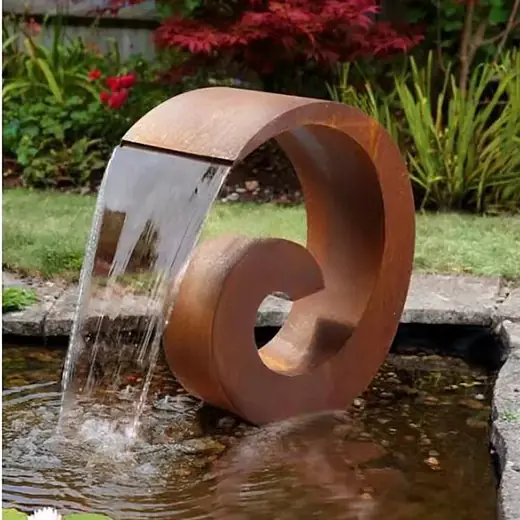
What weathering steel does over its first years outdoors, what it does to the paving underneath, and what to detail at design stage.
Send the position and the constraints and we will tell you which way the decision should go for your case rather than in general.