
304 vs 316 Stainless Steel for Outdoor Sculpture
The grade decision costs little at the quotation stage and a great deal once a piece starts pitting. Here is how to make it properly.
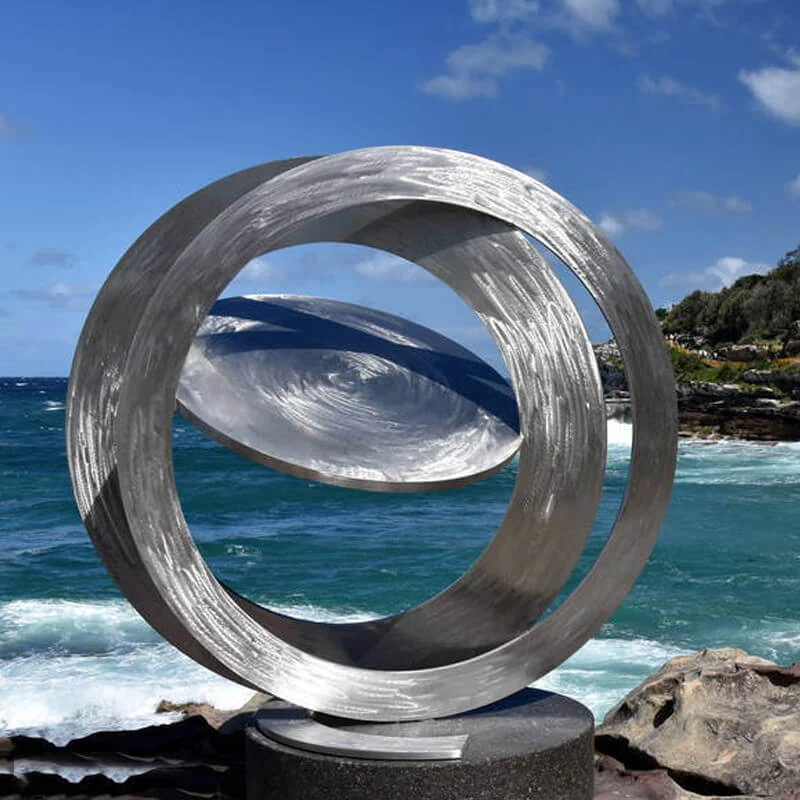
The single most common regret is a piece that is too small. Here is how to get the scale right before anything is fabricated.
Almost nobody orders a piece that turns out too big. Nearly everybody who is disappointed ordered one that is too small. A sculpture is judged against the space around it, and open sky, mature planting and a long approach all shrink it. What looks substantial in a workshop can vanish on a lawn.
The number that matters is how far away people first see the piece, not how much ground it stands on. A form viewed from forty metres needs mass and a strong silhouette. A form viewed from three metres in a courtyard can be delicate and detailed. Give your supplier the approach distance and the sight lines and the proportions follow from that.
Before committing, cut the outline from cardboard or stack boxes to the proposed height, stand it in position, and walk the approach at the times of day the garden is actually used. It takes an hour and it has saved more projects than any render.
A piece read against a hedge needs to break the hedge line or sit clearly below it. Caught exactly at the top of the hedge it reads as an accident. The same applies to walls, fence lines and rooflines behind the position.
Planting around a new piece is at its smallest on the day it goes in. If the surrounding beds will reach a metre in three years, a seventy centimetre sculpture is a temporary feature. Size the piece against the mature scheme.
A base plate hidden under gravel or planting reads very differently from a piece on a visible plinth. A plinth adds apparent height and formality, direct fixing feels more natural in a soft landscape. Decide which you want early, because it changes the base detail and the foundation.
A photograph taken from the normal approach, the distance to that viewpoint, the height of anything directly behind the position, and the height you are considering. That is enough to get a straight answer about whether the proportions will work.
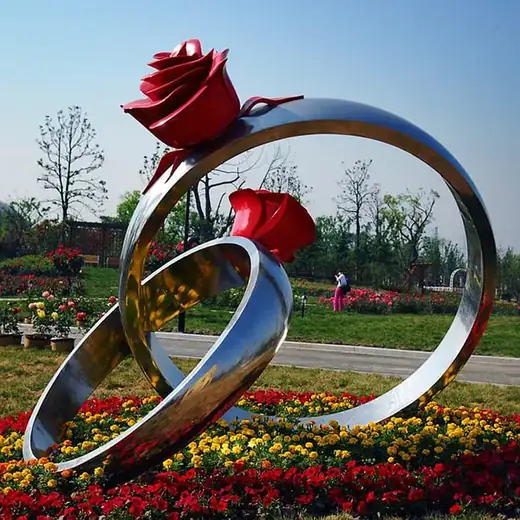
Stainless Steel Ring Sculpture Ornament
View details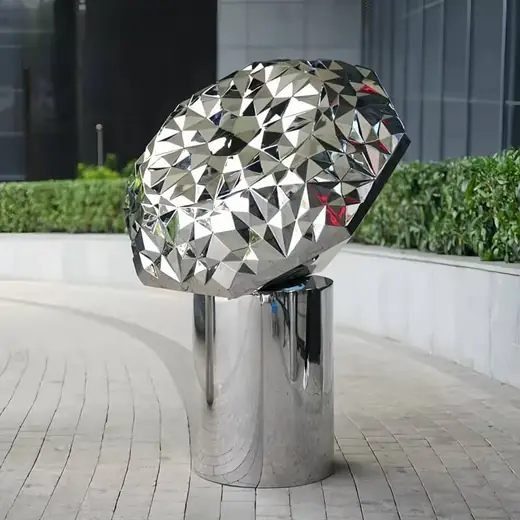
Stainless Steel Diamond Sculpture Ornament
View details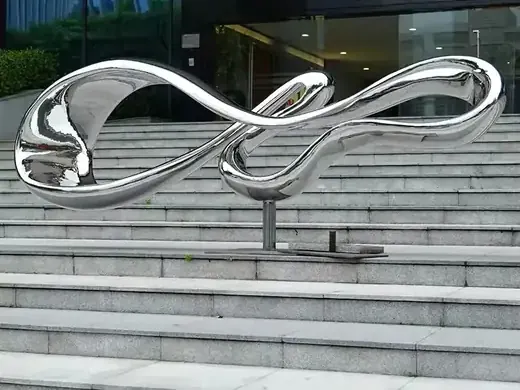
Modern Stainless Steel Infinity Sculpture
View details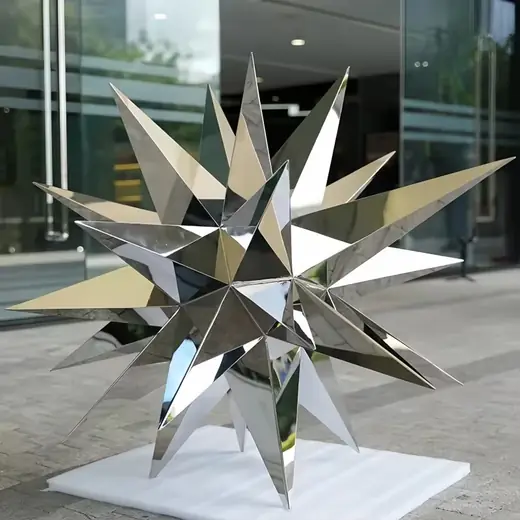
Stainless Steel Starburst Meteor Hammer Landmine Sculpture
View detailsNone that survives contact with a real garden. The useful discipline is the cardboard mock up, because it accounts for the approach, the background and the light in a way a formula never will.
The form scales, but the panel divisions, the internal frame and the base detail have to be redrawn rather than simply multiplied. It is much cheaper to settle the size before fabrication than after.
The grade decision costs little at the quotation stage and a great deal once a piece starts pitting. Here is how to make it properly.

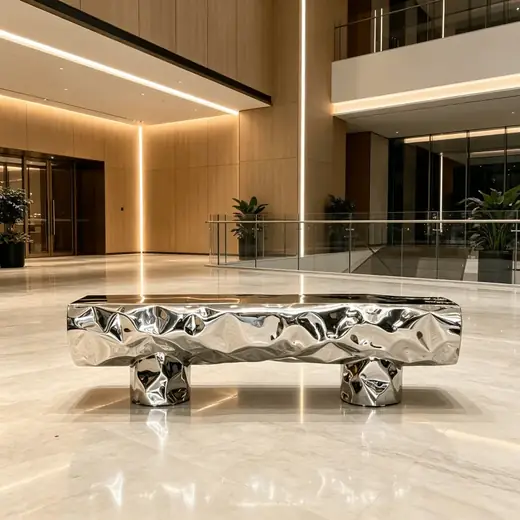
A flawless mirror finish is decided during welding and grinding, long before anyone reaches for a polishing mop.
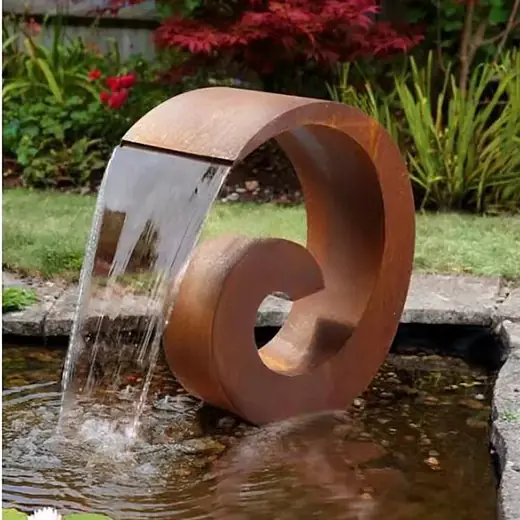
What weathering steel does over its first years outdoors, what it does to the paving underneath, and what to detail at design stage.
Send the position and the constraints and we will tell you which way the decision should go for your case rather than in general.