
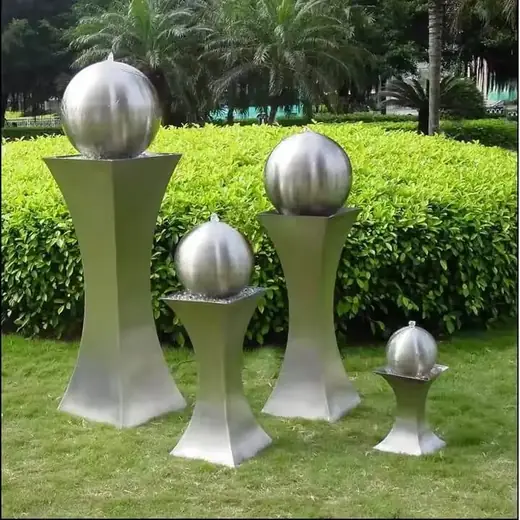
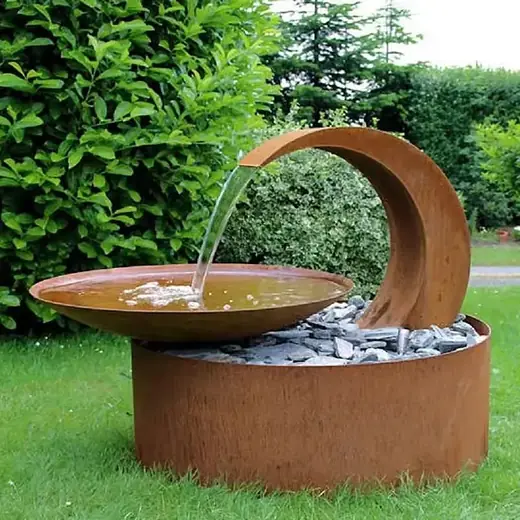

304 vs 316 Stainless Steel for Outdoor Sculpture
The grade decision costs little at the quotation stage and a great deal once a piece starts pitting. Here is how to make it properly.
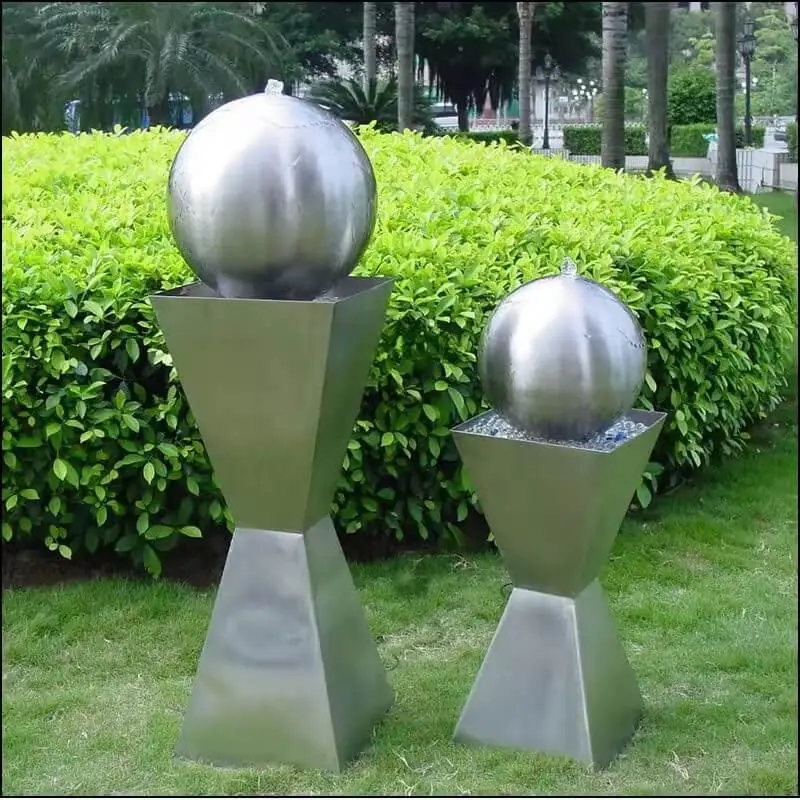
Water turns a sculpture into a system. Decide the effect, the grade and the plant room before the form is finalised.
A smooth sheet, a broken film, a spill over an edge and a jet all look similar in a render and behave completely differently in reality. The effect sets the edge detail, the flow rate and how sheltered the position needs to be, so it has to be agreed before the form is finalised rather than chosen afterwards.
A thin sheet of water is blown off course by very little wind, which empties the reservoir onto the paving and eventually runs the pump dry. Exposed positions need a heavier flow, a shorter drop, or a different effect entirely.
Recirculated water concentrates whatever is in it, and treatment chemicals build up. Continuously wetted steel in treated water is the hardest duty a sculpture faces, which is why 316 or 316L is specified rather than defaulting to 304 to save on the quotation.
Feed pipework, the pump chamber and the service access point are drawn into the form before fabrication. Pipework added afterwards is always visible and always awkward to reach when something needs clearing.
A spill edge a millimetre out of level sends all the water to one side. Weir and spill edges are machined and checked level during trial assembly in the workshop, where correcting them is still straightforward.
The visible sculpture is one part. Reservoir volume, the pump, the top up supply, the overflow and the drain are the rest, and they are normally specified with your landscape contractor so they match local supply and the maintenance regime.
A fountain that has never run before it is crated arrives as a set of unknowns. The piece is water tested in the workshop and the flow is set before it is drained and packed.
In freezing climates the system is drained for winter, which needs a drain point designed in. Year round, drainage points get checked twice a year and the piece is rinsed with fresh water on a regular cycle.
The internal pipework and the pump chamber are built into the piece. The pump, water supply and drainage connection are normally specified locally so they match the supply and the servicing arrangements on site.
Rarely well. The grade, the internal pipework and the drainage all need to be there from the start. Converting afterwards usually means visible pipework and a compromised specification.
The grade decision costs little at the quotation stage and a great deal once a piece starts pitting. Here is how to make it properly.

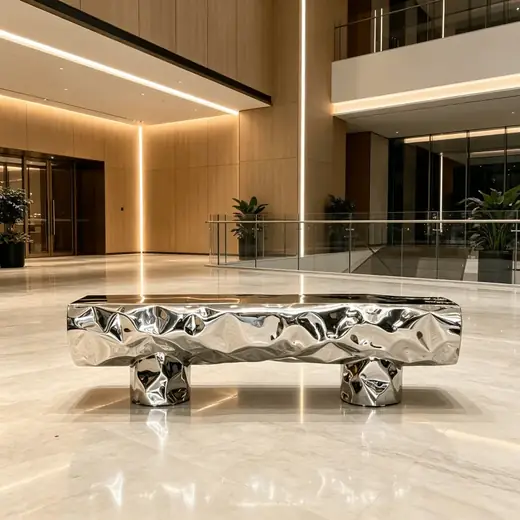
A flawless mirror finish is decided during welding and grinding, long before anyone reaches for a polishing mop.
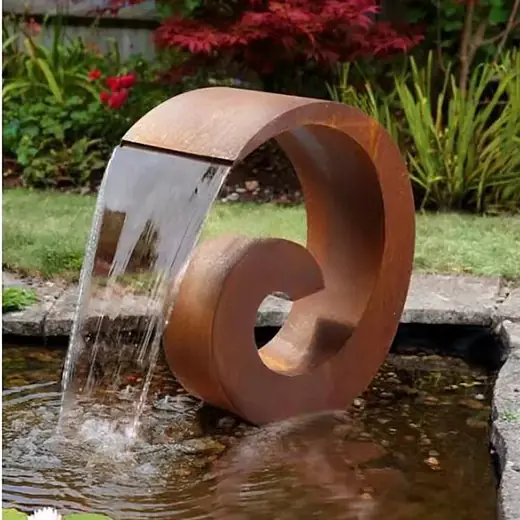
What weathering steel does over its first years outdoors, what it does to the paving underneath, and what to detail at design stage.
Send the position and the constraints and we will tell you which way the decision should go for your case rather than in general.