
How a Mirror Polish on Stainless Steel Sculpture Is Actually Achieved
A flawless mirror finish is decided during welding and grinding, long before anyone reaches for a polishing mop.
The grade decision costs little at the quotation stage and a great deal once a piece starts pitting. Here is how to make it properly.
Both grades are austenitic stainless steels with roughly 18 percent chromium and 8 to 10 percent nickel. The difference is molybdenum. 316 carries about 2 percent of it and 304 carries none. Molybdenum is what resists chloride attack, and chloride is what causes the small brown pits that appear on a mirror surface and cannot be polished out without thinning the panel.
Inland gardens, courtyards, lobbies, malls, corridors and almost every interior position. 304 holds its surface in rain, sun and frost indefinitely with nothing more than occasional washing. Specifying 316 for a suburban garden piece adds cost for a duty the material will never see. Most of what leaves our workshop is 304 for exactly that reason.
Within roughly a kilometre of the sea, on any roof or terrace exposed to onshore wind, beside a chlorinated pool, and in any position where the piece is wetted by treated water. Fountains are the clearest case: the water is recirculated, treatment chemicals concentrate, and the steel is wet continuously. That is the hardest duty a sculpture faces.
316L is the low carbon version. On a large sculpture the welds can run for metres, and low carbon content keeps the heat affected zone beside those seams as corrosion resistant as the panel itself. For a small piece with short seams, standard 316 is fine. For a monumental welded form in a marine setting, 316L is the safer specification.
Iron contamination. If a stainless piece is ground with a wheel that has been used on carbon steel, or stored where construction dust settles on it, it will rust in spots regardless of grade. That is why passivation after welding and clean handling on site matter as much as the grade on the order.
Tell your supplier the position, not the grade. Say the piece sits eight hundred metres from the coast, or that it stands in a chlorinated reflecting pool. A supplier who then quotes 304 without comment is telling you something useful about how they work.
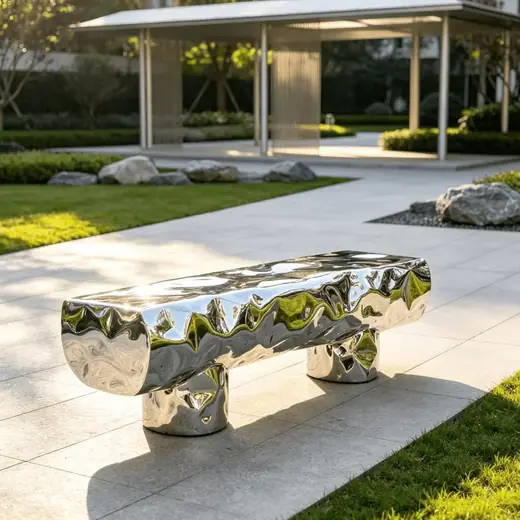
Stainless Steel Mirror Creative Leisure Seat Design A
View details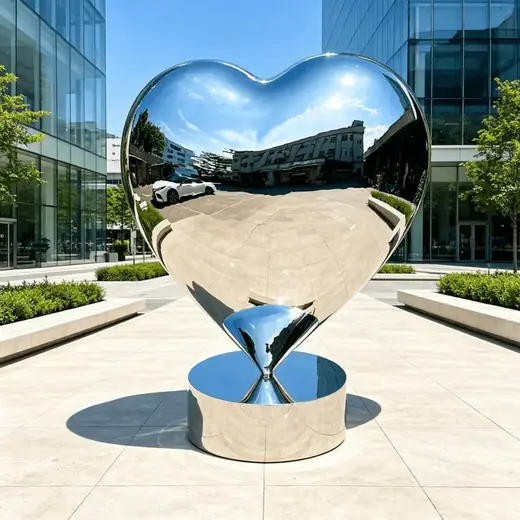
Large Stainless Steel Love Shaped Sculpture
View details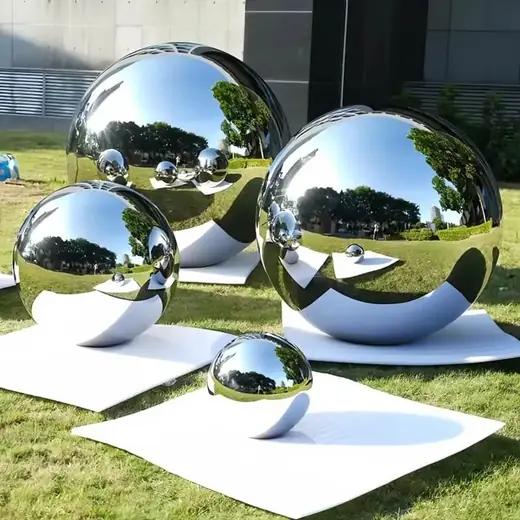
Stainless Steel Mirror-Faced Large Sphere Design B
View details
Large Modern Outdoor Garden Decorative Metal Art Abstract Sphere
View detailsNo. They are visually identical, which is exactly why the grade has to be confirmed against the order before cutting rather than assumed from the appearance of the sheet.
No. Polished 304 and polished 316 are indistinguishable. You are paying for behaviour over years, not for appearance on delivery.
A flawless mirror finish is decided during welding and grinding, long before anyone reaches for a polishing mop.
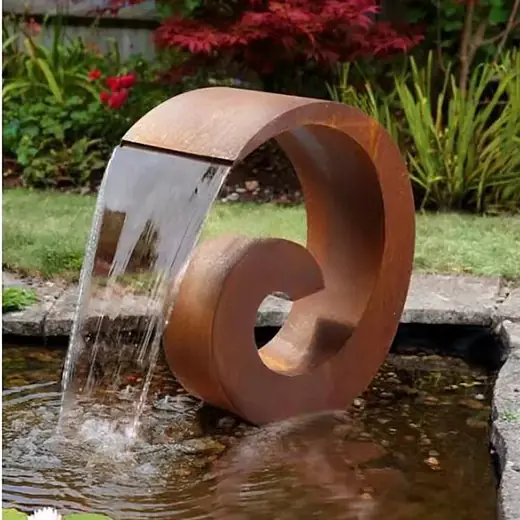
What weathering steel does over its first years outdoors, what it does to the paving underneath, and what to detail at design stage.
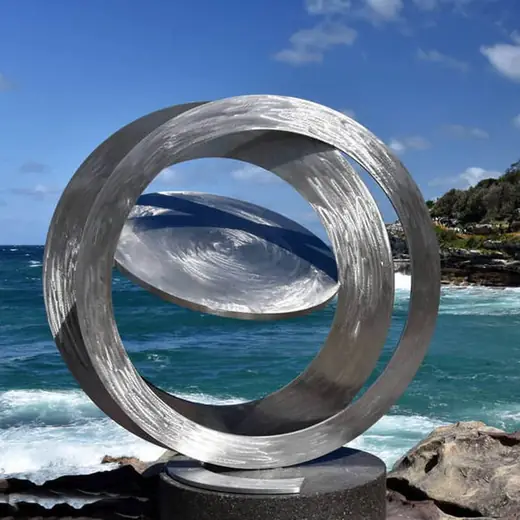
The single most common regret is a piece that is too small. Here is how to get the scale right before anything is fabricated.
Send the position and the constraints and we will tell you which way the decision should go for your case rather than in general.