

304 vs 316 Stainless Steel for Outdoor Sculpture
The grade decision costs little at the quotation stage and a great deal once a piece starts pitting. Here is how to make it properly.
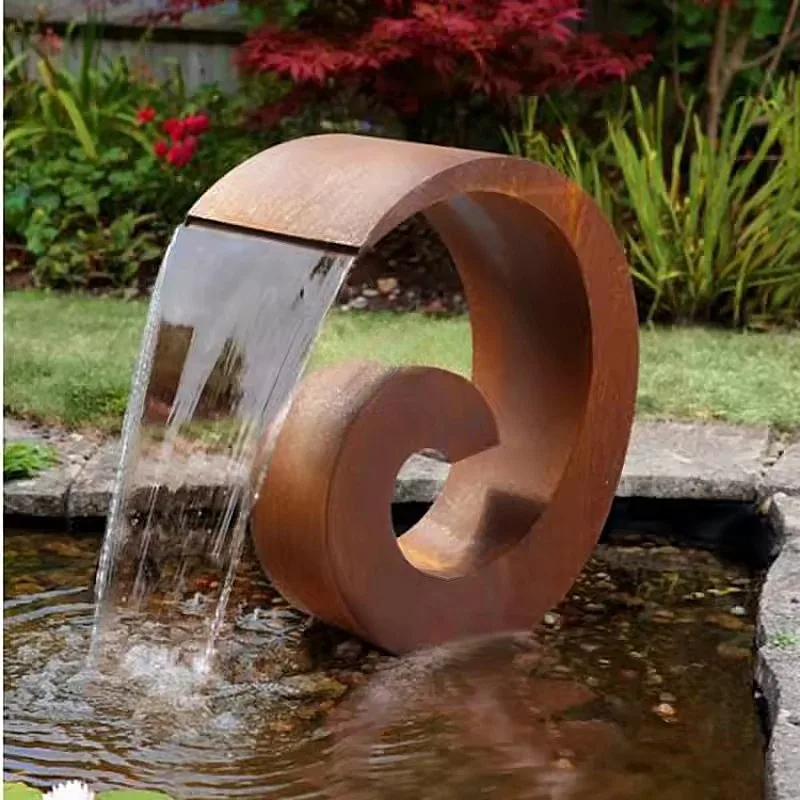
What weathering steel does over its first years outdoors, what it does to the paving underneath, and what to detail at design stage.
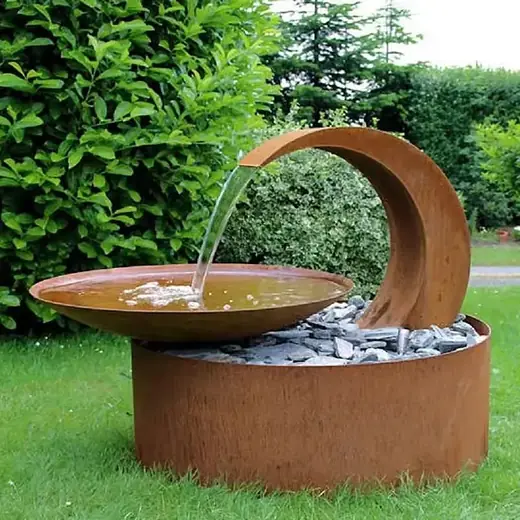
Weathering steel is alloyed with copper, chromium, nickel and phosphorus so that the first oxide layer forms tight and adherent rather than flaky. That layer seals the plate underneath, which is why the colour deepens and then stabilises instead of eating through the material. Ordinary mild steel rusts in flakes that fall away and expose fresh metal underneath, which is why it needs paint.
Untreated weathering steel arrives silver grey and takes months of wetting and drying cycles to turn. During that period it sheds the heaviest run off it will ever produce, straight onto whatever is below it. Bringing the patina on in the workshop means the piece ships the colour it will keep and the worst of the staining happens where it does no harm.
Weld metal that does not match the parent plate weathers to a different colour and leaves permanent stripes across a form. Structural seams are welded and then ground so the patina forms evenly across the joint rather than stopping at it.
There is run off while the patina settles and a little thereafter. On pale limestone or light concrete it marks permanently. The standard answer is a gravel or dark stone margin under and around the piece, detailed at design stage. It takes the run off without showing it and it costs nothing to plan and a great deal to retrofit.
Water trapped inside a hollow Corten form attacks it from the inside where no one looks and where the protective patina never properly forms. Vent and drainage holes are positioned during design and checked open before dispatch.
Weathering steel loses a small amount of thickness to the patina over its life. A plate chosen purely for appearance can end up under strength decades later. Thickness is set from the structure of the piece and its exposure, then confirmed against the drawing before cutting.
Sealing Corten changes its appearance permanently and stops the process the material exists for. If a sealed look is genuinely wanted, it has to be agreed before the piece is weathered, not applied later as a correction.
Not in any normal service life. The patina is self limiting, which is the entire point of the alloy. Pieces left in standing water or with blocked internal drainage are the exception, and both are design faults rather than material faults.
It is less suited to it. Constant salt prevents the patina from stabilising properly and the corrosion rate stays higher. In genuinely marine positions, stainless steel is the better specification.
The grade decision costs little at the quotation stage and a great deal once a piece starts pitting. Here is how to make it properly.

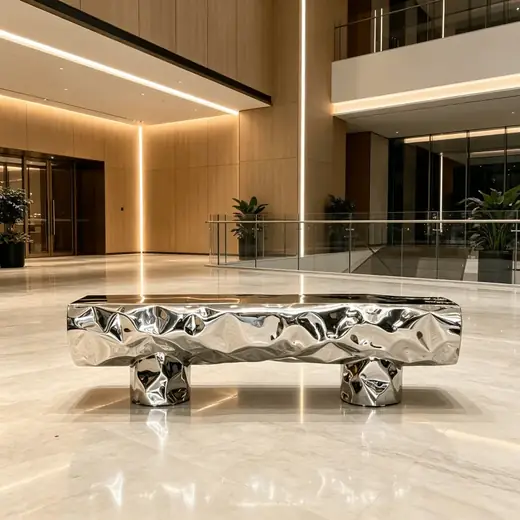
A flawless mirror finish is decided during welding and grinding, long before anyone reaches for a polishing mop.
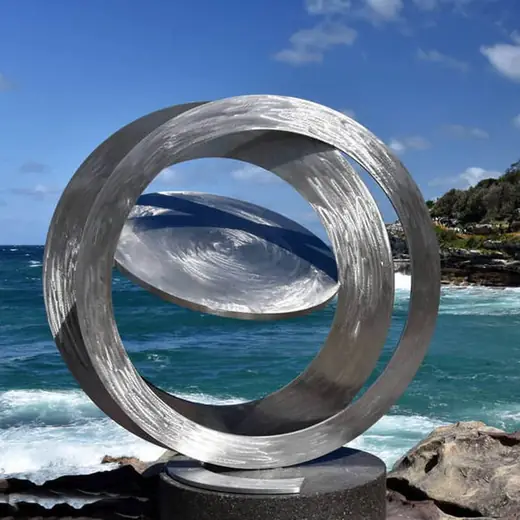
The single most common regret is a piece that is too small. Here is how to get the scale right before anything is fabricated.
Send the position and the constraints and we will tell you which way the decision should go for your case rather than in general.