
304 vs 316 Stainless Steel for Outdoor Sculpture
The grade decision costs little at the quotation stage and a great deal once a piece starts pitting. Here is how to make it properly.

A flawless mirror finish is decided during welding and grinding, long before anyone reaches for a polishing mop.
Every other finish is forgiving. Brushed, hammered and coated surfaces all break up light and conceal small imperfections. A mirror finish does the opposite: it magnifies waviness, shows every seam that was not dressed flat, and turns a slightly over-worked panel into a funhouse reflection. That is why the polishing stage is the last place a mirror finish is won.
Surface defects in the incoming sheet cannot be polished out later without removing enough material to thin the panel. Sheet is inspected before cutting, and because 304 and 316 look identical on the rack, the grade is confirmed against the order at the same time.
A compound curved sculpture cut from a guessed flat pattern produces panels that have to be forced together. Forced panels carry stress, and stress shows in the reflection. The form is developed into flat patterns first so that the panels meet without being pulled into place.
Panels are formed over shaped bucks in several passes rather than forced into shape in one. Over-worked steel reads as waviness under a mirror finish even when the geometry is correct.
Heat distortion on a thin polished panel is permanent. TIG welding with matched filler wire, staged around the piece so the heat is spread rather than concentrated, and welded from the inside wherever the geometry allows.
Every seam is ground and levelled until it reads flat under raking light, before any polishing begins. This is the step that separates a piece where the reflection runs unbroken across the joint from one where the weld line is visible from ten metres away. It is also the step most often rushed.
Polishing runs through successive grits with the surface checked under raking light between stages. Skipping a grit leaves scratches that are invisible on a dull surface and obvious once the piece is bright, at which point the only remedy is to go back several stages.
Welding strips the passive chromium oxide layer exactly where corrosion would otherwise start. The piece is cleaned and passivated after all hot work, then crated with foam contact on every finished face.
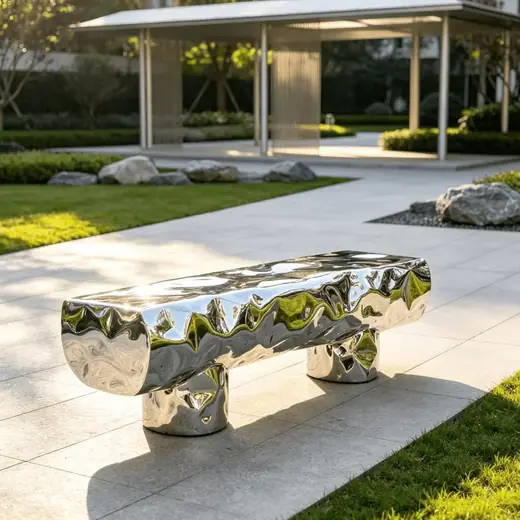
Stainless Steel Mirror Creative Leisure Seat Design A
View details
Large Stainless Steel Love Shaped Sculpture
View details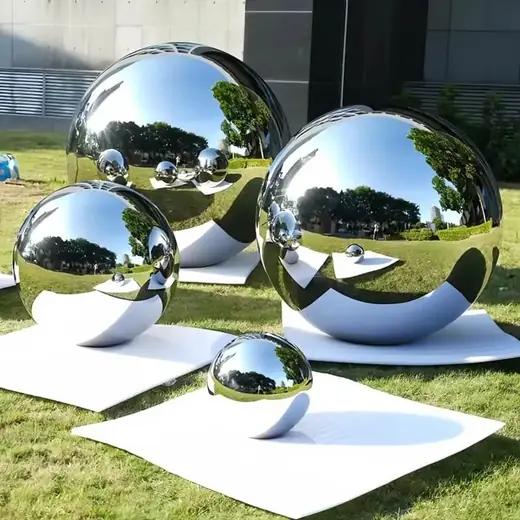
Stainless Steel Mirror-Faced Large Sphere Design B
View details
Large Modern Outdoor Garden Decorative Metal Art Abstract Sphere
View detailsLight scratches can be worked out by a specialist, but it means re-polishing an area and blending it, which is skilled work. Preventing damage with proper crating and careful handling is far cheaper than repairing it.
It looks spectacular and it shows every fingerprint. Where a piece is within arm's reach of the public all day, a brushed or hammered finish usually serves better and costs no more.
The grade decision costs little at the quotation stage and a great deal once a piece starts pitting. Here is how to make it properly.
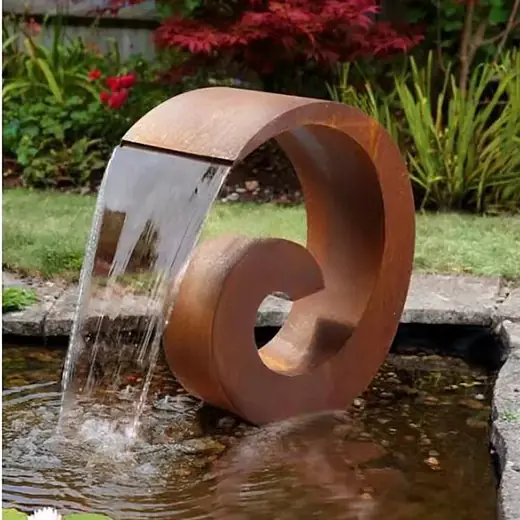
What weathering steel does over its first years outdoors, what it does to the paving underneath, and what to detail at design stage.
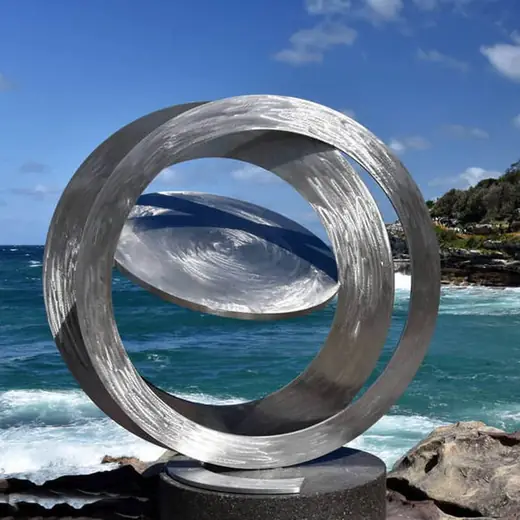
The single most common regret is a piece that is too small. Here is how to get the scale right before anything is fabricated.
Send the position and the constraints and we will tell you which way the decision should go for your case rather than in general.