
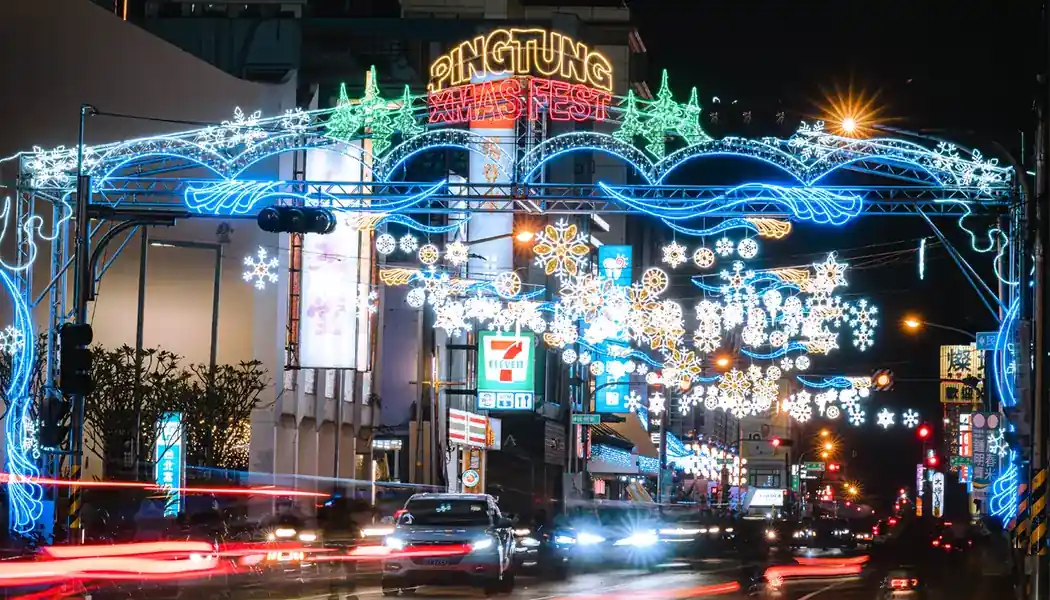
Installing Cross Street Motif Lights Safely
Survey, fixing, cabling and strike-down practice for motif lighting installed over a live carriageway.
Survey Before You Order
Record the bracket or catenary type, its condition, the span, the clearance over the carriageway and the power position for every location. This survey is what the frame is designed around. Ordering first and surveying later is the most expensive sequence there is.
Check What The Bracket Can Take
A flat 2D frame is chosen over a 3D form on cross-street positions for a reason: weight. The frame weight, the wind loading and the bracket's own condition all matter. Where the bracket is old, the limiting factor is usually the bracket, not the motif.
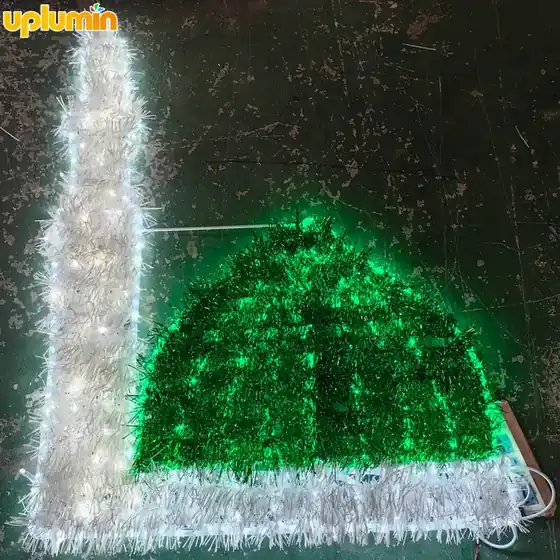
Unpack In Installation Order
Ask for crates labelled by street position. On a district programme this saves more time than any other single thing, because a crew working a traffic-managed window cannot afford to sort units on the ground.
Dress The Cabling Properly
Connectors go horizontally, never at the lowest point of a drop where water collects. Keep joints off the ground. Leave slack at corners so nothing is under tension when the structure moves in wind. IP65 protects against rain, not against sitting in a puddle.
Test Before The Platform Leaves
Power up and check each unit while the access platform is still under it. A fault found after the road reopens costs a second traffic management booking, which is usually more than the unit is worth.
Strike Down And Storage
Take units down dry if you can, and store them in the original crates with their fixing kits. Stoving varnished frames survive several seasons, but not if they are stacked wet in an open yard. Keep the crate labelling so next season's install starts from a known position list.
Keep reading
Related Pages
Product ranges
Project showcase
Questions
Questions On This Topic
Should cross street motifs be 2D or 3D?
2D in almost all cases. Flat frames weigh less and present less wind area, which is what existing street brackets are sized for.
Who specifies the fixing kit?
We do, from your bracket survey. Send a photograph and dimensions of the bracket with the enquiry and the fixings are set to it at drawing stage.
What is the most common installation mistake?
Connectors left at the lowest point of a cable drop. Water finds them, and a run goes dark in the first heavy week.
Want This Checked Against Your Actual Site
Send the photographs and dimensions. Advice on a real position beats advice in general.