
Principle and Characteristics of Ultrasonic Flaw Detection -
Principle of Ultrasonic Flaw Detection
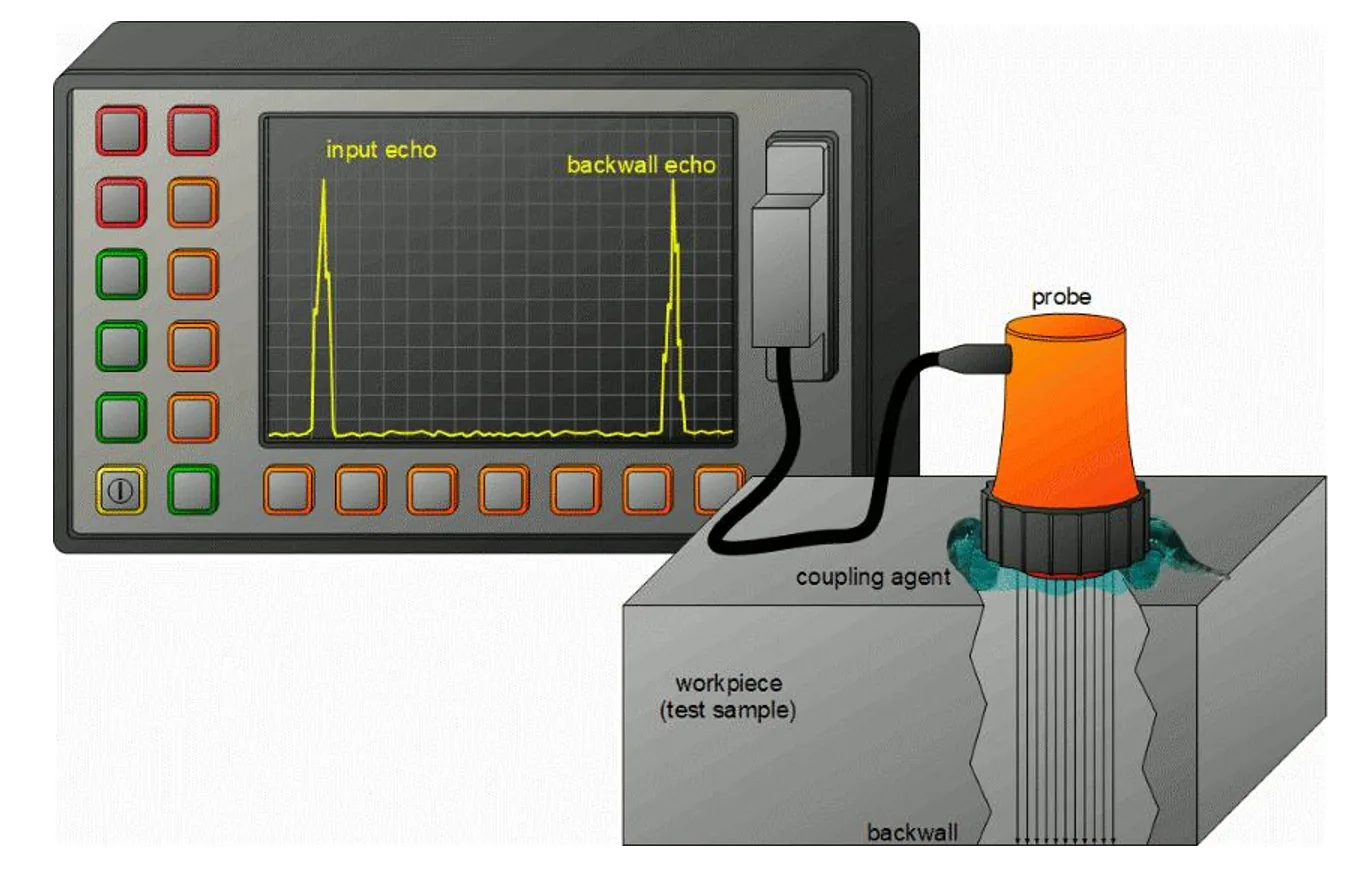
Ultrasonic flaw detection identifies internal defects by analyzing reflections at material interfaces. Ultrasonic waves penetrate metal and generate pulse waveforms when encountering defects or the bottom surface. Defect position and size are determined from the reflected wave patterns on the display screen. This method is recognized as the most effective approach for rail flaw detection worldwide.
Key Characteristics of Ultrasonic Waves
Ultrasonic waves reflect at interfaces between different materials, enabling detection of defects equal to or larger than the wavelength. Small defects below the wavelength may not reflect and can be bypassed by the wave. High-frequency ultrasonic waves exhibit strong directivity, allowing precise defect location. Ultrasonic energy is high; a 1 MHz wave carries energy equivalent to one million times that of a 1000 Hz sound wave at the same amplitude.
Application in Rail Inspection
The method detects transverse cracks in the rail head, which are invisible to visual inspection. It enables defect detection at operating speeds without requiring track possession. Data from A-scan and B-scan displays are recorded for later expert review. Non-destructive testing ensures rail integrity without altering the track structure.
Equipment Referenced in This Article
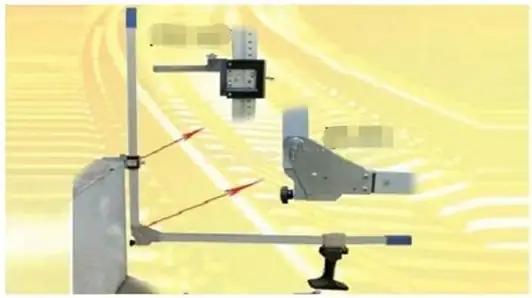
RAILWAY PLATFORM GAUGE
The Railway Platform Gauge is a portable measuring tool designed for precise measurement of the horizontal distance...
View Product →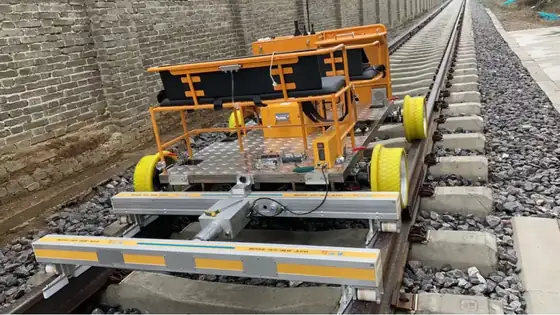
Track Geometry Measurement
The GJY-H-CK-22CM Track Geometry Measurement system is integrated into an electric flaw detection vehicle and runs at a...
View Product →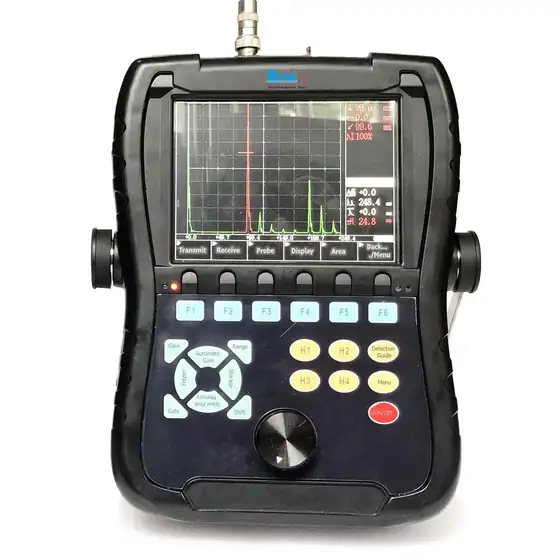
CK2108 Ultrasonic Flaw Detector
The CK2108 is a portable handheld ultrasonic flaw detector designed for rapid, accurate detection and evaluation of...
View Product →Frequently Asked Questions
How does ultrasonic flaw detection find rail defects?
It uses reflected ultrasonic waves from defects and the rail bottom surface to generate pulse waveforms on the screen, which are analyzed to determine defect location and size.
Can ultrasonic detection find small defects?
Defects equal to or larger than the ultrasonic wavelength will reflect the wave and be detected. Defects smaller than the wavelength may not reflect and could be missed.
Why is ultrasonic detection preferred for rail inspection?
It detects internal defects such as transverse cracks in the rail head that are invisible to visual inspection and can be performed at operating speeds.
What types of defects can be detected?
The system can detect cracks, inclusions, folds, pores, sand holes, and other internal flaws in rail material.
Is the detection process non-destructive?
Yes. Ultrasonic flaw detection does not alter or damage the rail structure during inspection.
How is the data used after inspection?
A-scan and B-scan data are recorded and stored for playback, expert review, and verification of suspected defect locations.
Does the method work at high speeds?
Yes. Ultrasonic detection is designed for use during rail operations, allowing defect identification without stopping the train or closing the line.
Ask Our Engineers About This Topic
If this article raised a question about your own track, send it to our engineering team.