Overview of Ultrasonic Rail Testing
Non Destructive Testing With Ultrasonic Technology
Ultrasonic testing enables in-depth inspection of rail structure without damaging the material or compromising its integrity. The method requires access to only one side of the rail, allowing continuous monitoring without disassembly. This supports routine inspection and corrosion checks while the rail remains in service.
Safety And Health Advantages Over Radiographic Testing
Unlike radiographic testing which uses high-energy x-rays and poses a long-term radiation hazard to technicians, ultrasonic testing is non-ionizing and safe. The technology is widely used in medical imaging, such as obstetrics, and carries no known health risk during rail inspection operations.
Detection Of Internal Defects At Operating Speed
Ultrasonic rail testing detects internal defects such as transverse cracks in the rail head that are invisible to visual inspection. The method operates at running speed, enabling inspection during scheduled maintenance windows without disrupting service.
Data Recording For Expert Review And Verification
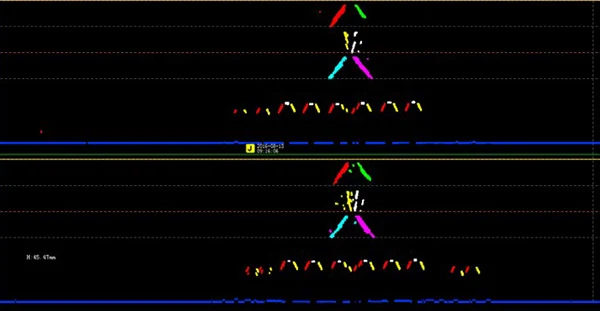
All ultrasonic inspection results are recorded in A-scan and B-scan formats. This allows for playback, analysis, and re-review by qualified personnel after the inspection run, ensuring that suspected defects are verified before any maintenance action.
Application Across Rail Infrastructure Types
The technology is used across state-owned railways, private and industrial lines, ports, mines, urban metro systems, and rail maintenance contractors. It supports both routine checks and follow-up verification after rail grinding, welding, or replacement.
Equipment Referenced in This Article
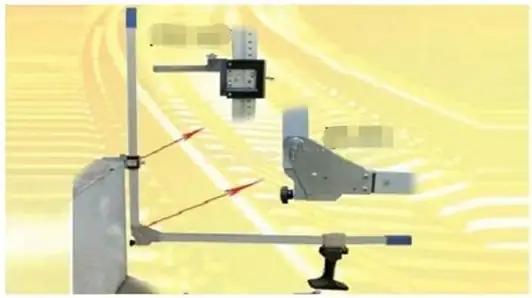
RAILWAY PLATFORM GAUGE
The Railway Platform Gauge is a portable measuring tool designed for precise measurement of the horizontal distance...
View Product →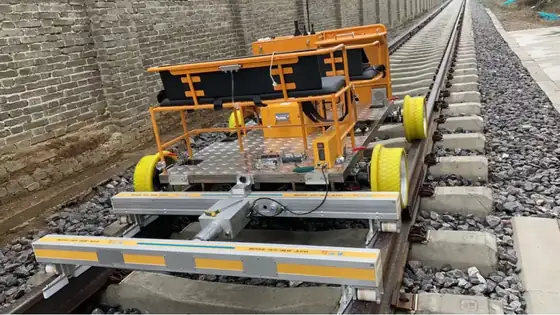
Track Geometry Measurement
The GJY-H-CK-22CM Track Geometry Measurement system is integrated into an electric flaw detection vehicle and runs at a...
View Product →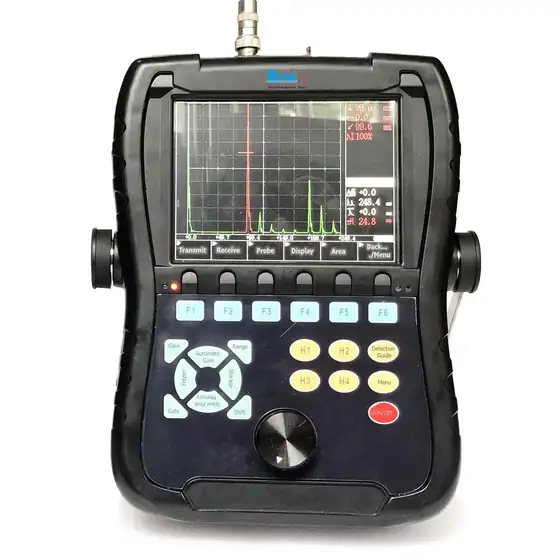
CK2108 Ultrasonic Flaw Detector
The CK2108 is a portable handheld ultrasonic flaw detector designed for rapid, accurate detection and evaluation of...
View Product →Frequently Asked Questions
What types of rail defects can ultrasonic testing detect?
It detects internal defects such as transverse cracks in the rail head, which are not visible to visual inspection and can lead to derailments.
Is ultrasonic testing safe for operators?
Yes. Unlike radiographic testing, ultrasonic testing does not use ionizing radiation and poses no known health hazard to technicians.
Can the rail remain in service during inspection?
Yes. Ultrasonic testing requires access to only one side of the rail and does not require disassembly, so the rail can stay in place during routine inspection.
How is inspection data managed after the run?
Data is recorded in A-scan and B-scan formats and can be played back, transferred, and reviewed by experts for verification of suspected defects.
Is ultrasonic testing suitable for night operations?
Yes. The system includes lighting that provides not less than 2 lx at 50 m, making it suitable for inspection during night maintenance windows.
Can ultrasonic testing be used on different rail profiles?
Yes. Probe configurations can be matched to the specific rail profile in service, and console and report formats can be adapted to the operating railway.
Do you provide technical support for inspection crews?
Yes. Pre-sales, in-sales, and after-sales technical service, on-site engineer training, and construction team support are provided with each order.
Ask Our Engineers About This Topic
If this article raised a question about your own track, send it to our engineering team.