
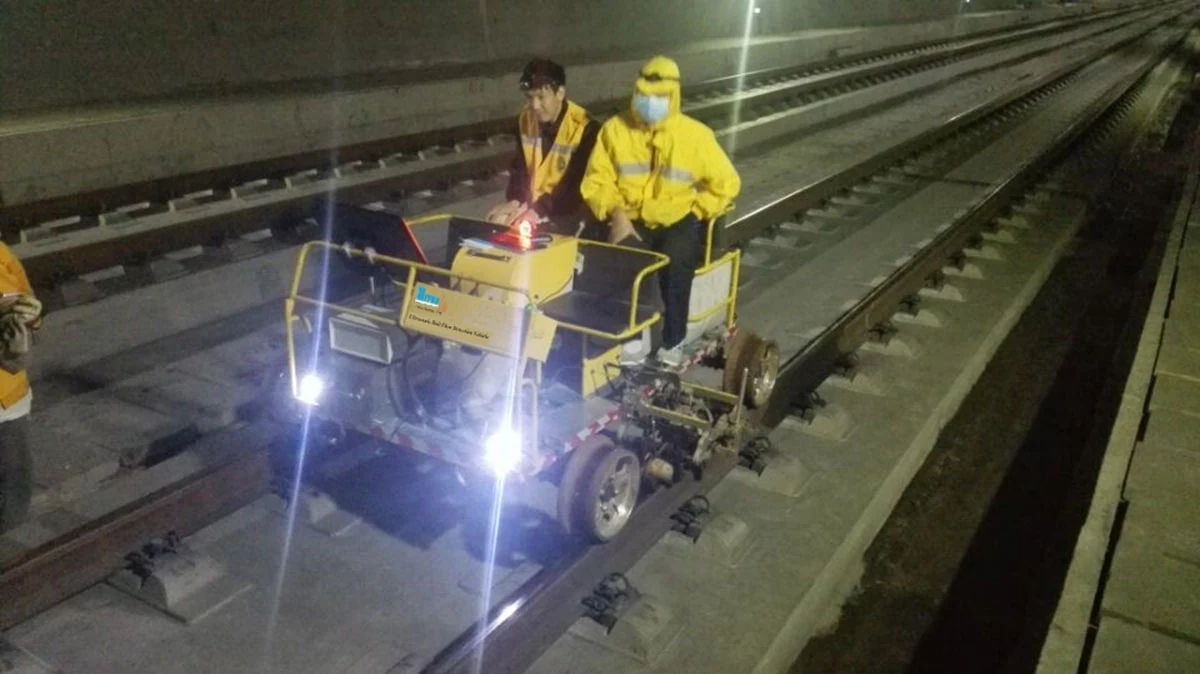
How to Make Preparations for Rail Flaw Detection
Before any rail flaw detection run, verify instrument performance through comprehensive debugging. Check voltage indication, probe and protective film alignment, connection line pressure, probe pressure, and waterway integrity. This ensures the instrument operates correctly and avoids failures during track deployment.
Once on track, calibrate each channel’s alarm threshold, probe position, and detection sensitivity based on the specific rail type and condition. Accurate setup is essential for reliable defect detection and consistent data quality.
During operation, maintain detection speed according to track conditions: slow at joints, reduce speed in the rail waist area, and maintain uniform speed in the rail head. Ensure alarm sounds are clear, waveforms are distinct, and all probe positions on the rail are visible. Repeat detection if anomalies appear in the display or alarm.
For complex track features such as staggered joints, insulated joints, and switch rails, perform detection in both forward and reverse directions. Increase gain and water injection to improve signal clarity and reduce detection blind spots.
In areas with severe rail head spalling, instrument detection may fail. Use manual inspection methods in conjunction with automated systems. Strictly follow operating procedures to prevent missed or incorrect detection.
Use multiple probes and detection methods to verify suspicious signals at multiple levels. Confirm all waveform displays are valid and avoid missing any potential defect locations to prevent accidents due to inspection errors.
Rotate probe detection direction monthly: use inner rear outer in odd months, outer rear inner in even months. For curved tracks with side wear, adjust probe alignment regularly to minimize detection blind areas and maintain consistent coverage.
Equipment Referenced in This Article
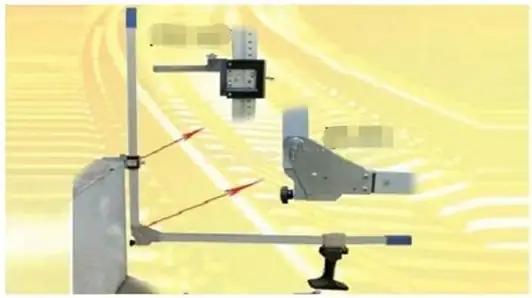
RAILWAY PLATFORM GAUGE
The Railway Platform Gauge is a portable measuring tool designed for precise measurement of the horizontal distance...
View Product →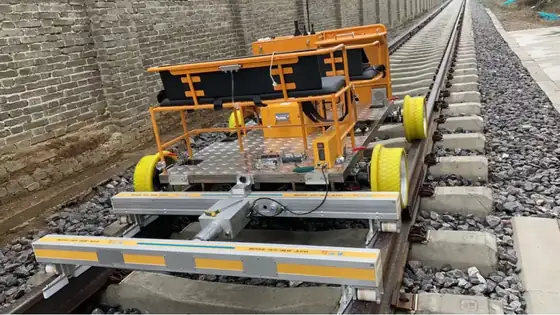
Track Geometry Measurement
The GJY-H-CK-22CM Track Geometry Measurement system is integrated into an electric flaw detection vehicle and runs at a...
View Product →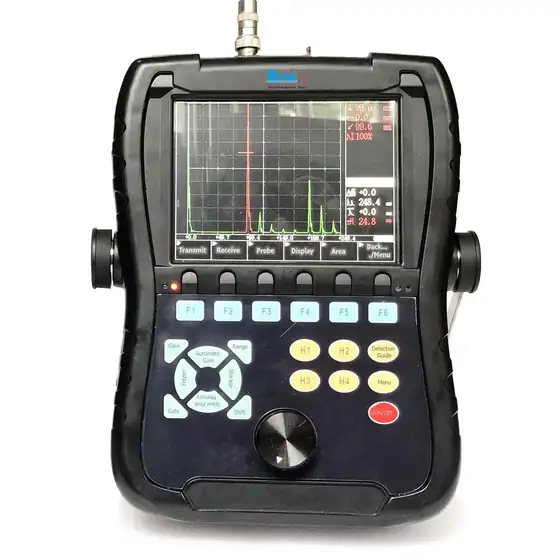
CK2108 Ultrasonic Flaw Detector
The CK2108 is a portable handheld ultrasonic flaw detector designed for rapid, accurate detection and evaluation of...
View Product →Frequently Asked Questions
What should I check before starting a rail flaw detection run?
Verify voltage indication, probe and protective film alignment, connection line pressure, probe pressure, and waterway integrity. Perform a full system debug to ensure the instrument is functional before deployment.
How do I adjust the detection sensitivity on the track?
After placing the equipment on track, calibrate each channel’s alarm threshold, probe position, and sensitivity based on the rail type and condition to ensure accurate detection.
What speed should I maintain during detection?
Maintain 15 km/h for continuous detection. Slow down at joints and in the rail waist area, and keep a uniform speed in the rail head to ensure consistent data quality.
How do I handle complex track features like switch rails?
Perform detection in both forward and reverse directions. Increase gain and water injection to improve signal quality and reduce blind spots in these challenging areas.
What if the rail head is severely spalled?
Instrument detection may fail in areas with severe spalling. Use manual inspection methods in combination with automated systems and follow procedures strictly to avoid missed detection.
How often should I rotate the probe detection direction?
Rotate probe direction monthly: inner rear outer in odd months, outer rear inner in even months. This helps reduce blind spots and improves detection reliability.
How do I verify suspicious signals?
Use multiple probes and detection methods to check suspicious signals at multiple levels. Confirm all waveforms and positions before making any judgment to avoid missed or incorrect detection.
Ask Our Engineers About This Topic
If this article raised a question about your own track, send it to our engineering team.