
Development track of rail flaw detection vehicle in Asia -
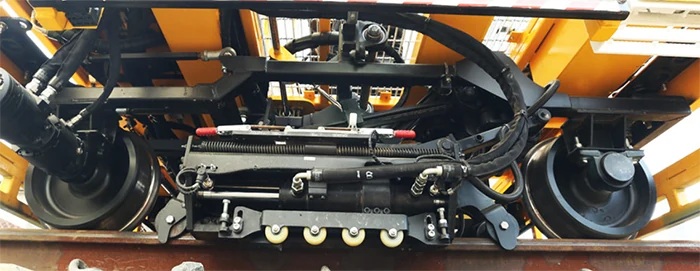
The development of rail flaw detection vehicles in Asia reflects distinct regional approaches. Japan primarily manufactures its own detection vehicles, importing only minor components from Australia. These vehicles are built on specialized railway platforms and operate at detection speeds between 30 and 40 km/h. They combine flaw detection with rail profile measurement, including wear assessment. The Tokyo Gauge Company, known as Tokimec, uses sliding shoe ultrasonic sensors capable of 40 km/h detection and has deployed these systems on Shinkansen lines. An alternative system imported from Australia’s GEMCO company uses wheel sensors with a maximum detection speed of 33 km/h. The average annual inspection mileage for a single Japanese vehicle is approximately 5,000 km.
China’s journey in acquiring large-scale rail flaw detection vehicles began in 1989 with the import of a vehicle from Australia’s GEMCO company. That initial import failed to meet contractual technical requirements. From 1993 onward, Pandrol Jackson’s SYS-1000 system was introduced. In recent years, Sperry developed the 1900-type detection system tailored for China’s railway conditions. This system incorporates a 70° deflection ultrasonic probe, enhancing detection of rail head core damage. The probe wheel diameter was increased from 6.5 inches to 9 inches, reducing internal ultrasonic sound path length. Since 2000, China’s application of rail flaw detection vehicles has matured significantly. By 2010, the total flaw detection mileage across the national network reached 283,600 km, with an average annual inspection mileage per vehicle exceeding 10,000 km—demonstrating higher operational efficiency than comparable systems in Europe and North America.
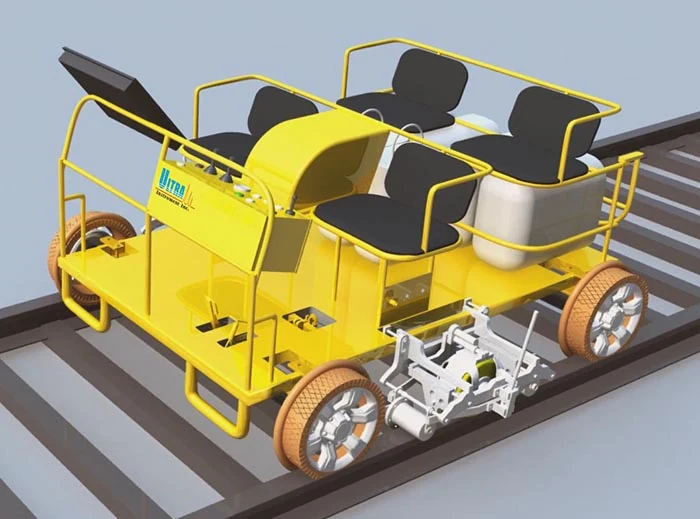
Around 2010, Ultra Instrument Inc. developed the UR18-D dual-rail electric ultrasonic flaw detection vehicle to meet specific market needs in China. The vehicle is powered by lithium battery and features four walking wheels. It enables real-time, simultaneous detection of both rails. The design emphasizes cost-effectiveness, practicality, and economic operation. The system supports continuous inspection at 15 km/h and can travel at up to 20 km/h between inspection sites. It is built for rapid deployment, with a modular platform that allows two people to carry and assemble the vehicle on track within five minutes without lifting equipment.
Equipment Referenced in This Article
RAILWAY PLATFORM GAUGE
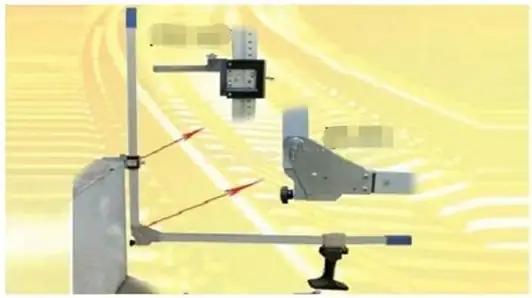
The Railway Platform Gauge is a portable measuring tool designed for precise measurement of the horizontal distance...
View Product →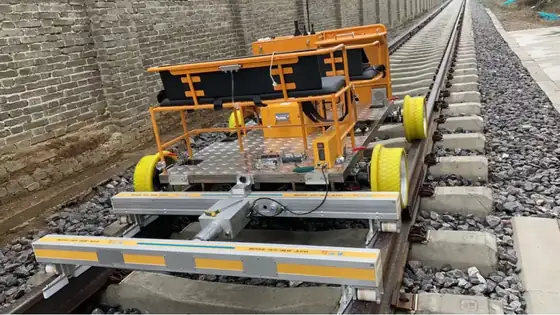
Track Geometry Measurement
The GJY-H-CK-22CM Track Geometry Measurement system is integrated into an electric flaw detection vehicle and runs at a...
View Product →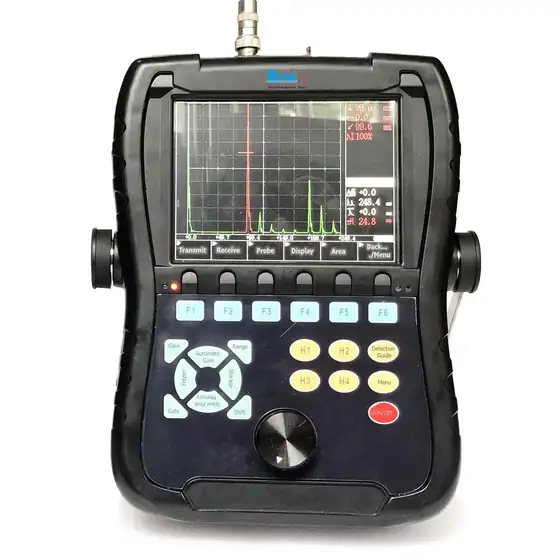
CK2108 Ultrasonic Flaw Detector
The CK2108 is a portable handheld ultrasonic flaw detector designed for rapid, accurate detection and evaluation of...
View Product →Frequently Asked Questions
What is the detection speed of the UR18-D vehicle?
The UR18-D performs continuous detection at not less than 15 km/h, with travel speeds of not less than 20 km/h between inspection sites.
How does the UR18-D differ from Japanese and Chinese imported systems?
Unlike Japanese systems that use sliding shoe sensors and operate at 30–40 km/h, the UR18-D uses a wheel probe system with lithium battery drive, enabling real-time dual-rail detection at 15 km/h and easier on-site deployment.
What improvements were made in the UR18-D compared to earlier Chinese systems?
The UR18-D features a modular design for rapid on-track assembly, lithium battery power, and a 9-channel wheel probe. It is designed for practical, cost-effective operation with real-time dual-rail detection.
Can the UR18-D be used in remote or low-accessibility areas?
Yes. The vehicle’s modular platform allows two people to carry and assemble every component on track within five minutes, without requiring lifting equipment.
What is the endurance of the UR18-D per shift?
The vehicle provides endurance of not less than 60 km or 4 hours of continuous operation per shift, supporting extended inspection runs.
Does the UR18-D support data recording and review?
Yes. The system records A-scan and B-scan data during detection, which can be transferred to a computer for playback and expert review after the inspection.
How is the UR18-D powered?
The vehicle is driven by a lithium battery, enabling quiet, emission-free operation suitable for urban and sensitive track environments.
Ask Our Engineers About This Topic
If this article raised a question about your own track, send it to our engineering team.