
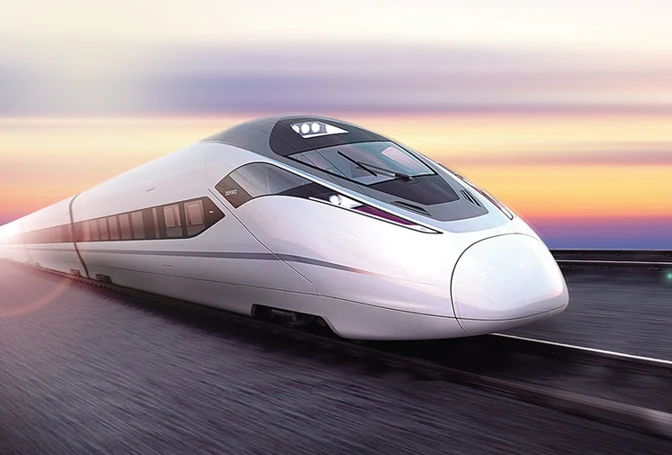
Development direction of ultrasonic rail flaw detection
Detection Speed And Positioning
For mixed passenger and freight railways with increasing freight car speeds, the ideal detection speed for ultrasonic flaw detection vehicles is expected to be between 80 and 100 km/h. This range allows periodic inspections without disrupting transportation schedules and enables integration into existing train diagrams. For high-speed railways, where bullet trains operate at higher speeds, detection at 80 to 100 km/h remains feasible during night maintenance windows, aligning with current high-speed rail maintenance management practices.
Sensor Selection And Technology
Wheel sensors are preferred due to their adaptability to various track conditions, including slotted lines and irregular rail head shapes. They perform reliably in cold climates, unlike sliding shoe sensors which face operational challenges in winter. Although sliding shoe sensors were historically associated with higher speeds, advancements in wheel sensor technology—such as those developed by Sperry—have narrowed the speed gap. All ultrasonic flaw detection vehicles used by Ultra Instrument Inc. employ wheel sensors, which have demonstrated long-term reliability and adaptability. Future development should focus on wheel sensors, with sliding shoe sensors serving as a supplementary detection method.
Installation Mode Comparison
Two primary installation modes exist globally: detection trolley and bogie truck. Bogie truck installations achieve slightly higher detection speeds, with European data indicating 80 to 100 km/h. In contrast, detection trolley systems in China operate at 40 to 60 km/h. The trolley mode places higher demands on the centering mechanism of the sensor, requiring precise alignment for consistent performance. The choice between modes depends on speed requirements, track conditions, and maintenance infrastructure.
Equipment Referenced in This Article
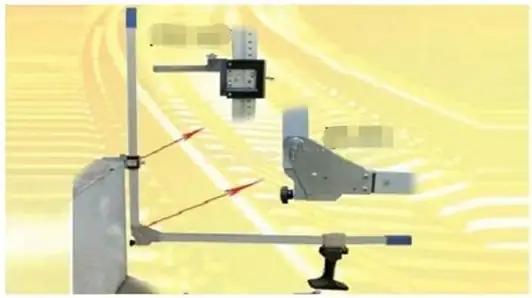
RAILWAY PLATFORM GAUGE
The Railway Platform Gauge is a portable measuring tool designed for precise measurement of the horizontal distance...
View Product →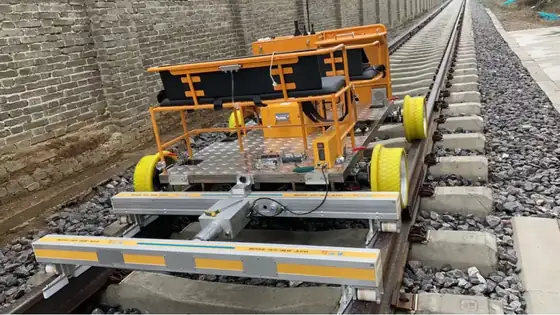
Track Geometry Measurement
The GJY-H-CK-22CM Track Geometry Measurement system is integrated into an electric flaw detection vehicle and runs at a...
View Product →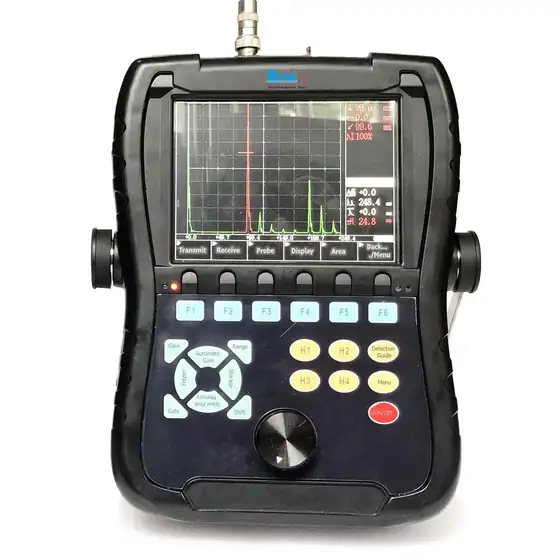
CK2108 Ultrasonic Flaw Detector
The CK2108 is a portable handheld ultrasonic flaw detector designed for rapid, accurate detection and evaluation of...
View Product →Frequently Asked Questions
What is the ideal detection speed for ultrasonic flaw detection vehicles?
The ideal detection speed is between 80 and 100 km/h for mixed passenger and freight railways, allowing periodic inspections without disrupting train schedules.
Why are wheel sensors preferred over sliding shoe sensors?
Wheel sensors offer better adaptability to track conditions, including slotted lines and irregular rail heads, and perform reliably in cold climates where sliding shoe sensors struggle.
Can wheel sensors achieve speeds above 40 km/h?
Yes. Advances in wheel sensor technology, such as those by Sperry, have enabled speeds exceeding 40 km/h, reducing the historical speed advantage of sliding shoe sensors.
What are the differences between bogie truck and detection trolley installation modes?
Bogie truck installations allow higher detection speeds (80–100 km/h), while detection trolley systems typically operate at 40–60 km/h and require more precise centering mechanisms.
Is sliding shoe sensor still used in modern systems?
Sliding shoe sensors are used as a supplementary detection method, but future development focuses on wheel sensors due to their reliability and adaptability.
How does detection speed affect maintenance scheduling?
Detection speeds of 80–100 km/h allow integration into train diagrams for mixed traffic lines and enable efficient night-time inspections on high-speed railways.
What factors influence the choice of installation mode?
Speed requirements, track conditions, and the precision of the centering mechanism influence whether bogie truck or detection trolley installation is selected.
Ask Our Engineers About This Topic
If this article raised a question about your own track, send it to our engineering team.