
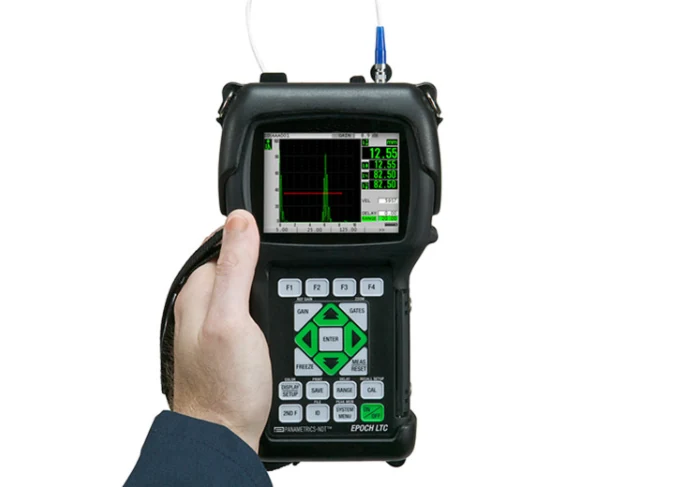
Advantages and Disadvantages of Ultrasonic Flaw Detection
Advantages of Ultrasonic Flaw Detection
Strong penetration ability allows detection depth of several meters. High sensitivity detects reflectors equivalent to air gaps with diameter of a few tenths of a millimeter. Accurate determination of defect orientation, size, and shape within the material. Inspection requires access to only one side of the object. Defect results are available immediately after inspection. Safe operation with lightweight and portable equipment.
Disadvantages of Ultrasonic Flaw Detection
Requires experienced personnel for proper operation. Difficult to inspect rough, irregular, thin, small, or heterogeneous materials. Challenging to achieve precise qualitative and quantitative characterization of detected defects. Not suitable for structures with cavities. Limited traceability unless photographic records are taken.
Application in Rail Inspection
Used in ultrasonic rail flaw detection vehicles, hand push trolleys, and portable flaw detectors. Detects transverse cracks in rail heads and other internal defects invisible to visual inspection. Supports continuous inspection at operating speeds with real-time data recording. Enables follow-up verification through A-scan and B-scan data playback.
Equipment Referenced in This Article
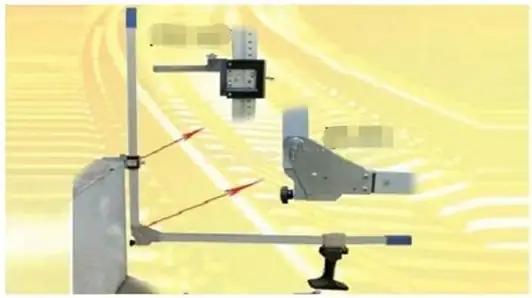
RAILWAY PLATFORM GAUGE
The Railway Platform Gauge is a portable measuring tool designed for precise measurement of the horizontal distance...
View Product →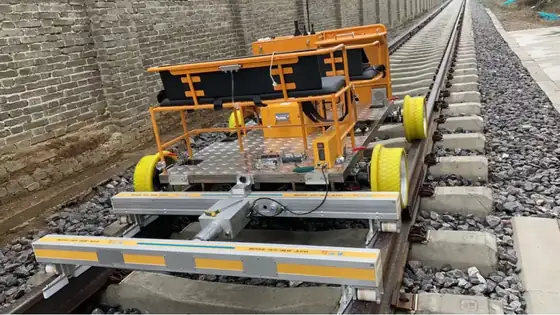
Track Geometry Measurement
The GJY-H-CK-22CM Track Geometry Measurement system is integrated into an electric flaw detection vehicle and runs at a...
View Product →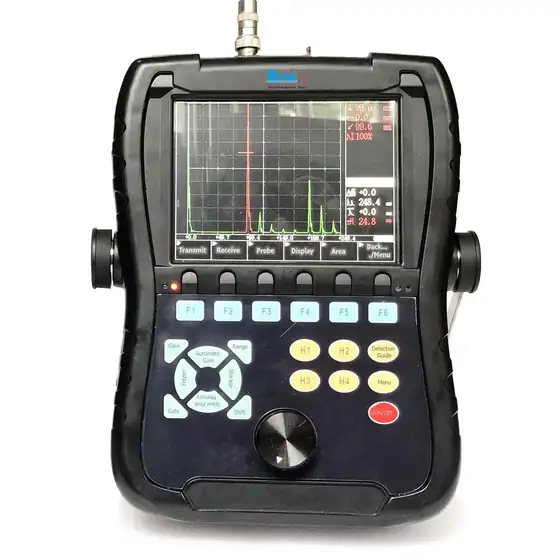
CK2108 Ultrasonic Flaw Detector
The CK2108 is a portable handheld ultrasonic flaw detector designed for rapid, accurate detection and evaluation of...
View Product →Frequently Asked Questions
What types of defects can ultrasonic detection find in rails?
It detects internal defects such as transverse cracks in the rail head, inclusions, folds, pores, and sand holes using primary and secondary wave reflections.
Why is ultrasonic detection preferred over visual inspection?
Visual inspection cannot detect internal defects like transverse cracks in the rail head, which are a major cause of derailments. Ultrasonic detection finds these defects at operating speed and records data for review.
Can ultrasonic flaw detection be used on all rail types?
It works best on uniform, smooth rail sections. It is difficult to use on rough, thin, irregular, or heterogeneous materials, and not suitable for rails with cavities.
Is special training required to operate ultrasonic equipment?
Yes. Operation requires experienced personnel due to the complexity of interpreting A-scan and B-scan data and setting correct probe angles and sensitivity.
How is inspection data preserved for future review?
Data is recorded in real time as A-scan and B-scan traces, speed, sensitivity, and job information, allowing playback and expert review after the inspection.
Does ultrasonic detection require access to both sides of the rail?
No. The method only requires access to one side of the rail, making it suitable for use on tracks where access is limited.
Can ultrasonic flaw detection be used at night?
Yes. Equipment is designed with night lighting and readable displays, allowing safe operation during night maintenance windows.
Ask Our Engineers About This Topic
If this article raised a question about your own track, send it to our engineering team.