
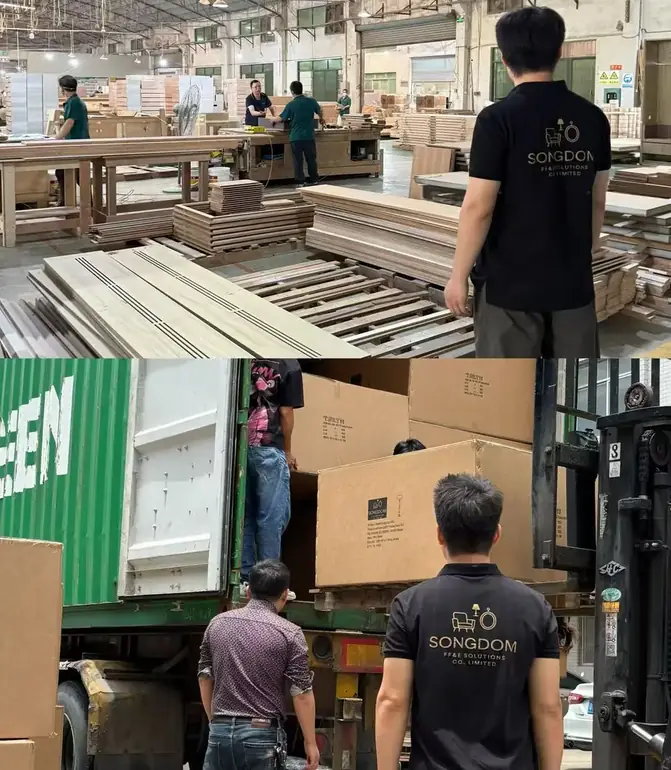
How to Import Project FF&E From China Without Surprises
Documentation, certification, consolidation and sequencing — the four places import programmes go wrong.
Importing FF&E for a project is not the same as importing goods for a warehouse. There is a fixed date at the other end, the goods have to arrive in an order that matches a construction programme, and most of them have to satisfy a local inspector before they can be installed. Four things decide whether that goes smoothly.
Certification comes first, not last
The destination market's requirement determines what can be manufactured, so it belongs at design stage. UL, ETL, FCC, FDA, cUPC, WaterSense, UKCA, WRAS, CE and SAA are all live requirements depending on the product and the market. Discovering a certification gap at final inspection means re-manufacturing, not re-labelling.
Documentation should travel with the goods
Packing lists, certificates and compliance files prepared to move with the shipment keep the receiving end from stalling. A compliant product that cannot be proven compliant behaves, at a site gate, exactly like a non-compliant one.
Consolidate by what the site can install
Shipping by factory is convenient for the supply chain and useless for the site. Consolidating categories from multiple factories so the property receives complete room sets is what lets the site actually progress on delivery day.
Sequence against the construction programme
Production dates should be set against the construction programme and the opening date rather than against factory convenience. Where the schedule is at risk, changing the production sequence or the shipping mode protects the opening, and both options need to be available before they are needed.
Plan the last mile
Factory-to-site shipment removes a handover. On the Hyatt House and Hotel Indigo projects, Songdom managed shipment from the manufacturing factories directly to the hotel site, so the client carried no logistics coordination work at all.
Build in an inspection gate before the container closes
Everything above assumes the goods are correct. Final inspection before packing is the last point at which a mistake is cheap.
Key Takeaways
- Certification decisions belong at design stage
- Compliance files should move with the shipment
- Consolidate by room set, not by factory
- The last inspection before packing is the cheapest correction point
Songdom FF&E Solutions sources and inspects project FF&E for hospitality, airport, hospital, residential and commercial projects from offices in Foshan, China and Nha Trang, Vietnam.
Other Categories On The Same Package
 Furniture
Guest Room Case Goods
Wardrobes, desks, nightstands and credenzas built by factories with 20 to 25 years of hotel work.
View product Lighting
Hospitality Table Lamps and Desk Lamps
Custom guest-room and public-area table lamps, inspected to the drawing before the carton is sealed.
View product Door & Window
Hotel Windows and Doors
Window and door packages sourced alongside the interior scope on one programme.
View productWhere This Has Been Delivered
 Hospitality
Hyatt House West Chester Ohio
Full-scope lighting and lighted mirror procurement with factory-to-site logistics handled end to end.
Read case Hospitality
Hotel Indigo Atlanta Vinings by IHG
One-stop lighting and lighted mirror sourcing with a documented inspection record on every lamp type.
Read case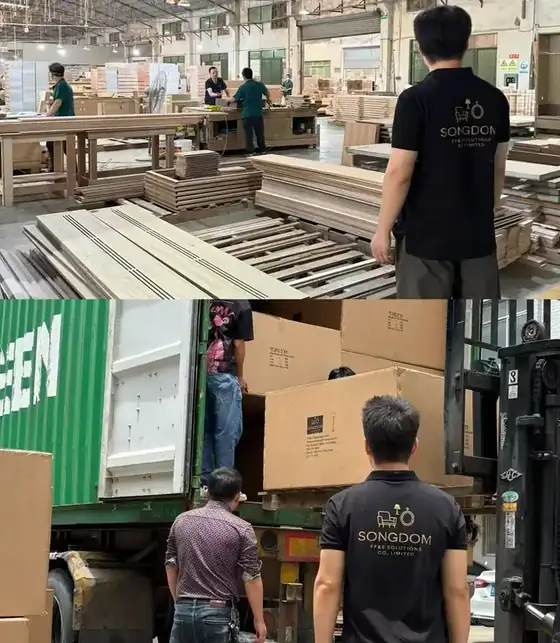

Reader Questions
Can you ship directly to the project site?
Yes. On the Hyatt House and Hotel Indigo projects Songdom managed shipment from the manufacturing factories directly to the hotel site.
Who handles the freight coordination?
Songdom works with factories, shipping partners and clients to keep production aligned with opening schedules, and adjusts the production and shipping method when the schedule requires it.
What happens if the schedule slips?
The production sequence or the shipping mode is adjusted to protect the opening date, which is why both need to be arranged before they are needed.
Put This Into Practice On Your Project
Send the FF&E schedule and we will apply exactly this process to your package.