
- Home
- Project Photographs
- Stainless Channel Covers In A Finished Floor
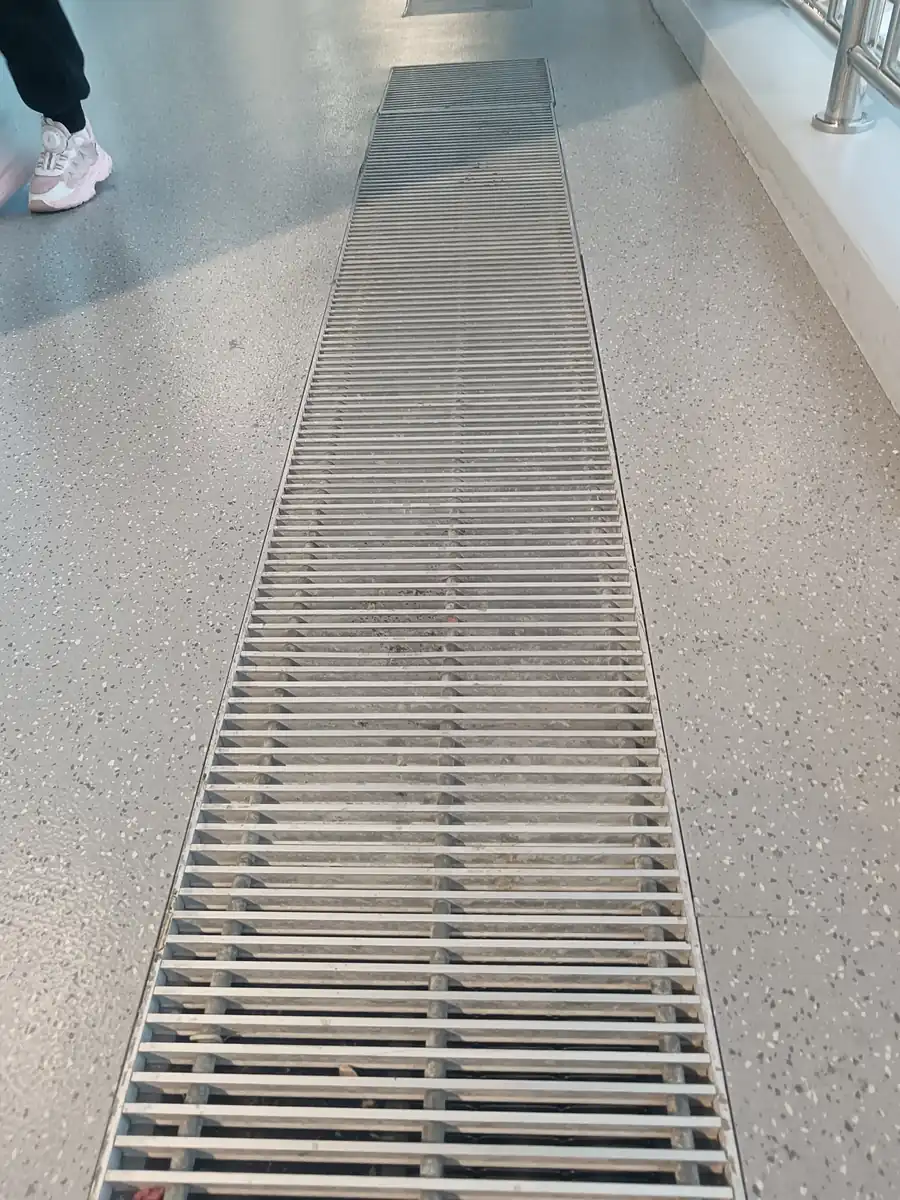
Stainless Channel Covers In A Finished Floor
A slot drain run set into a finished interior floor, photographed by the factory with the covers in place and the floor in use.
The Challenge
An interior floor channel where the covers are lifted for cleaning, the floor is washed down, and the slab left very little depth for the grating.
Customer Pain Points
- Galvanized covers do not survive a chemical washdown regime
- The slab depth available was less than a conventional section needs
- Panels long enough to be efficient are too heavy to lift every shift
What Was Specified
Stainless steel grating on a shallow but thick bearing bar with an open round cross bar, divided into liftable panel lengths and acid passivated after fabrication so the cut ends at each panel joint are protected.
The Result
The covers sit flush in the finished floor and come up by hand for cleaning. The photograph the factory publishes is of the installed run.
Client name, contract value and quantity are not published by the source site and are not invented here. The photograph is the factory’s own.
How Work Like This Is Built
Drawing And 3D Model
A grating that is wrong on paper is wrong in steel, and steel is expensive to be wrong in.
The design team models the panel, the frame and the opening it has to sit in before any bar is cut, so bearing bar pitch, panel division and frame clearance are agreed in a drawing rather than discovered on site.
Material Selection
Carbon steel and stainless steel fail in completely different places.
Carbon steel with a hot-dip galvanized coat for general traffic and drainage, stainless steel with acid passivation where washdown, chloride or food-grade cleaning is involved. Aluminium alloy is produced where weight is the constraint.
Cutting And Stamping
Bar ends that are not square never sit flat in a frame.
Bearing bar and cross bar stock is cut and stamped on the plant’s laser cutting and stamping equipment, which is also what makes serrated and toothed edges repeatable across a batch.
Pressure Welding Or Press Locking
The joint between bearing bar and cross bar is the whole strength of a panel.
Welded panels are produced on the automatic pressure welding line. Press locked panels are assembled by forcing the cross bar into the bearing bar under pressure, which is what gives a flush top surface without a weld bead.
Framing And Fabrication
Most grating complaints are about edges, not about the mesh.
Banding bar, end plates, hooks, hinges, lifting handles and cut-outs for pipework are fabricated to the drawing, so the panel arrives as a finished cover rather than as a sheet to be trimmed on site.
Surface Treatment
The coating decides how many winters a panel survives.
Hot-dip galvanizing, electroplated galvanizing, painting or acid passivation, chosen against the environment the panel will live in rather than against the invoice.
Inspection Before Packing
A panel that does not drop into its frame is scrap once it is in a container.
Panels are checked against the drawing for size, squareness, bar pitch and coating finish before they are banded and stacked.
Packing And Export
Grating is heavy, sharp and easy to damage in transit.
Panels are stacked flat, banded and packed for sea freight, which is the route most of this plant’s output takes.
Products From The Families Involved
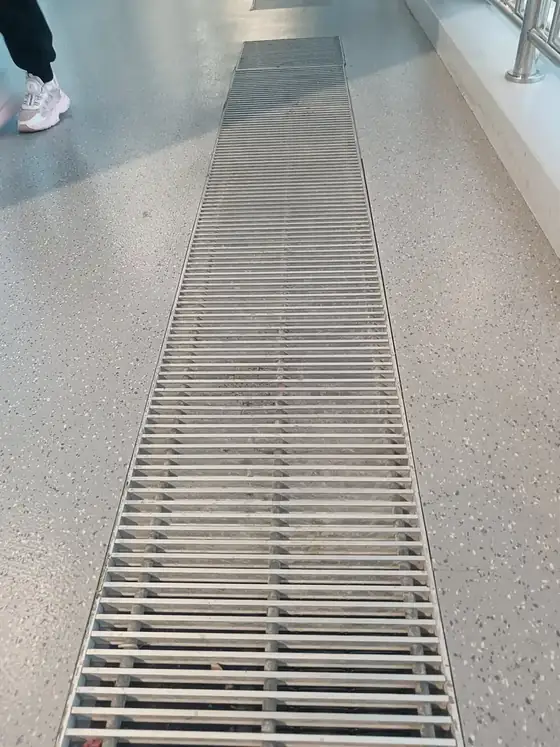
Ditch Steel Grating 30x5 Stainless Steel
Stainless steel ditch grating on 30x5 bearing bar with an 8 mm round cross bar, acid passivated, for interior floor channels that are washed down.
See the specification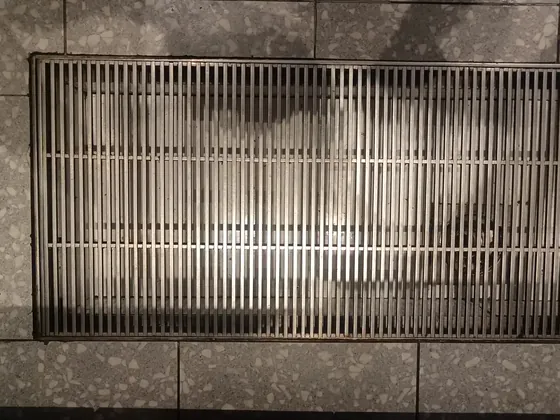
Heel Guard Grating 25x6 Stainless Steel
Stainless steel heel guard panel on 25x6 bearing bar with 6x6 cross bar, acid passivated, for washdown floors and visible interior runs.
See the specification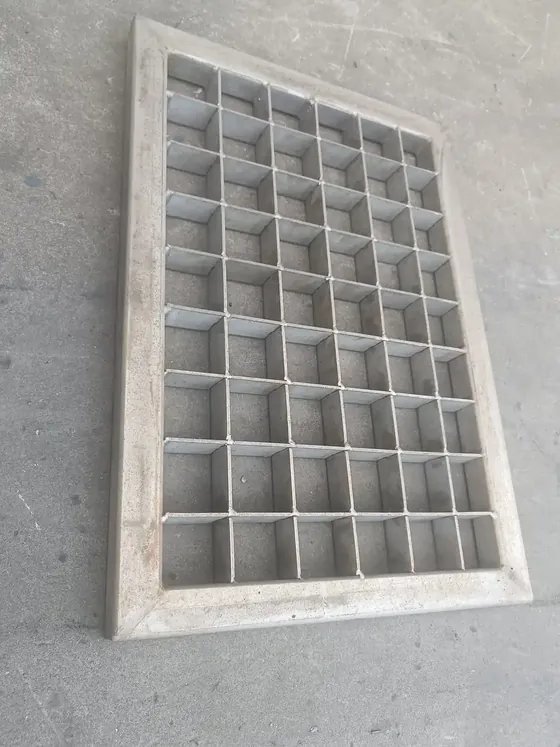
Press Locked Grating 30x2 Stainless Steel
Light stainless press locked panel with matched 30x2 bearing and cross bars, acid passivated, for hygienic floors and light-duty visible decks.
See the specificationProduct Families On This Page
Planning A Project Like This
Send a photograph of the position, the mounting available and the quantity you are planning. A drawing and a quotation come back by email.