
Category
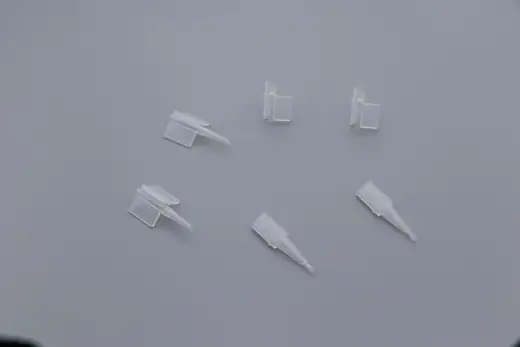
Luer Fittings And Connectors
Molded luer locks, slip adapters, caps and stopcocks that mate reliably with standard syringes and tubing sets.
Browse Category →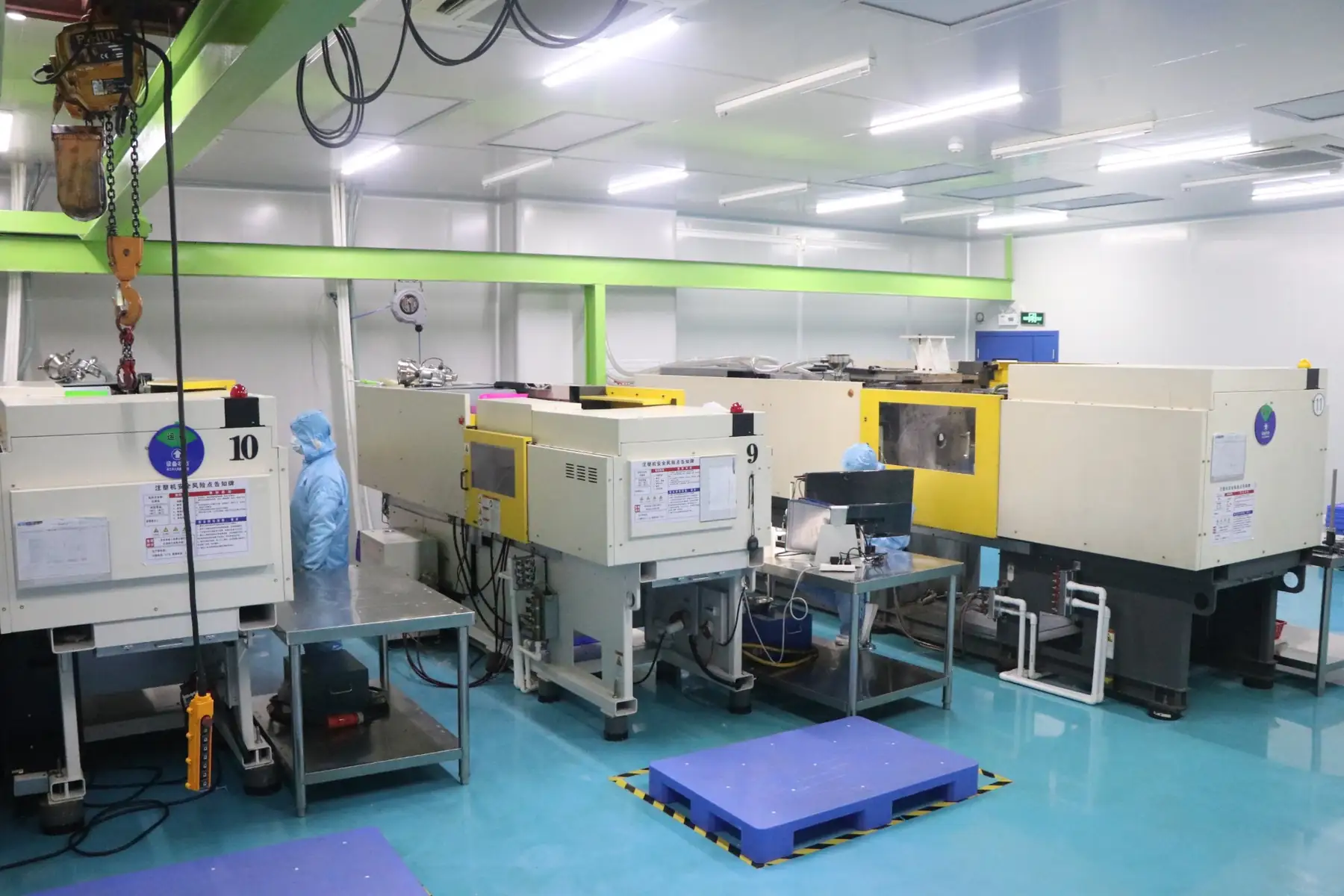
Tooling and clean room molding for disposable diagnostic and delivery components, built in Shenzhen since 2007 under ISO 13485:2016.
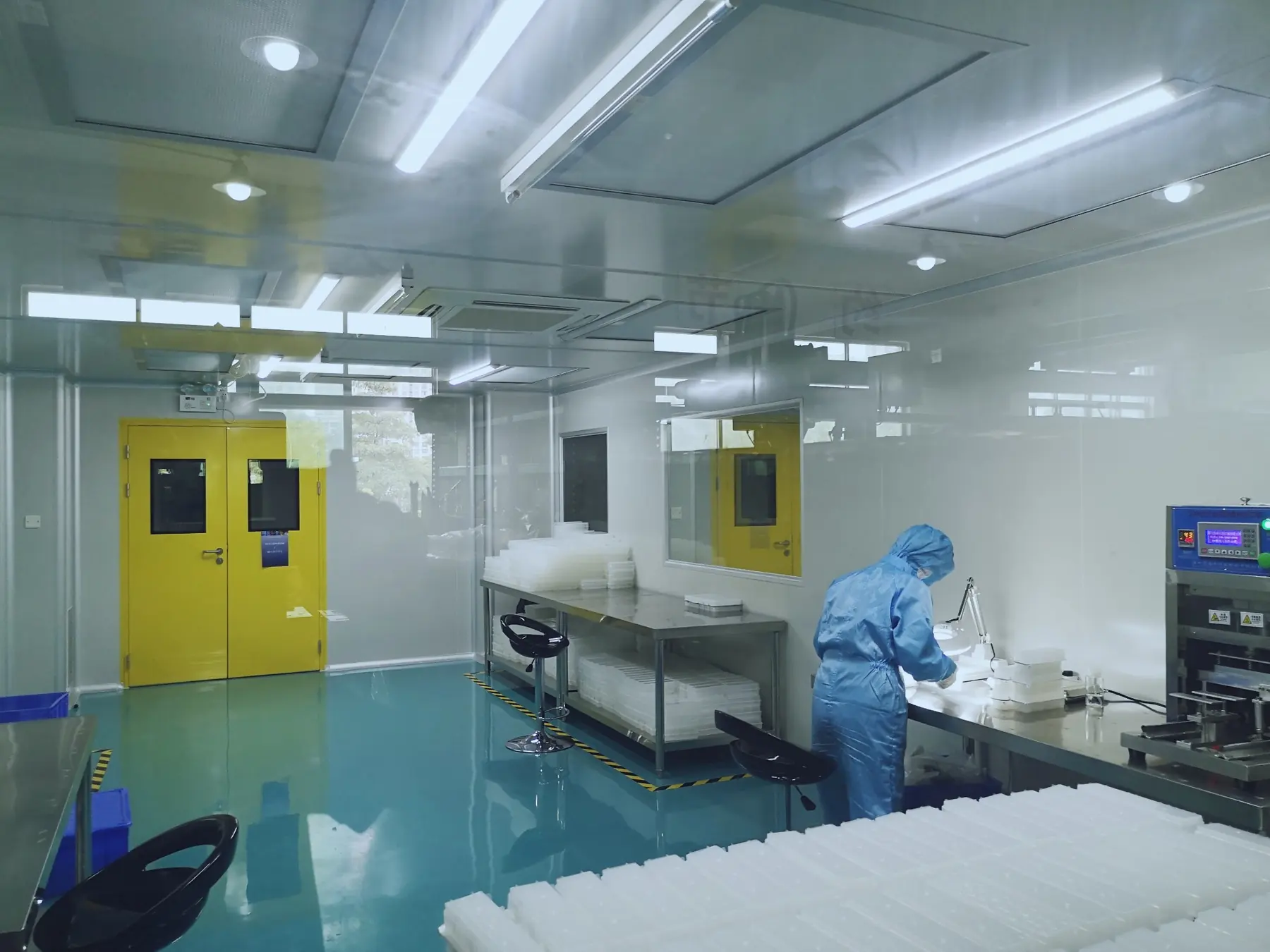
Molds cut to 0.002 mm and parts molded in an ISO 8 clean room, so tooling tolerance survives all the way to the packed carton.
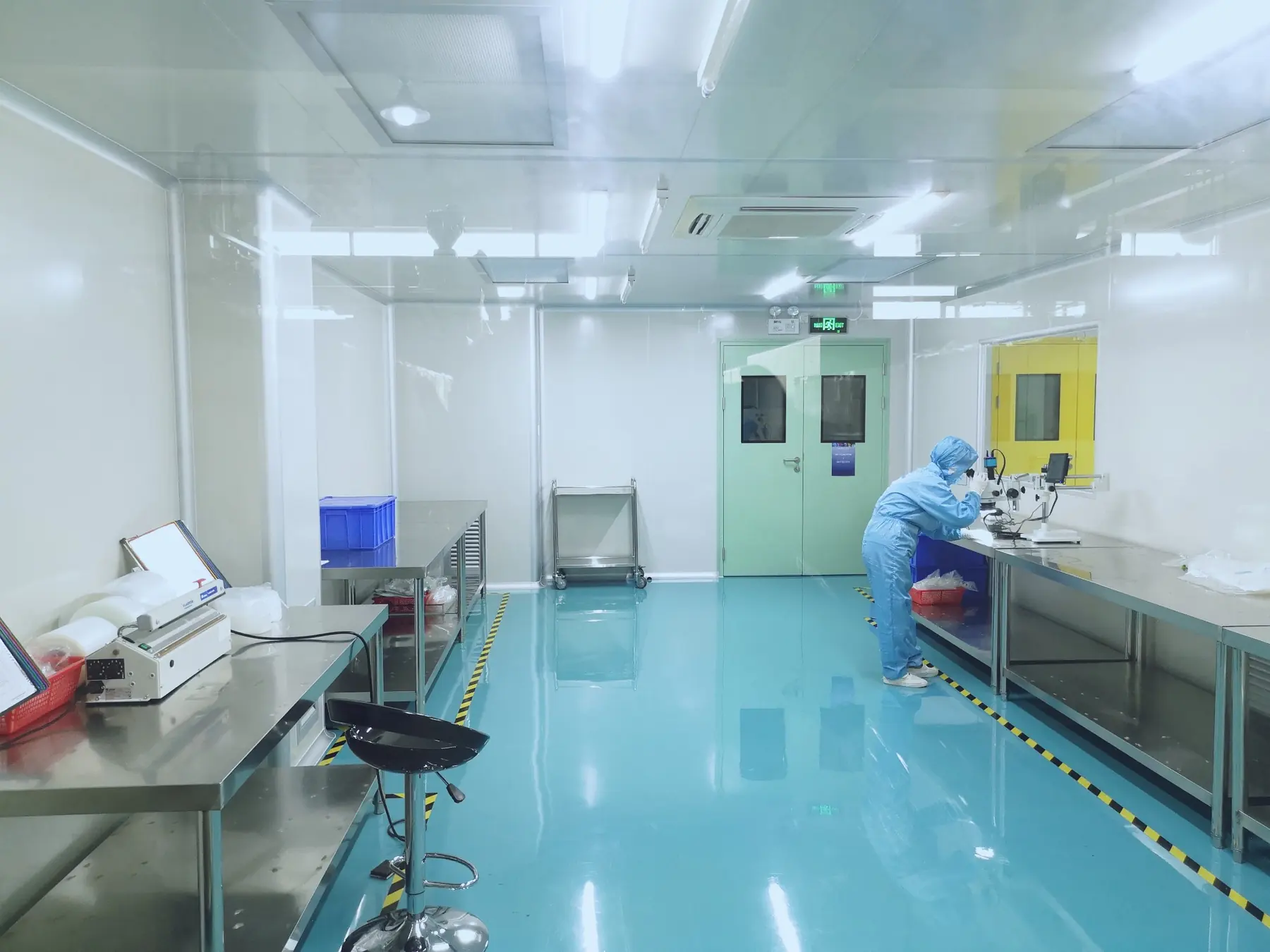
Four in-house divisions and 260 people take a medical component from 3D data through tooling, sampling and molded volume without outside subcontracting.

One site holding high precision tooling, large scale mold processing, automated molding and clean room assembly for medical and automotive customers.
We mold small disposable plastic components for medical devices: luer fittings and stopcocks, reaction cups and specimen containers, blood separation parts, transfer pipettes, syringe and catheter components, and single use surgical handles. We cut the molds for them ourselves.
IVD instrument makers, disposable device brands, ophthalmic and dental device companies, and contract manufacturers who need a molder that can also build the tool. Our automotive and home appliance divisions serve tier suppliers with the same equipment base.
Most buyers of small medical parts are juggling one supplier for the tool and another for the molding, and losing weeks every time a dimension drifts. We hold the tool, the molding process and the clean room in one plant, so a correction is a machine booking rather than a shipment and a negotiation.
In business since 2007, 260 people across four divisions, mold machining accuracy of 0.002 to 0.005 mm, 350 to 400 mold sets built per year, ISO 8 clean room molding, and certification to both ISO 9001:2015 and ISO 13485:2016.
One site in Maozhouhe Industrial Zone, Songgang Street, Baoan District, Shenzhen, holding high precision tooling, large scale mold processing, automated molding and clean room production.
Every category below is tooled and molded here. Follow one through to see the full component list, the problems it solves and the questions buyers ask about it.
Molded luer locks, slip adapters, caps and stopcocks that mate reliably with standard syringes and tubing sets.
Browse Category →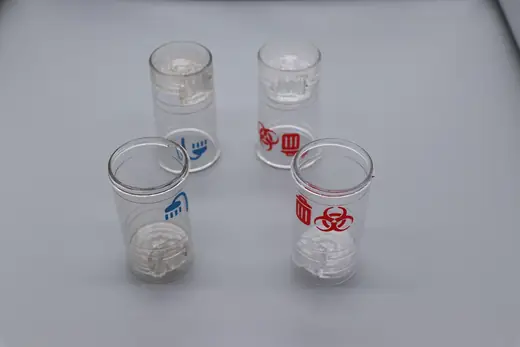
Reaction cups, specimen containers, centrifuge tubes and closures for analysers and laboratory workflows.
Browse Category →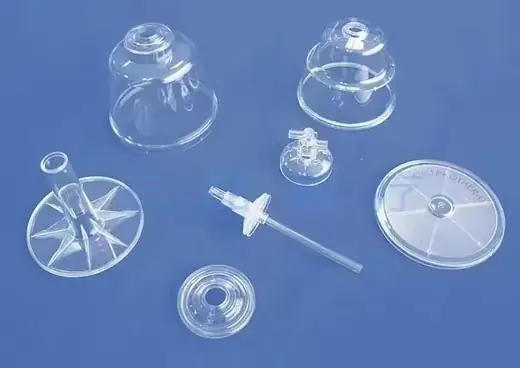
Molded separator bodies, discs and collection parts for blood handling and sample preparation devices.
Browse Category →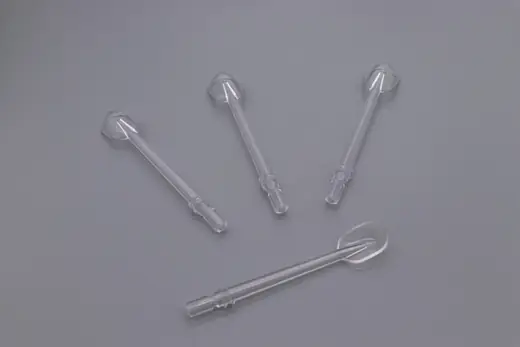
Single use pipettes, droppers and graduated transfer parts molded for consistent draw and drop volume.
Browse Category →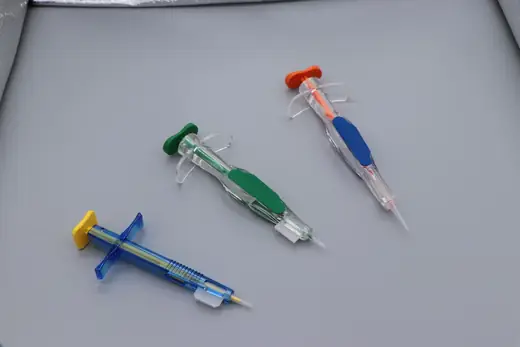
Molded barrels, hubs, wings and housings for syringes, IV catheters and infusion devices.
Browse Category →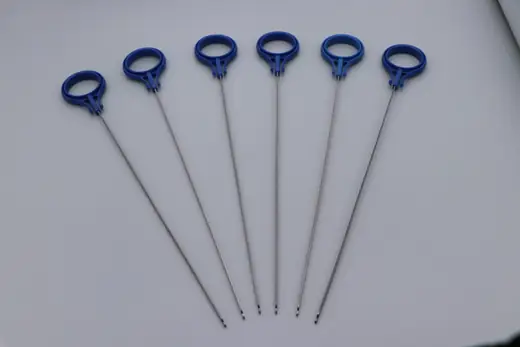
Single use handles, biopsy instrument bodies, dental trays and ophthalmic device components.
Browse Category →Twenty three molded components across six families, each with its own tooling, sampling record and clean room packing format.
A family of molded luer connectors, clamps and tips for fluid lines in infusion, sampling and instrument plumbing.
View Component →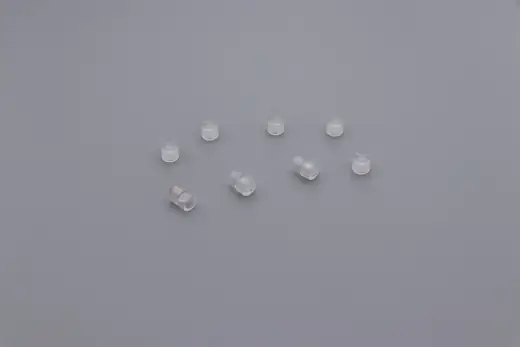
Small molded luer caps and closures that seal an open port between procedures.
View Component →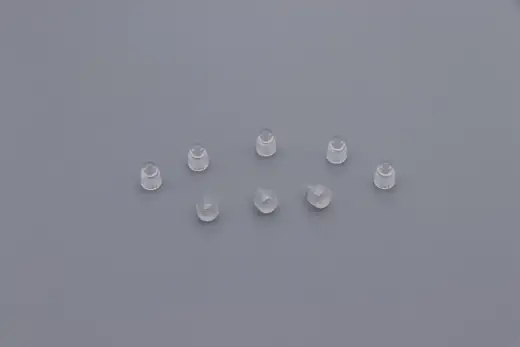
Female luer closures and seals molded for ports that have to open and close repeatedly without losing their seal.
View Component →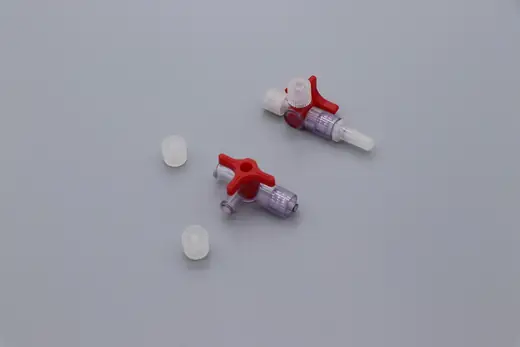
Molded stopcock bodies, handles and caps for three way fluid control on infusion and sampling lines.
View Component →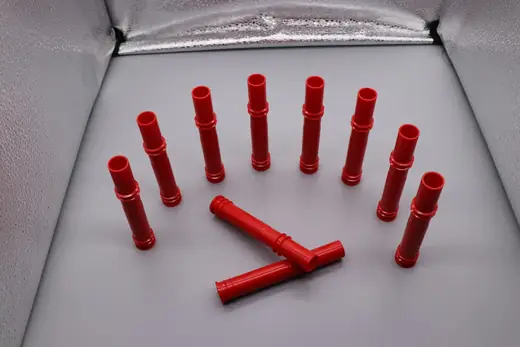
Colour coded luer connectors and tee pieces used where a line has to be identified at a glance.
View Component →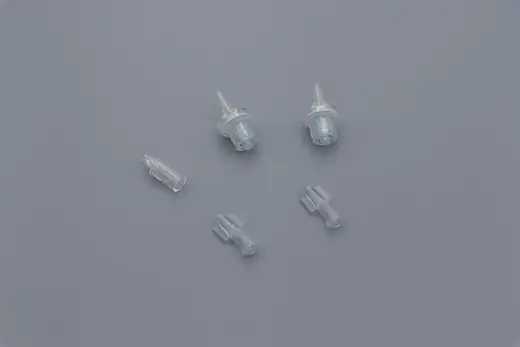
Very small molded fittings and adapters for compact fluidic assemblies where a standard luer body will not physically fit.
View Component →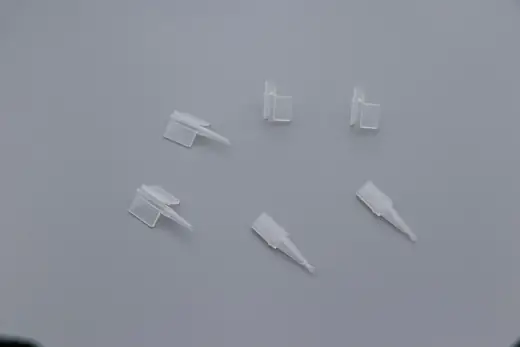
Slip fit luer adapters and transition pieces that join a syringe or a line to a component with a different interface.
View Component →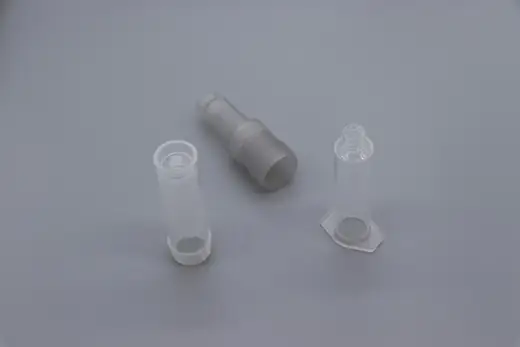
Molded reaction cups for automated analysers, where the optical path runs through the wall and a thickness variation reads as a result error.
View Component →Graduated specimen containers with printed scales and biohazard marking, molded for collection and transport of clinical samples.
View Component →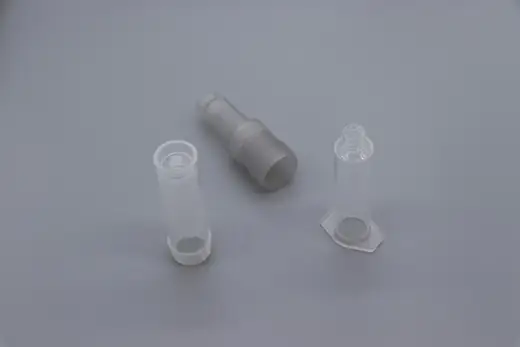
Molded centrifuge tubes and closures for sample preparation, where the part has to hold its shape under spin load and still seal afterwards.
View Component →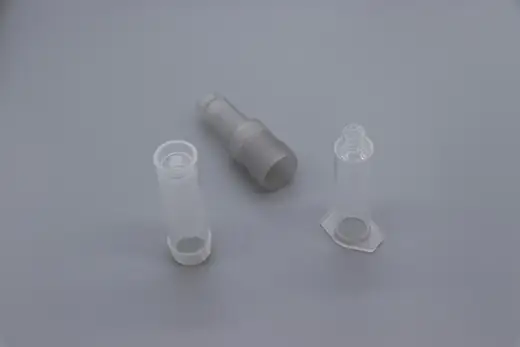
Multi part sample tube assemblies combining a tube, an insert and a closure.
View Component →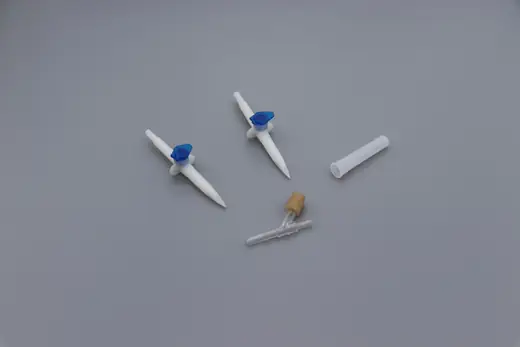
Small molded caps and seals for vials and sample tubes.
View Component →Molded blood separator bodies, discs and internals, carried over from the original product catalogue.
View Component →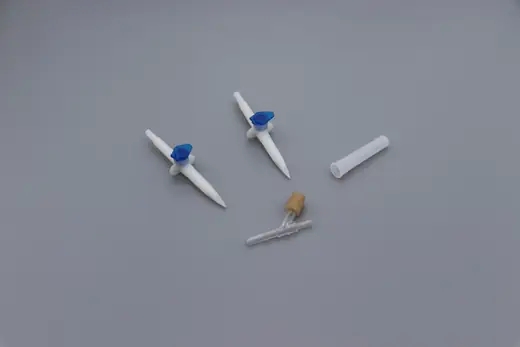
Molded holders, hubs and transfer parts used around blood collection.
View Component →Single use transfer pipettes molded for consistent draw and release.
View Component →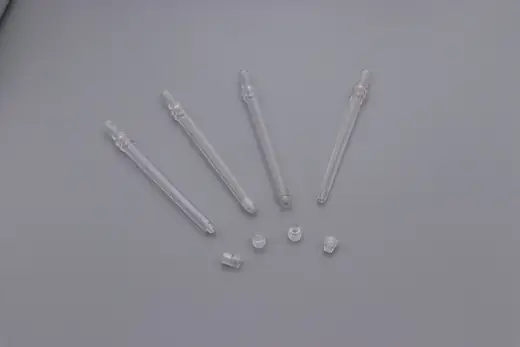
Molded dropper pipettes for controlled drop by drop delivery.
View Component →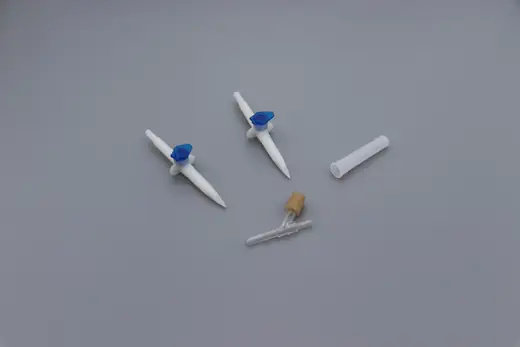
Droppers and transfer tubes with moulded graduation detail, for protocols where the user has to see how much was drawn.
View Component →Molded barrels, plungers, flanges and colour coded syringe parts for single use delivery devices.
View Component →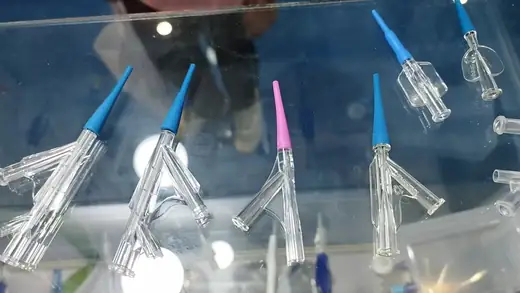
Molded hubs, wings and housings for intravenous catheters, shown here coming off the production line.
View Component →Molded handles and grip bodies for biopsy and sampling instruments, assembled onto steel shafts.
View Component →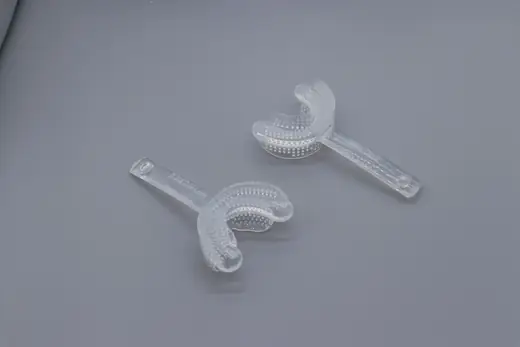
Molded single use impression trays with a perforated arch, used to carry impression material in the mouth.
View Component →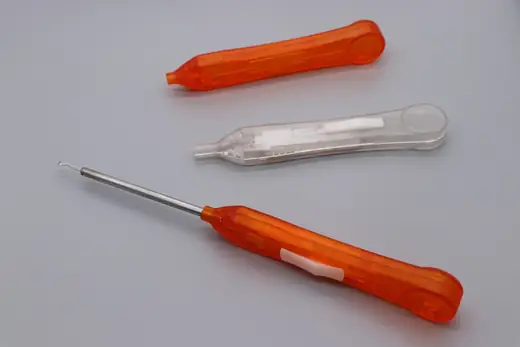
Colour coded handles for single use instruments, molded around a metal working end.
View Component →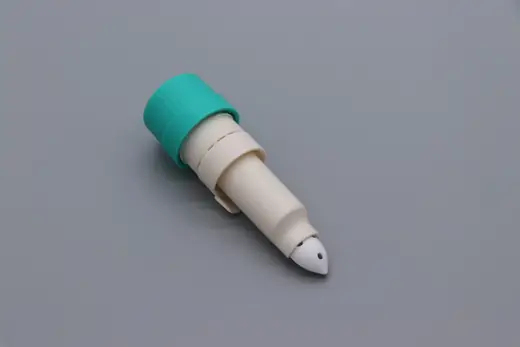
An ophthalmic delivery component carried over from the original product catalogue, molded as a body and cap assembly.
View Component →Analyser consumables and sample handling parts where a moulding variation becomes a result variation.
See Applications →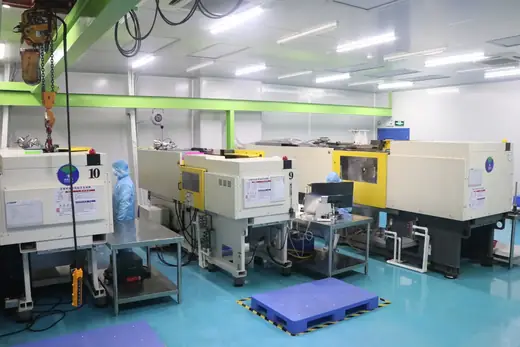
Single use delivery and access devices where the tool, not the moulding machine, decides whether the device works.
See Applications →Specialty single use devices in small volumes, with geometry that a general molder will usually simplify until it no longer works.
See Applications →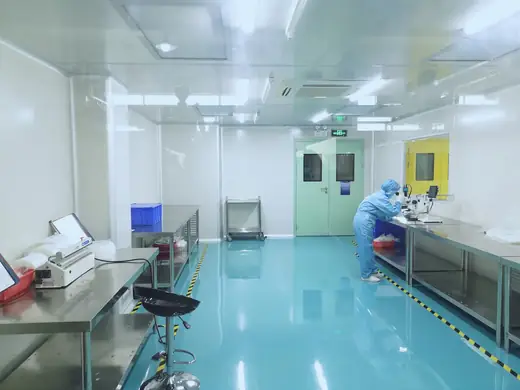
The divisions that gave us our volume discipline: automotive and white goods tooling running on the same equipment base as our medical work.
See Applications →These are the three failures we see most often when a buyer comes to us from another supply chain, and each one has the same root cause.
When the mold sits with one company and the molding machine with another, every dimensional correction turns into a shipment, a quotation and three weeks. Holding both on one site makes it a machine booking.
Split an assembly across molders and each part passes its own inspection while the assembly still fails. We prefer to hold every cavity of an assembly so the tolerance stack has one owner.
A shipment that cannot be traced back to a cavity cannot be investigated. Our ERP system records the lot, the tool and the machine behind every delivery.
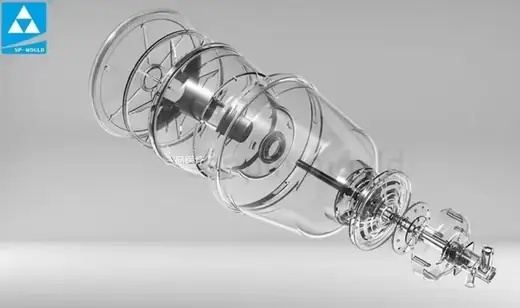
From your 3D part data to a sampled, released production tool, without the part leaving our site.
See The Stages →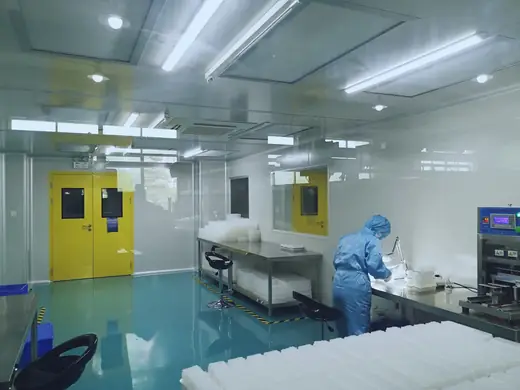
ISO 8 clean room molding and packing for parts that touch a sample, a drug or a patient.
See The Stages →Complex tooling for parts that combine two materials or need a moulded in surface treatment.
See The Stages →Getting from a first sampled part to a repeatable production lot without changing supplier halfway.
See The Stages →Three projects documented from our own records. Where a customer is not named it is because we have no permission to name them, not because the project is invented.
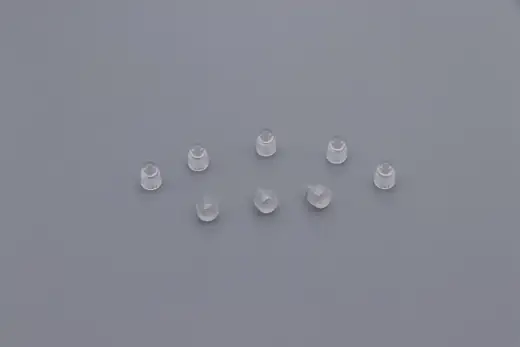
A container and a closure can each pass dimensional inspection and still leak together, because the seal is a property of the pair and not of either part alone.
Read The Case →Thin clear sections warp as they cool, and a separator has to stay both dimensionally stable and optically clear across every cavity of every part in the assembly.
Read The Case →Supporting an automotive program meant adding equipment and capacity faster than a mold shop normally grows, while keeping the precision standards our medical work depends on.
Read The Case →Photographs from our own site rather than stock images. Each one is captioned with what it actually shows.

GF five axis machines for complex surface processing High speed machining centres for high precision detail Makino and GF spark erosion machines for fine cavity features.
Mold design review before steel is cut Cavity by cavity sampling at tool release In process dimensional checks through the production shift.
The questions that actually predict whether a medical molding program will run smoothly, and the ones that only sound impressive.
Read More →What an ISO 8 molding environment does and does not do for an analyser consumable, and where the real risks sit.
Read More →Why 0.002 mm on mold steel tells you more about a molder than the tonnage list on their homepage.
Read More →Yes. Mold design, steel machining, EDM, sampling and volume molding all happen at our Shenzhen site, across four divisions and 260 people.
We hold ISO 9001:2015 and ISO 13485:2016, and our certificate records also show EN ISO 13485:2016.
No. Parts are molded and packed in an ISO 8 clean room and ship non sterile, so sterilisation stays with your validated process.
Mold machining accuracy is 0.002 to 0.005 mm on ground surfaces, with medical and plug in mold work controlled at 0.002 mm. Part tolerance is confirmed against your drawing rather than quoted as a blanket figure.
Up to 5 tonnes and 1000 x 800 x 700 mm in our precision mold department, which builds 350 to 400 mold sets a year.
Email your 3D data and annual forecast to [email protected], or call +86 150 1404 0012. We reply with a feasibility review rather than a price alone.
Email your 3D data with an annual forecast and we will come back with a feasibility review, a cavitation proposal and an honest view of anything in the design that will cause trouble in steel.