
Luer Fittings And Connectors
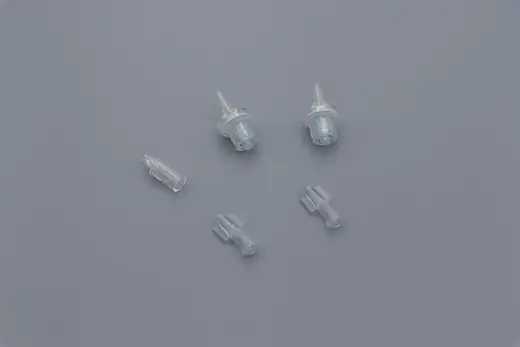
Micro Luer Fittings
Very small molded fittings and adapters for compact fluidic assemblies where a standard luer body will not physically fit.
View Component →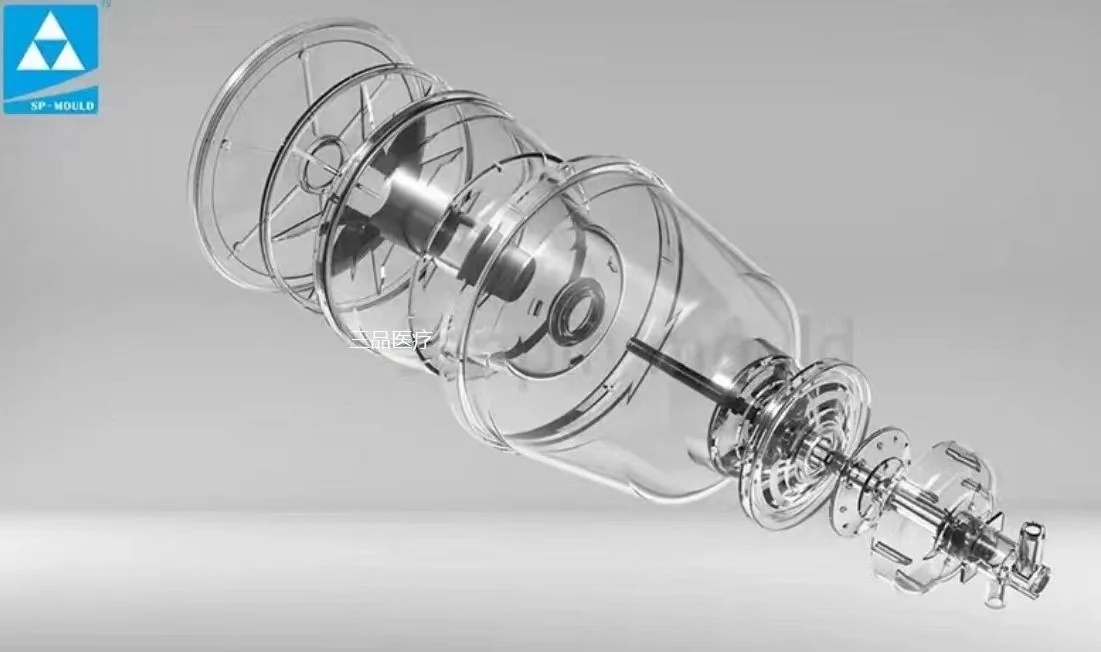
Why 0.002 mm on mold steel tells you more about a molder than the tonnage list on their homepage.
Every dimension on a moulded part comes from a surface in the tool. A molding machine can hold a process steady, but it cannot add accuracy the cavity does not have. This is why our machining accuracy of 0.002 to 0.005 mm on ground surfaces is a more useful number than a machine count.
Complex surfaces are completed on five axis machines, high precision detail on high speed machines, and features below conventional cutter size by spark erosion on Makino and GF equipment. Medical and plug in mold work is controlled at 0.002 mm.
A tool that leaves the tool room accurate can still drift in production. That is why in process checks run through the shift rather than only at its ends, and why the tool record and the lot record are linked in our ERP system.
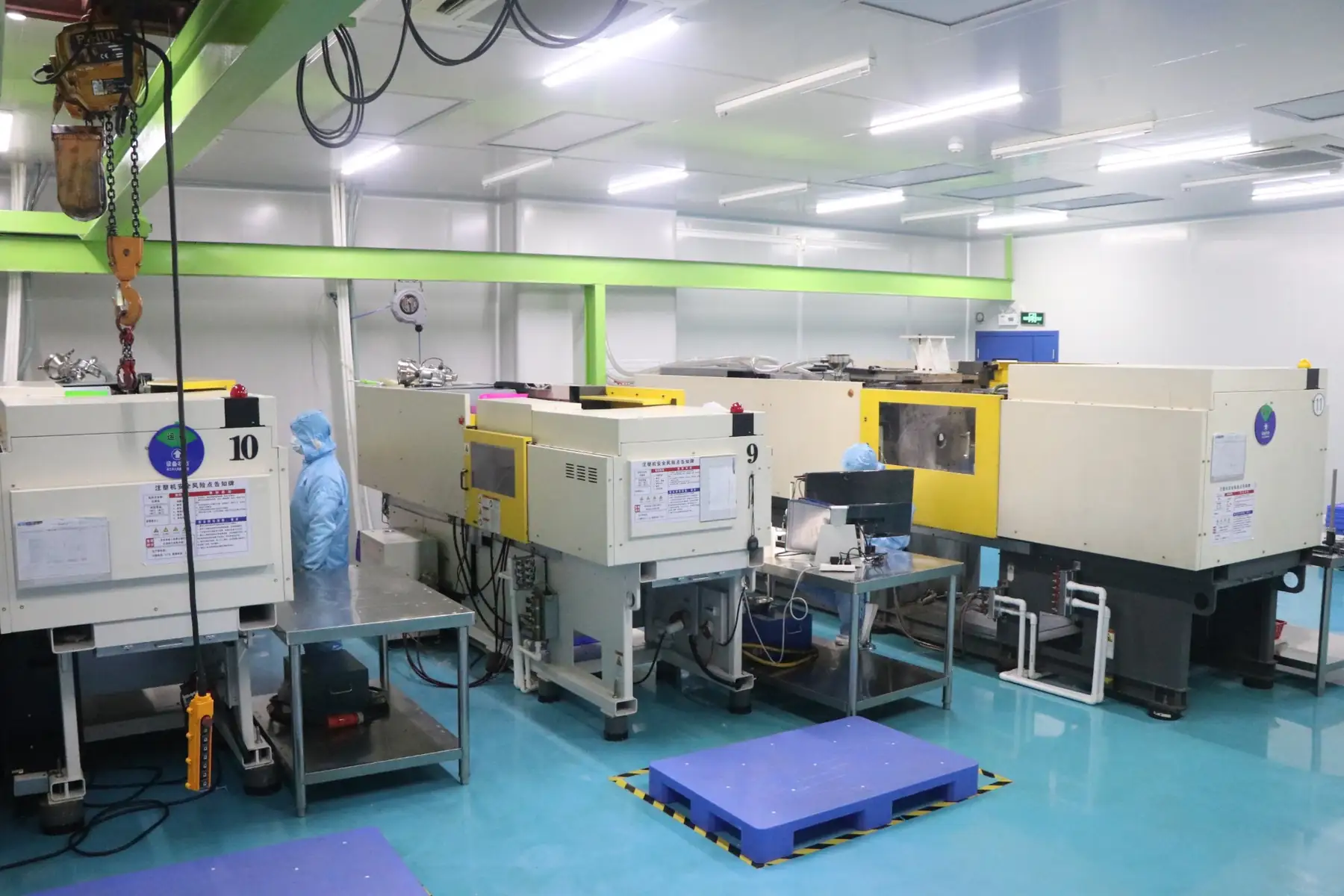
Ask for the machining accuracy on ground surfaces, the sampling method at tool release, and the maximum mold size and weight the shop can handle. Ours are 0.002 to 0.005 mm, cavity by cavity sampling, and 5 tonnes at 1000 x 800 x 700 mm.
0.002 to 0.005 mm on ground surfaces, with medical and plug in mold work controlled at 0.002 mm.
No. Part tolerance also depends on resin shrinkage and wall section, which is why we confirm it against your drawing at mold flow review rather than quoting a blanket figure.
Very small molded fittings and adapters for compact fluidic assemblies where a standard luer body will not physically fit.
View Component →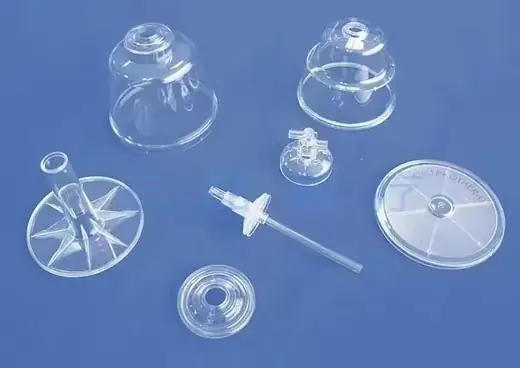
Molded blood separator bodies, discs and internals, carried over from the original product catalogue.
View Component →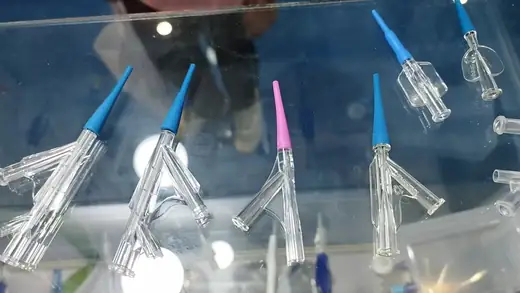
Molded hubs, wings and housings for intravenous catheters, shown here coming off the production line.
View Component →Thin clear sections warp as they cool, and a separator has to stay both dimensionally stable and optically clear across every cavity of every part in the assembly.
Read The Case →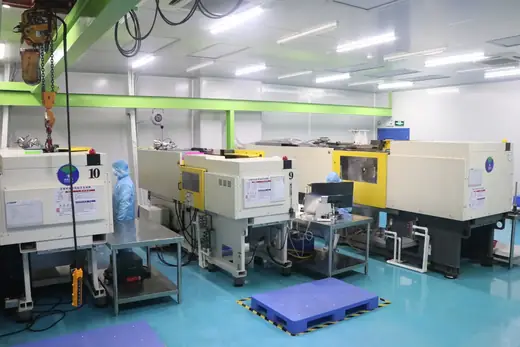
Single use delivery and access devices where the tool, not the moulding machine, decides whether the device works.
See Applications →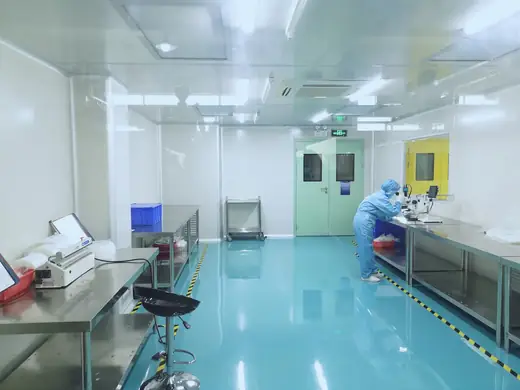
The divisions that gave us our volume discipline: automotive and white goods tooling running on the same equipment base as our medical work.
See Applications →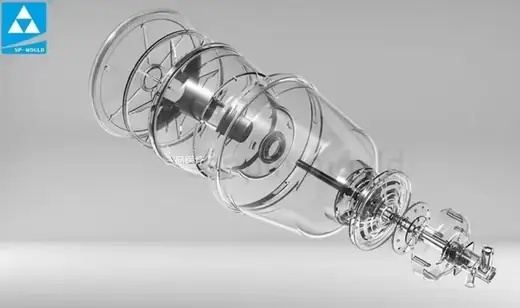
From your 3D part data to a sampled, released production tool, without the part leaving our site.
See The Stages →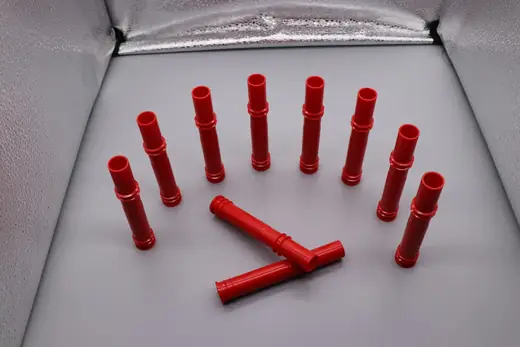
Complex tooling for parts that combine two materials or need a moulded in surface treatment.
See The Stages →Send the drawing and we will apply exactly what this guide describes to your geometry, and tell you where it will not work.