
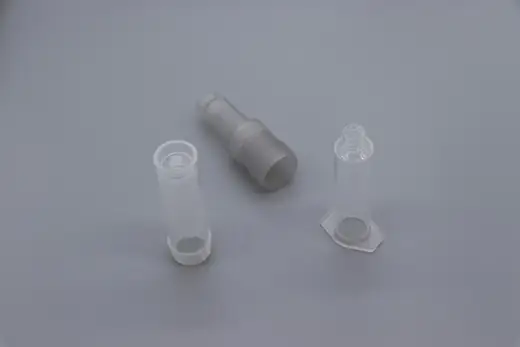
Diagnostic Consumables
Reaction Cup
Molded reaction cups for automated analysers, where the optical path runs through the wall and a thickness variation reads as a result error.
View Component →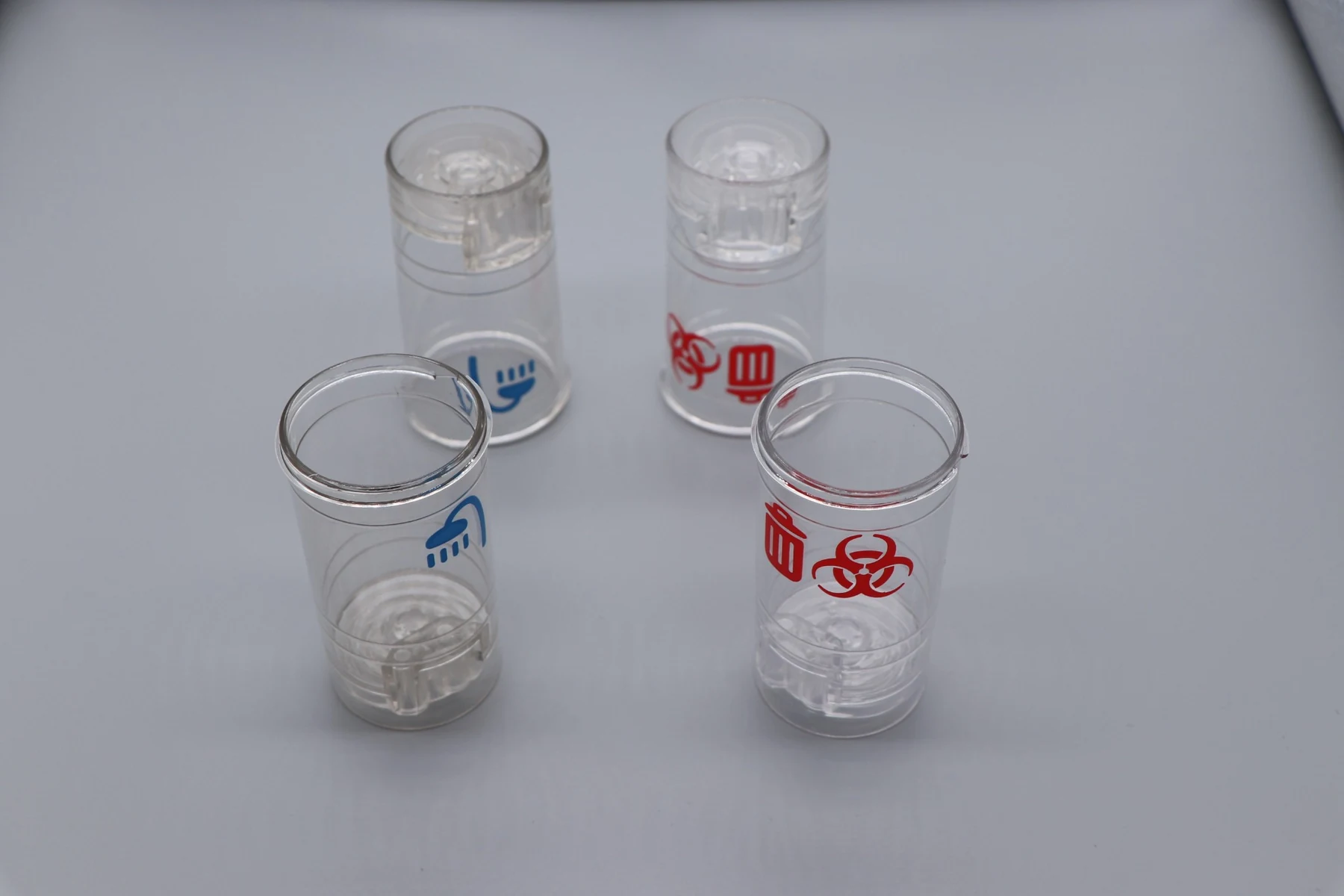
Reaction cups, specimen containers, centrifuge tubes and closures for analysers and laboratory workflows.
Molded reaction cups for automated analysers, where the optical path runs through the wall and a thickness variation reads as a result error.
View Component →
Graduated specimen containers with printed scales and biohazard marking, molded for collection and transport of clinical samples.
View Component →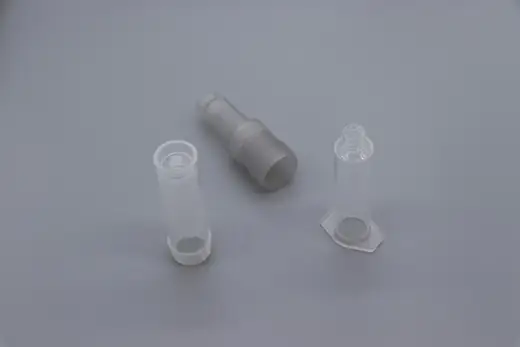
Molded centrifuge tubes and closures for sample preparation, where the part has to hold its shape under spin load and still seal afterwards.
View Component →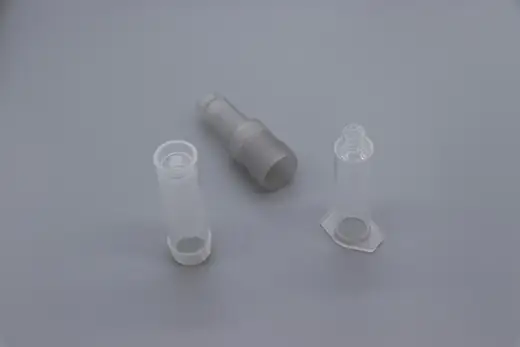
Multi part sample tube assemblies combining a tube, an insert and a closure.
View Component →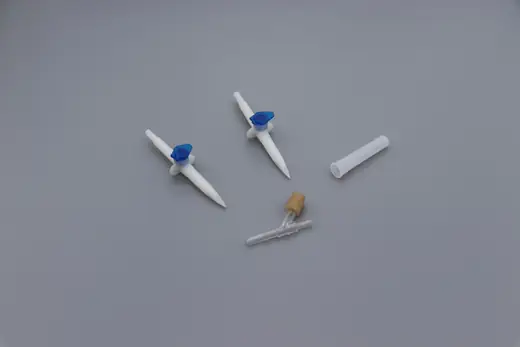
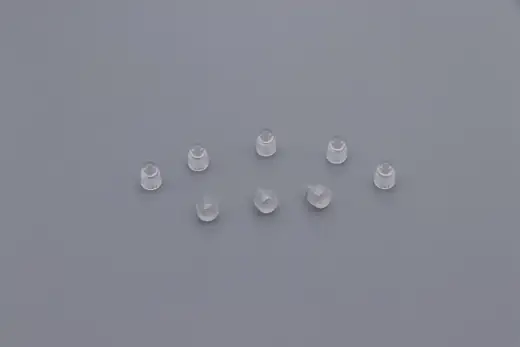
Small molded caps and seals for vials and sample tubes.
View Component →Analyser consumables and sample handling parts where a moulding variation becomes a result variation. See the industry page for pain points and matching components.
A container and a closure can each pass dimensional inspection and still leak together, because the seal is a property of the pair and not of either part alone.
Read The Case →Yes. Clarity comes from mold surface finish and controlled packing, both of which we manage in house. We review the read path with you before the tool is cut.
We run water tightness testing on assembled pairs. One of our documented customer projects covers exactly this kind of container and closure validation.
Our injection department runs automated and conventional molding cells alongside the clean room. Give us the annual forecast with your enquiry and we will size cavitation to it.
Email the 3D data and your annual forecast. We reply with a feasibility review and a cavitation proposal sized to where the product is going, not to the pilot order.