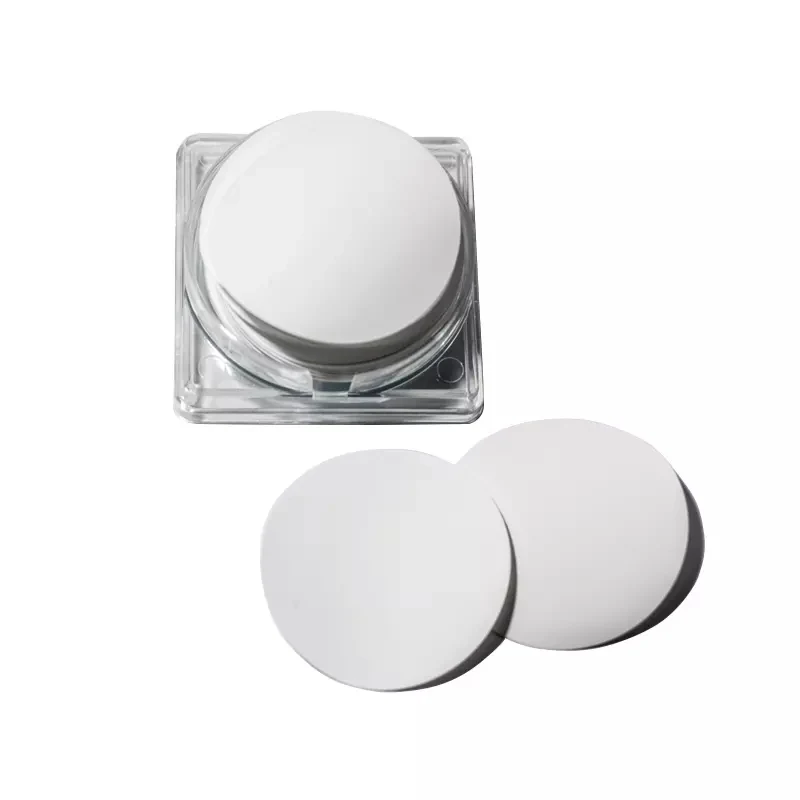
Regenerated cellulose (RC) membrane offers ultra-low non-specific binding and minimal extractables, making it ideal for trace-level analysis and biological sample preparation. Its natural hydrophilici
Regenerated cellulose (RC) membrane offers ultra-low non-specific binding and minimal extractables, making it ideal for trace-level analysis and biological sample preparation. Its natural hydrophilicity eliminates the need for wetting agents, reducing contamination risk in HPLC and GC sample clean-up.
RC membrane maintains integrity across aqueous solutions and a broad range of organic solvents, including methanol, acetonitrile, and acetone. This compatibility supports solvent preparation and mixed-phase filtration without membrane degradation or extractable release.
RC's very low protein binding capability ensures high recovery of proteins, peptides, and low-concentration biomolecules. This makes it suitable for tissue culture filtration, diagnostic reagent processing, and biological sample analysis where analyte loss must be avoided.
Available in 0.1, 0.22, 0.45, 0.8, and 1.0 micron pore sizes, RC filters support particle removal from solvents, routine microbiological quality control, and fine precipitate retention. Use 0.22 micron for sterile-grade filtration and 0.45 micron for standard HPLC column protection.
At 25°C and 0.07 MPa pressure, RC membranes deliver water flow rates from 3.5 ml/min/cm² (0.1 μm) to 61 ml/min/cm² (1.0 μm). Higher flow rates at larger pores reduce filtration time without compromising retention for typical analytical applications.
PVDF membrane is available in hydrophobic and hydrophilic grades. Hydrophobic PVDF enables fast air flow and is ideal for venting, gas purification, and sterile filtration of medical devices. Hydrophilic PVDF supports aqueous and mixed-phase fluid clarification with low protein binding.
PVDF membrane resists organic solvents, acids, bases, and oxidation. It operates up to 90°C and maintains stability across pH 1-13. This makes it suitable for cleaning-in-place (CIP) processes, solvent recovery, and high-temperature filtration.
PVDF with a PET support layer offers enhanced mechanical strength compared to unsupported versions. This improves durability during high-pressure filtration and handling, especially for large-diameter discs used in industrial or high-volume lab workflows.
Hydrophilic PVDF delivers water flow rates from 6 ml/min/cm² (0.1 μm) to 150 ml/min/cm² (1.0 μm) at 25°C and 0.07 MPa. This exceeds RC performance in high-throughput applications such as buffer and cell culture medium clarification.
This allows integration into validated sterilization processes for pharmaceutical, diagnostic, and biotech workflows without compromising membrane integrity.
RC Membrane Filters are made from regenerated cellulose with no added wetting agents and reinforced with nonwoven…
View Details
PVDF membrane filters are designed for high-performance liquid and gas filtration in analytical and biotech…
View Details
PTFE membrane filters are designed for challenging sample matrices requiring high chemical resistance and low…
View Details
PP Membrane Filters are depth filters made from pure polypropylene microfiber, designed for pre-filtration in…
View DetailsBoth RC and hydrophilic PVDF have low protein binding. RC is specifically noted for ultra-low non-specific binding and high protein recovery, making it preferred for trace biological analysis.
Yes. RC membrane is compatible with aqueous solutions and a wide range of organic solvents, including methanol, acetonitrile, and acetone, without swelling or extractable release.
Yes. Hydrophobic PVDF membrane is ideal for venting, air filtration, and gas purification due to its high air permeability and ability to resist liquid penetration.
Both RC and PVDF membranes are rated for a maximum operation temperature of 90°C.
RC is naturally hydrophilic and does not require pre-wetting. Hydrophilic PVDF also does not require pre-wetting. Hydrophobic PVDF requires pre-wetting with a water-miscible solvent before use with aqueous samples.
Send the sample, solvent and volume and we will specify the part.