Most filter selection mistakes happen because the analyst picks a pore size first and a membrane second. The membrane decides whether the filter survives the sample at all. A hydrophilic membrane in a
Most filter selection mistakes happen because the analyst picks a pore size first and a membrane second. The membrane decides whether the filter survives the sample at all. A hydrophilic membrane in an aggressive organic solvent can swell, shed extractables or collapse, and no pore size will save the run. Decide the chemistry first, then the pore size, then the diameter.
Nylon is a general-purpose hydrophilic membrane that handles both aqueous and many organic mobile phases, which makes it the usual default for mixed workloads. PES gives fast flow and low protein binding on aqueous samples. MCE and CA are aqueous membranes with high flow, with CA the lower-binding of the two. RC tolerates a broad solvent range and binds little protein, so it suits samples that must be recovered intact. PTFE is the choice for aggressive solvents and acids; the hydrophobic grade needs pre-wetting for aqueous samples, while the hydrophilic grade does not. PVDF is available in both hydrophobic and hydrophilic grades and binds protein weakly. PP is a hydrophobic depth material with high dirt-holding capacity, which is why it appears in pre-filtration rather than final clarification.
If the analyte is a protein, a peptide or a low-concentration drug substance, a membrane that adsorbs it will lower recovery and the loss will look like a method problem. PES, RC and PVDF are the low-binding options. Nylon binds protein more strongly and is a poor choice for trace biological work even though it is convenient elsewhere.
0.45 micron is the routine pore size for protecting an HPLC column from particulates. Move to 0.22 micron for UHPLC and sub-two-micron packings, for fine precipitates, and where sterile-grade clarification is required. Coarser grades from 1.0 to 5.0 micron exist for pre-filtration of heavily loaded samples ahead of a finer stage.
A 13 mm filter offers 1.09 cm2 of filtration area and suits small sample volumes. A 25 mm filter offers 2.98 cm2 and takes more volume or a heavier particle load before it blocks. If a filter blocks part way through a sample, the fix is usually a larger diameter or a pre-filtration step, not more pressure.
Syringe filters in the Easyfil range are rated to 6 bar at 23 C, and that rating depends on the housing being sealed by injection moulding rather than solvent bonding. A filter that is being forced past its rating will either burst or push unfiltered sample past the seal, and the second failure is the one that quietly ruins data.
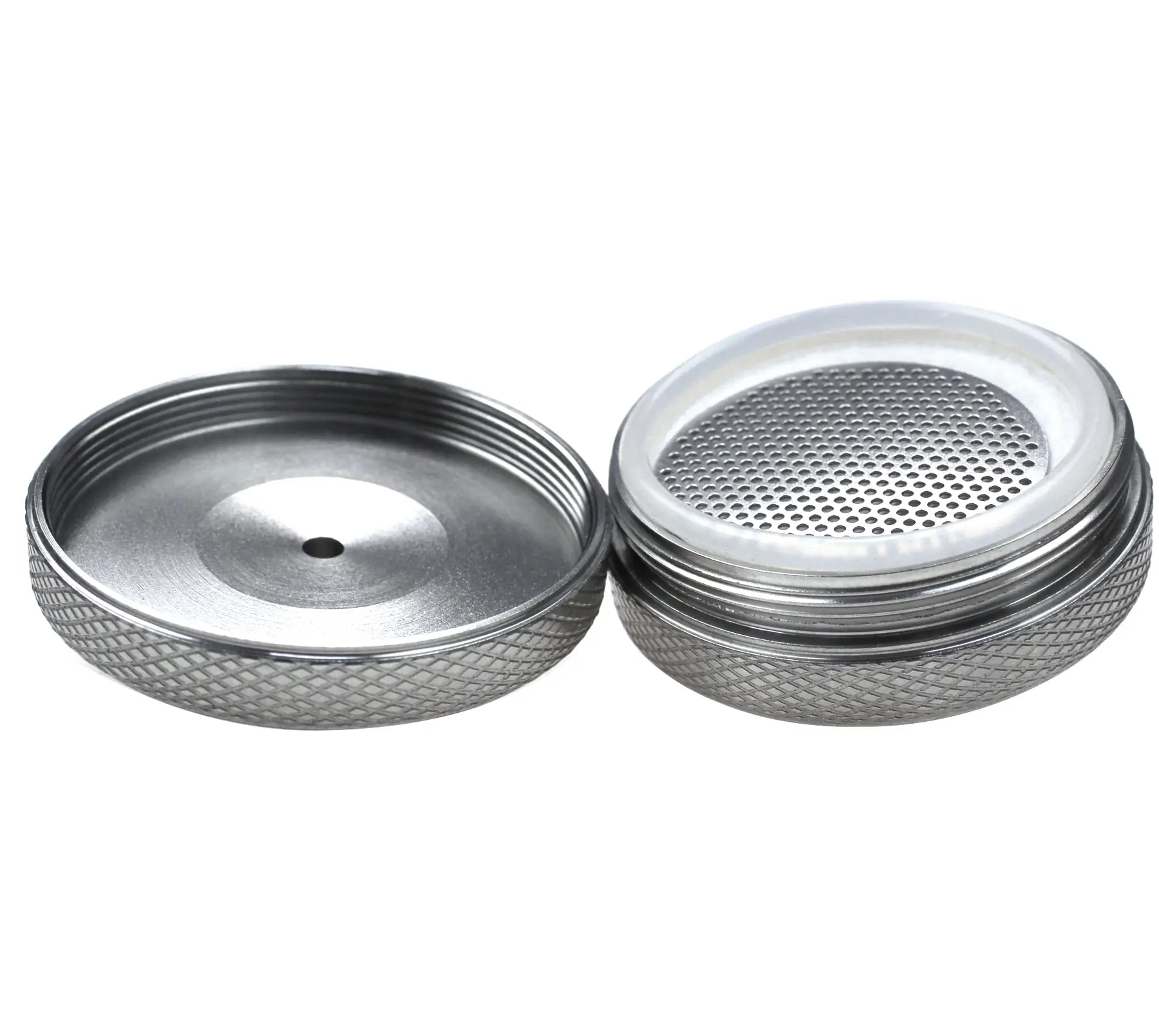
Not every filtration duty is a syringe pushing liquid through a disc. Sterifil covers sterile filtration. Vent Filter handles gas and venting duty rather than liquid samples. A reusable filter holder takes flat membrane discs and lowers consumable cost on repetitive large-volume work, at the cost of cleaning between samples and a carry-over risk that a single-use filter does not carry.
Reusable filter holders are designed for membrane filters ranging from 13 mm to 300 mm in diameter. These holders…
View Details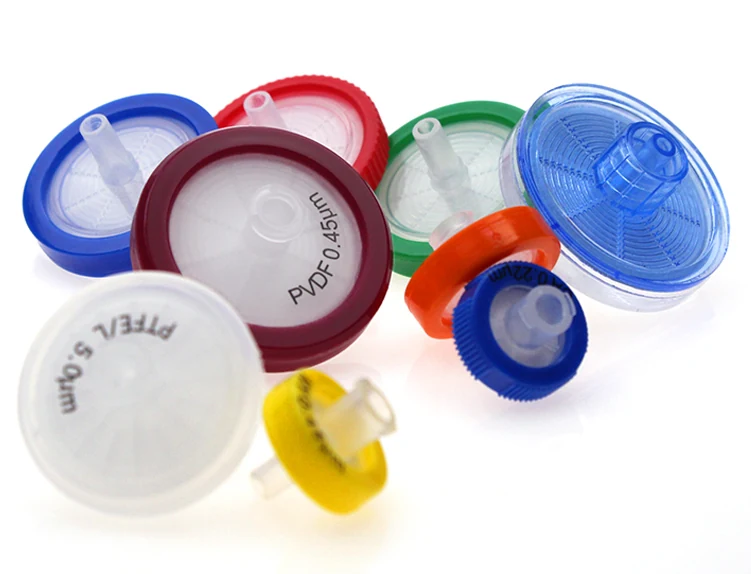
The Syringe Filter Guider is a precision alignment tool designed to ensure consistent and reliable syringe filter…
View Details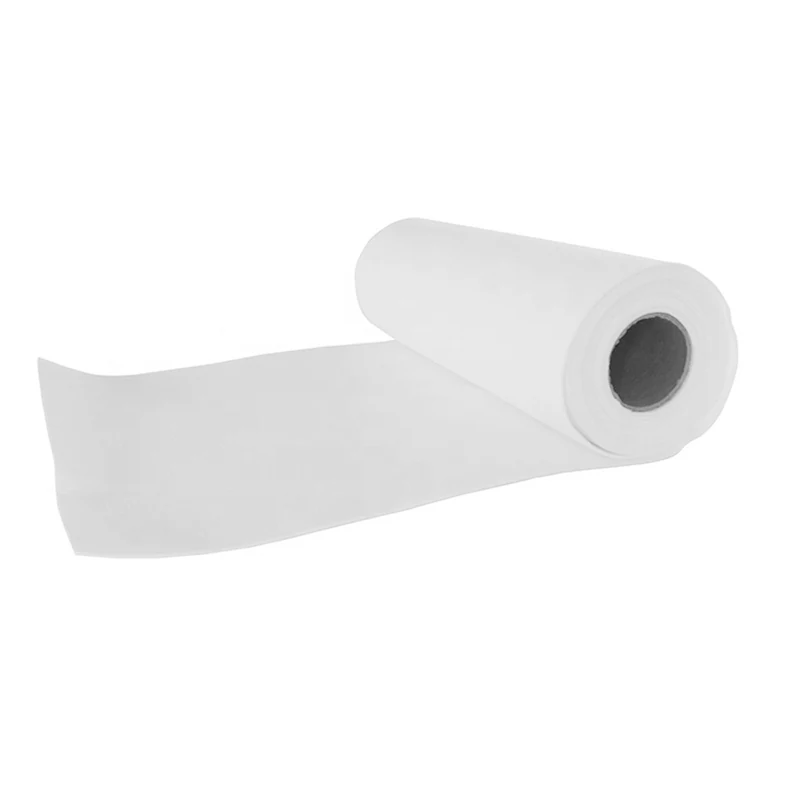
The Microlab Membrane Selection Guide helps analysts choose the right membrane type, pore size, and diameter for…
View Details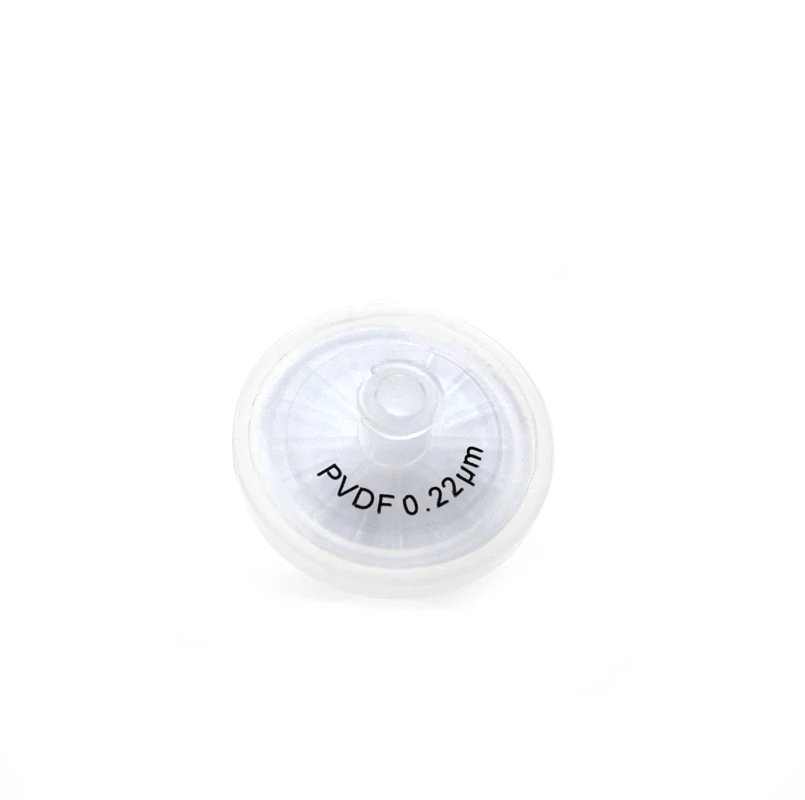
Allfil is a syringe filter designed for routine and demanding sample preparation in HPLC, GC, and biological…
View DetailsNylon or RC. Both handle aqueous and organic mobile phases. Choose RC over Nylon when protein or trace analyte recovery matters, because Nylon binds protein more strongly.
Hydrophobic PTFE needs pre-wetting with a water-miscible solvent such as methanol before an aqueous sample will pass. Hydrophilic PTFE does not.
No. A finer pore blocks faster and takes more pressure for the same volume. Use 0.45 micron for routine HPLC clean-up and reserve 0.22 micron for UHPLC, fine precipitates, or sterile-grade work.
Move from 13 mm to 25 mm for more filtration area, or add a coarser pre-filtration stage. Do not force the syringe; the range is rated to 6 bar at 23 C.
Yes. The OEM division covers OEM plastic devices, OEM contract manufacturing, and membrane die-cut and packing, so private-label printing and packing can be arranged.
Send the sample, solvent and volume and we will specify the part.