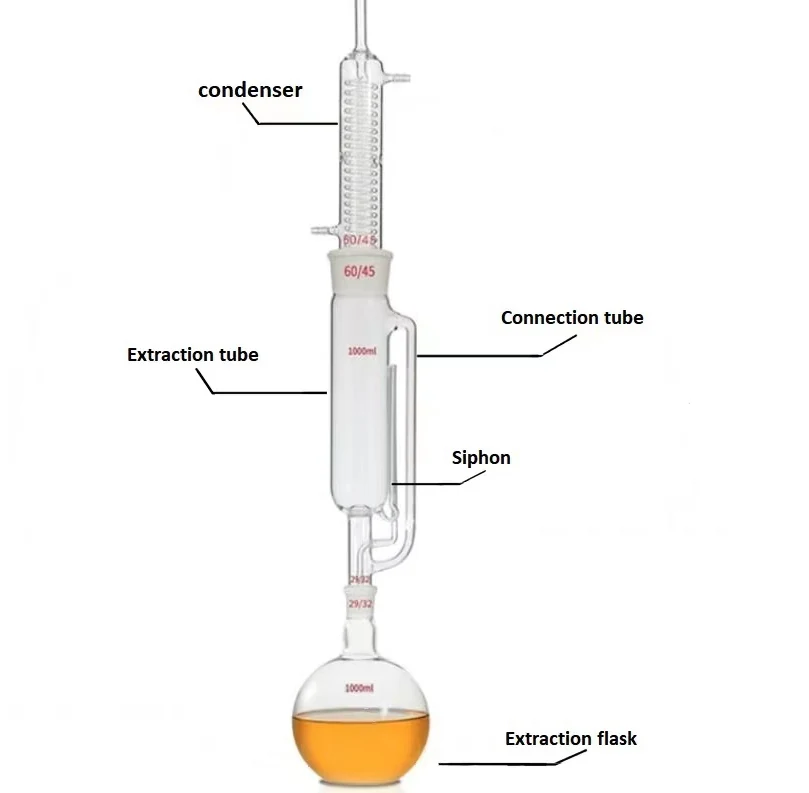
The Soxhlet extractor uses solvent reflux and siphon action to continuously extract compounds from solid materials. A pure solvent is heated, vaporizes, condenses, and drips into the extraction tube w
The Soxhlet extractor uses solvent reflux and siphon action to continuously extract compounds from solid materials. A pure solvent is heated, vaporizes, condenses, and drips into the extraction tube where it dissolves analytes. Once the solvent level reaches the siphon tube, it drains back into the flask, repeating the cycle. This process maximizes solvent efficiency and extraction yield over time.
Choose the flask size based on the amount of solid sample and solvent volume required. A 60ml flask suits small-scale or pilot tests. Larger volumes like 500ml or 2000ml are used for bulk extractions. The flask must hold enough solvent to ensure continuous siphoning without frequent refills.
Ball-shaped condensers are standard for general use with moderate cooling needs. Snake-shaped condensers offer greater surface area and improved condensation efficiency, especially for solvents with low boiling points or high vapor pressure. Use snake-shaped when faster condensation is needed to prevent solvent loss.
All components must use matching standard taper joints. The upper joint connects the extraction tube to the condenser, and the lower joint connects to the flask. Verify that the joint sizes (e.g., 34/35, 40/38, 50/42, 60/45, 70/50) match across the condenser, extraction tube, and flask to prevent leaks and ensure a sealed system.
The siphon tube must be long enough to allow complete drainage of the solvent back into the flask. The siphon diameter is fixed at 6mm across all models. A shorter siphon may not trigger the siphon action reliably, leading to incomplete cycles and reduced extraction efficiency.
The extraction tube holds the solid sample and allows solvent to pass through. Its length and joint sizes must match the condenser and flask. Longer tubes (e.g., 445mm for 2000ml) are used in larger systems. The tube must be clean and free of residue to avoid contamination.
All joints must be assembled tightly but not over-tightened. Use standard taper joints with a slight lubricant if needed. A leak at any joint will reduce solvent recovery, lower extraction efficiency, and may cause safety hazards with flammable solvents.
Microlab Quantitative filter paper is designed for gravimetric analysis. It ensures accurate mass measurement of precipitates after drying and ashing. Use it when the final residue must be weighed to determine analyte concentration.
The Soxhlet extractor is a laboratory apparatus used for continuous solvent extraction of solid samples. It operates…
View Details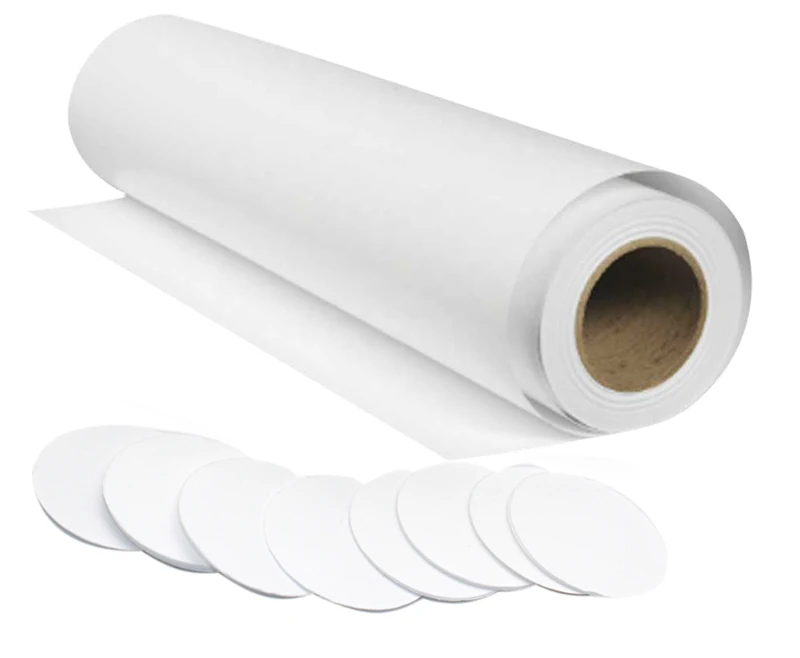
Quantitative filter paper is designed for gravimetric analysis in chemical and environmental testing. Made from…
View Details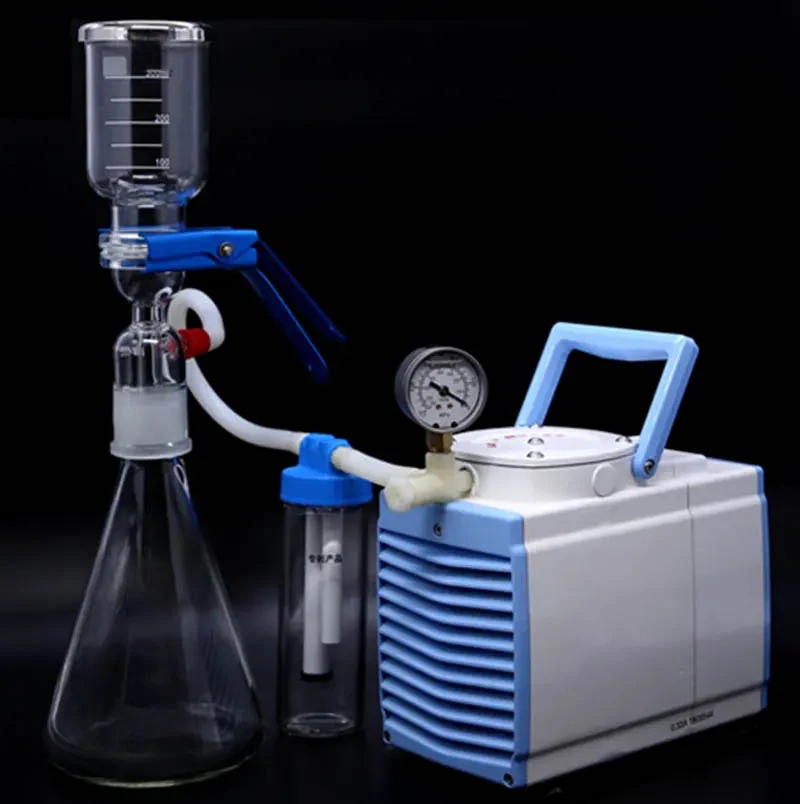
The Microlab series of diaphragm vacuum pumps provides oil-free, continuous operation for laboratory filtration and…
View Details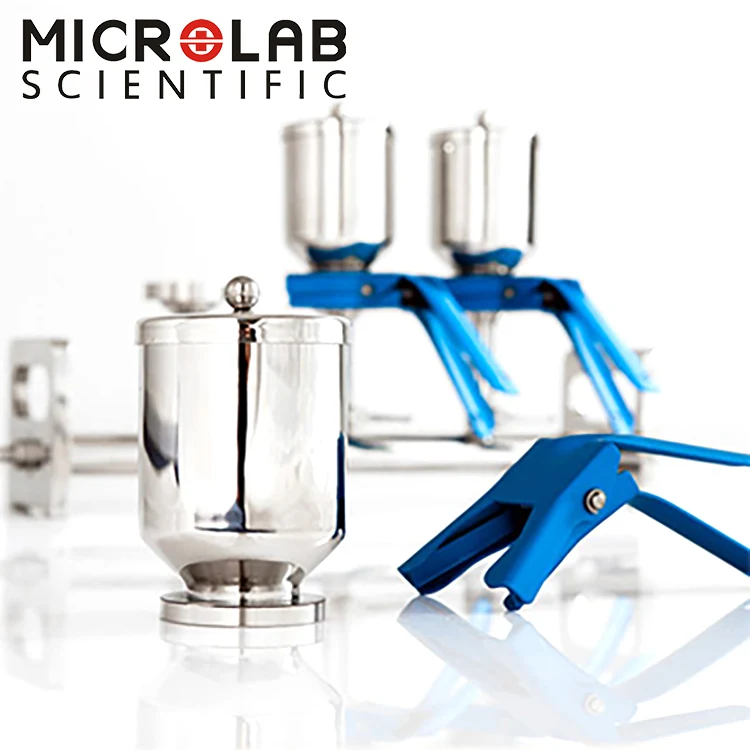
The Multiple Vacuum Filtration System is a modular manifold setup designed for simultaneous, efficient filtration of…
View DetailsBall-shaped condensers have a simple design with moderate cooling efficiency. Snake-shaped condensers have a longer, coiled path that increases surface area and improves condensation, especially for low-boiling solvents.
No. Each set is designed with matching taper joints and dimensions. Mixing components from different sizes (e.g., 60ml condenser with 500ml flask) will result in poor fit and potential leaks.
The extractors are suitable for common organic solvents like ethanol, acetone, hexane, and chloroform. Avoid highly corrosive or reactive solvents unless the materials are confirmed compatible.
Extraction time varies by sample and solvent but typically ranges from 6 to 24 hours. The process continues until the solvent returning to the flask is clear, indicating complete extraction.
Yes, but clean them thoroughly with solvent and rinse with distilled water. Residual analytes or solvent can contaminate future runs.
No. The filter paper is sold separately. Use it to collect and weigh precipitates after extraction if gravimetric analysis is required.
Yes. The OEM division offers OEM contract manufacturing, mould making, and private-label packing for lab equipment and consumables.
Send the sample, solvent and volume and we will specify the part.