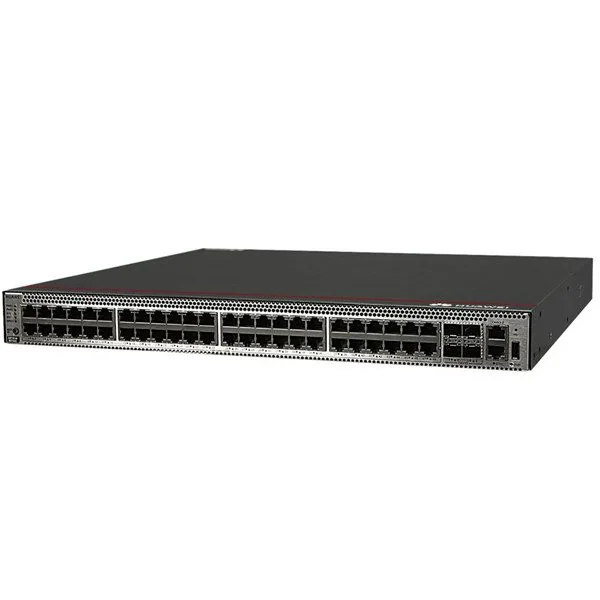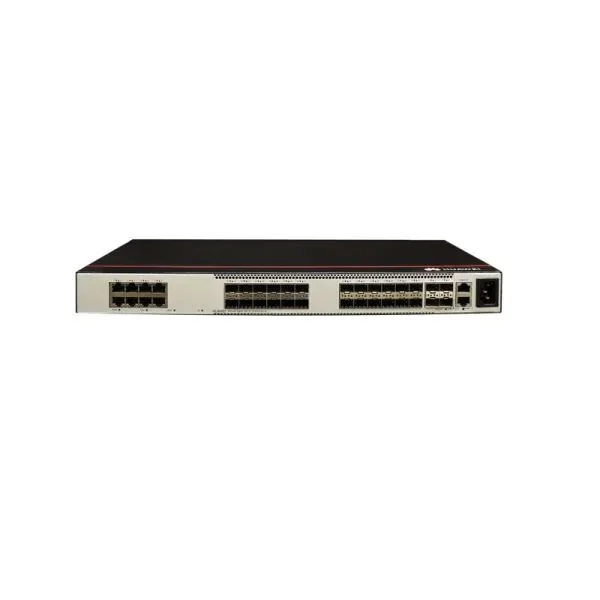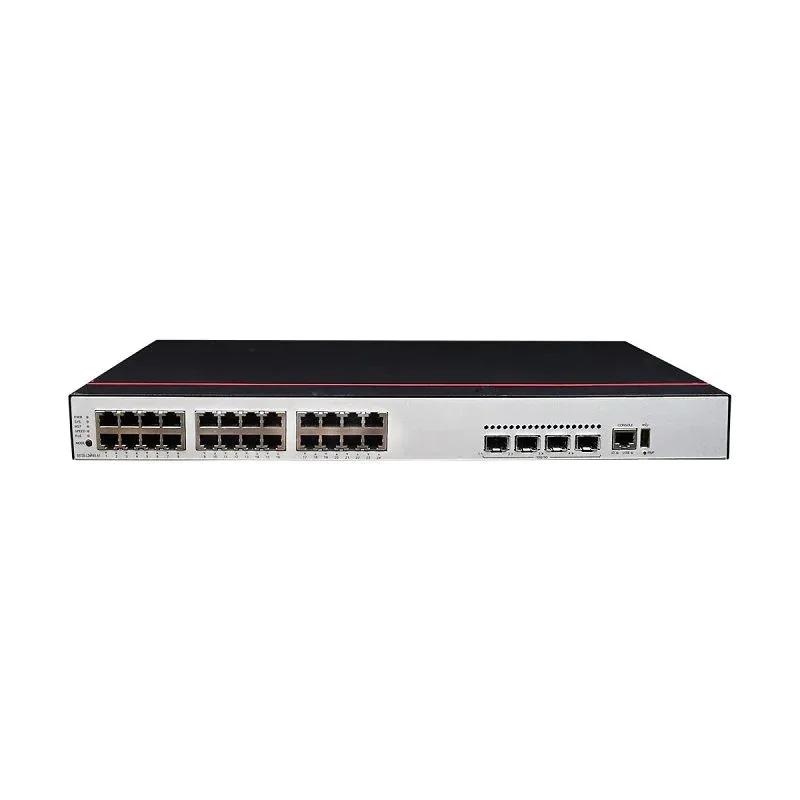
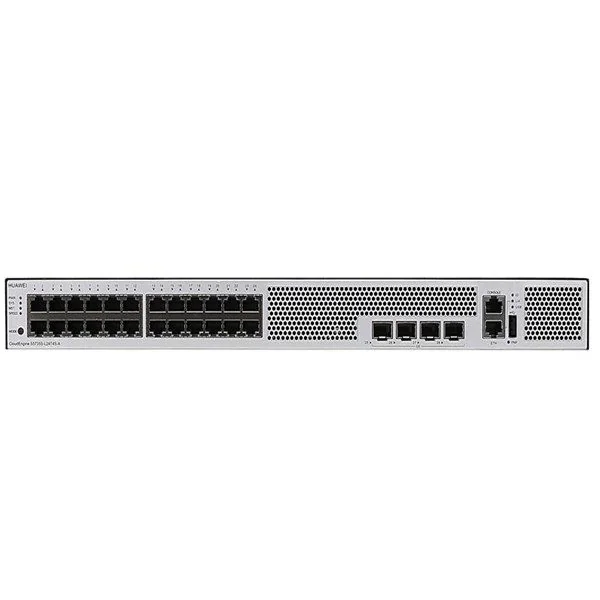
Huawei
S5731-H24T4XC
The CloudEngine S5731-H series switches are the next-generation intelligent gigabit fixed switches developed by Huawei. The CloudEngine S5731-H builds
A Catalyst part number encodes the port count, the port type, the uplink arrangement and the software tier. Misreading one character changes what arrives.
Catalyst 9000 part numbers follow a repeatable structure. Once the segments are separated the number stops being a code and starts being a description of the switch.
| Segment | Meaning | Example From the Line Card |
|---|---|---|
| Platform | Series and family | C9300, C9200, C9400 |
| L suffix | Fixed uplink variant of the same family | C9300L against C9300 |
| Port count | Number of downlink ports | 24 or 48 |
| Port type | What those downlinks do | T, P, U, S |
| Uplink | Fixed uplink description on L models | 4G, 4X |
| Software tier | Licence level supplied | A or E |
Reading C9300L-24P-4G-A with that table gives a 9300L, 24 downlink ports, PoE capable, four fixed 1G uplinks, Network Advantage tier. That is the whole switch in one line.
The single letter after the port count decides whether the switch can power anything, and it is the most common place a bill of materials goes wrong. The difference between a T and a P model is not an option that can be enabled later.
| Letter | Downlink Type | Powers Devices |
|---|---|---|
| T | Copper data only | No |
| P | Copper with PoE+ | Yes |
| U | Copper with UPoE | Yes, at higher per port power |
| S | SFP fibre downlinks | No |
A data-only model cannot be upgraded to PoE in the field. If access points, cameras or phones are anywhere in the design, the port type has to be right at the point of order.
This is why C9300-24T-A and C9300-24P-A sit at different prices and are not substitutes for each other, even though they are adjacent on most quotations.
The trailing A or E sets the licence tier supplied with the switch. Network Essentials covers switching, routing basics and standard management. Network Advantage adds the segmentation, automation and assurance capability that many campus designs now assume.
The tier is worth checking against the design rather than against the previous purchase order. A design that specifies a feature only available at Advantage will not work on Essentials hardware, and the correction is a licence purchase rather than a configuration change.
The Catalyst 9400 family does not describe a complete switch in one part number, because a modular chassis is a bill of materials rather than a product. Three separate part numbers have to agree.
A trailing equals sign on a Cisco part number denotes a spare ordered on its own rather than as part of a system. C9400-LC-48P and C9400-LC-48P= are the same card ordered two different ways, which matters when a spares pool is being built.
On fixed switches the uplink capability comes from a network module that is ordered separately and decides what the switch can actually connect to. The module has to match the switch generation.
A 9200 module does not fit a 9300, and the L variants of both families have their uplinks fixed at manufacture rather than in a module slot.
The CloudEngine S5731-H series switches are the next-generation intelligent gigabit fixed switches developed by Huawei. The CloudEngine S5731-H builds
The CloudEngine S5731-H series switches are the next-generation intelligent gigabit fixed switches developed by Huawei. The CloudEngine S5731-H builds
The CloudEngine S5731-H series switches are the next-generation intelligent gigabit fixed switches developed by Huawei. The CloudEngine S5731-H builds
The Huawei S5731-S32ST4X is a versatile switch tailor for mid-sized enterprises, delivering high-performing connectivity with 8 Ethernet ports, 24 Gig
Built on next-generation, high-performance hardware and powered by Huaweis Versatile Routing Platform (VRP), CloudEngine S5735-L switches feature flex
Built on next-generation, high-performance hardware and powered by Huaweis Versatile Routing Platform (VRP), CloudEngine S5735-L switches feature flex
Five decisions set the part number. Getting them in the right order prevents most of the changes that happen late in a project.
Port count and power budget are two separate limits. Most PoE shortfalls come from planning only the first one.
Most refresh projects fail on supply rather than on design. A phased programme only works if every phase arrives complete on the date the change window was booked.
A cabinet is commissioned as a unit, so it should be supplied as one. Switches, optics, rails and power leads belong in the same consignment.
The tender required a firm price and date at submission, months before any award, across a bill of materials of several hundred lines
The L variant has its uplinks fixed at manufacture rather than taking a network module, and carries a reduced stacking specification. It is chosen where the uplink requirement is known and will not change.
No. It identifies the part ordered as a spare rather than as part of a system. The card itself is the same, which is why it appears in spares pools rather than in new build orders.
Yes. The tier sets what is available, not what must be used. The problem only runs the other way.
No. A module is specific to the switch family it was designed for. Confirm the module part number against the exact switch model on the same order.
Send the design constraint rather than a part number. An engineer will come back with options and the trade offs.