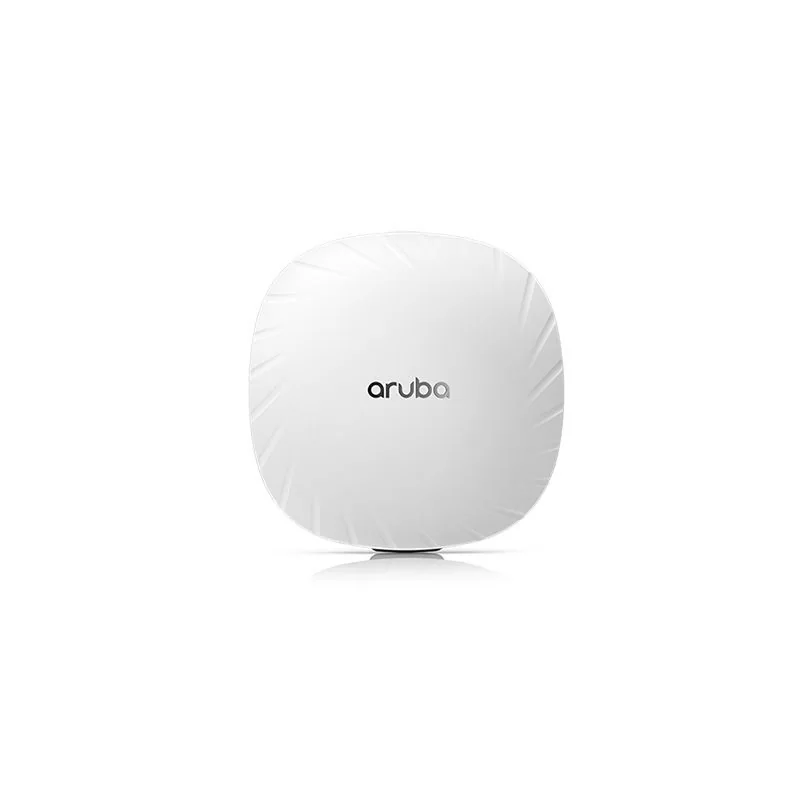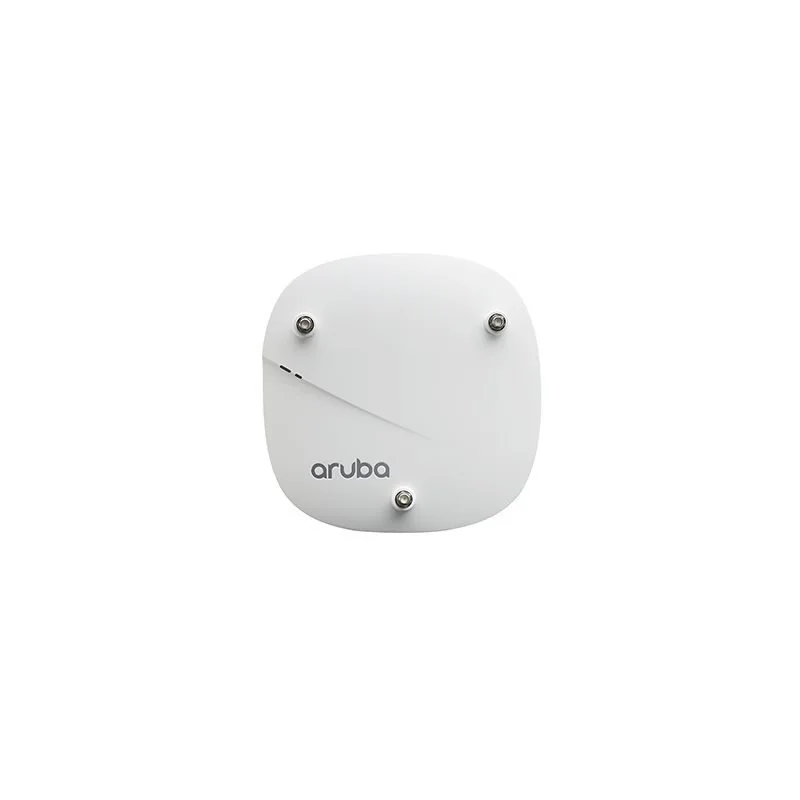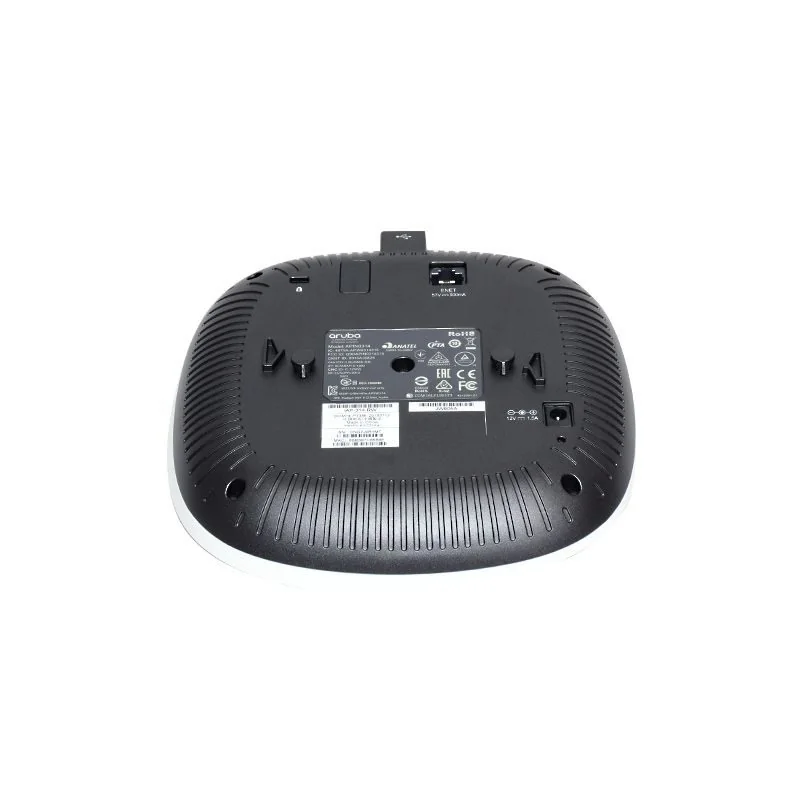
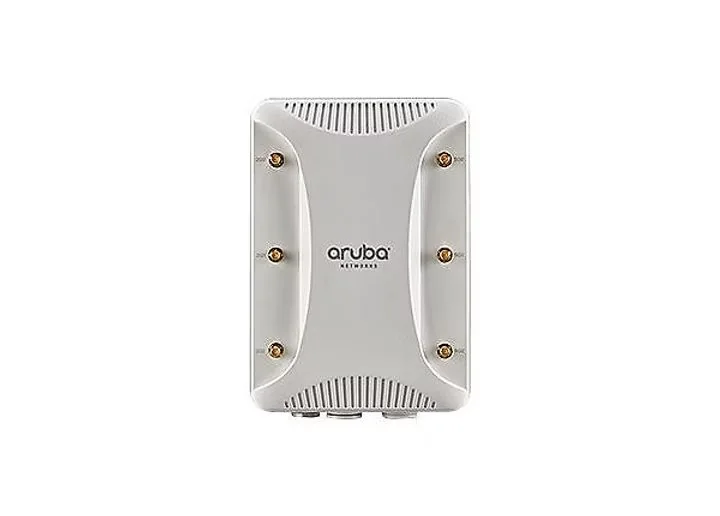
Aruba
JW245A
HPE JW245A - Aruba IAP228 Access Point Aruba IAP-228 (RW) Hardened Instant AP. It is supplied new factory sealed, with the serial list issued before s
Port count and power budget are two separate limits. Most PoE shortfalls come from planning only the first one.
A 48 port PoE switch does not necessarily deliver full power on all 48 ports at the same time. The power supply defines a total watt budget that every powered port draws from, so a switch can exhaust its watts long before it exhausts its ports.
This matters because port count is the number that appears on the quotation and watt budget is the number that appears on the datasheet. A design signed off on port count alone has only checked half the constraint.
Plan the power budget first and let it set the port count, not the other way around. Adding a second switch later costs more than specifying the correct power supply at the start.
Powered devices negotiate what they need rather than continuously drawing their class maximum. Planning to class maximum overprovisions expensively. Planning to idle draw underprovisions dangerously.
The workable approach is a realistic average per device type with headroom for the case where everything peaks together, which does happen at the start of a working day.
| Device Type | Typical PoE Standard | Planning Note |
|---|---|---|
| Wi-Fi 5 access point | 802.3at | Generally comfortable within its class |
| Wi-Fi 6 access point | 802.3at or 802.3bt | May reduce radio chains if underpowered |
| IP desk phone | 802.3af | Low and predictable draw |
| Fixed IP camera | 802.3af or 802.3at | Heater and infrared raise winter draw |
| PTZ camera | 802.3at or 802.3bt | Motor draw is intermittent and high |
Modern access points routinely want more than the older 802.3af budget allowed. The failure mode is the problem: an access point in reduced power mode does not go offline. It quietly disables radio chains or drops to a lower spatial stream count.
That surfaces as coverage and throughput complaints from users weeks later, and it is diagnosed as a wireless design fault rather than as a power budget fault. The switch reports no error because nothing has failed from its point of view.
If wireless performance dropped after an access point refresh on unchanged switching, check the PoE budget before re-surveying the site.
Fitting a second power supply does not necessarily double the PoE budget. Depending on the platform and how it is configured, the second supply may be providing redundancy rather than additional capacity.
The distinction is worth confirming per platform. A design that assumed combined capacity and received redundant capacity will be short of watts the first time the full device population is connected.
Access layer switches are replaced on a much longer cycle than the devices they power. A closet specified against today's device count will carry several generations of endpoint before it is replaced.
A switch chosen with that margin costs marginally more once. A switch chosen without it is replaced early, which costs the price of the switch plus a change window.
Across the Catalyst 9200, Catalyst 9300 and Aruba switching on this site the available PoE power is stated per model on the product page, alongside the default power supply fitted. Those two figures together are what a budget calculation needs.
Where a design is close to the limit, the practical options are a higher rated power supply, a higher port count model with a larger budget, or splitting the powered devices across two switches. All three are cheaper at design stage than after installation.
HPE JW245A - Aruba IAP228 Access Point Aruba IAP-228 (RW) Hardened Instant AP. It is supplied new factory sealed, with the serial list issued before s
JW325A is the Aruba Instant IAP-325 (RW) 802.11n/ac Dual 4x4:4 MU-MIMO Radio Integrated Antenna AP. Multifunctional 320 series wireless APs provide th
JW795A - HPE Aruba AP314 Series Access Points Aruba AP-314 802.11n/ac 2x2:2/4x4:4 MU-MIMO Dual Radio Antenna Connectors AP. It is supplied new factory
JW801A is the Aruba AP-335 802.11n/ac 4x4:4 MU-MIMO Dual Radio Integrated Antenna 2.5+1 GbE AP. The published specification for JW801A lists a publish
JW805A is the Aruba Instant IAP-314 (RW) 802.11n/ac Dual 2x2:2/4x4:4 MU-MIMO Radio Antenna Connectors AP. The published specification for JW805A lists
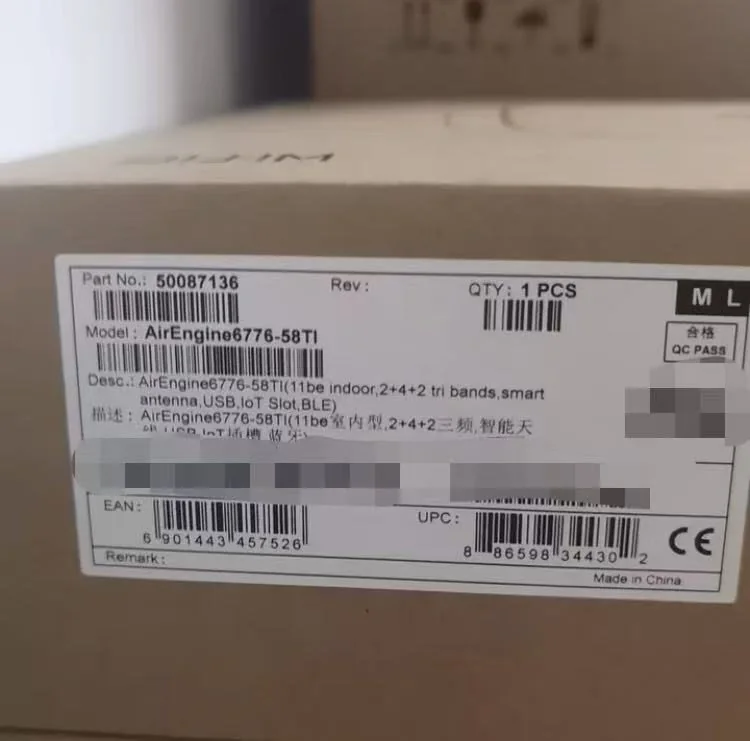
Huawei AirEngine 6776-58TI is a Wi-Fi 7 (802.11be) indoor IoT AP ideal for indoor coverage scenarios like mobile offices, education, healthcare, and s
Five decisions set the part number. Getting them in the right order prevents most of the changes that happen late in a project.
Wireless installs are rarely delayed by the access point. They are delayed by the mount, the power class or the cable that feeds it.
Wireless projects are rarely stopped by the access point. They are stopped by a mount, a PoE class or a licence count that nobody confirmed before the order went out.
Most refresh projects fail on supply rather than on design. A phased programme only works if every phase arrives complete on the date the change window was booked.
Lecture theatres and the library could not carry the client counts actually present, while the work could only happen during vacations
Enough to absorb the next endpoint generation and simultaneous peak. The exact figure depends on the device mix, but a budget calculated with no headroom at all will be exceeded within the life of the switch.
It will report the condition, but the visible symptom is usually a device behaving oddly rather than an alarm. Access points reducing radio chains is the common case and it looks like a coverage problem.
Not always. On some platforms and configurations the second supply provides redundancy rather than added capacity. Confirm this per platform before relying on it in a design.
No. Whether the downlinks can deliver power is set by the hardware model. The options are midspan injectors or replacing the switch.
Send the design constraint rather than a part number. An engineer will come back with options and the trade offs.