Size With Real Margin
Select capacity above the heaviest planned lift, and treat the safe overload figure as a protection limit rather than an occasional working range. A scale used near its capacity on every lift will drift sooner and leaves no margin for a snatch load.
Check The Load Path Every Shift
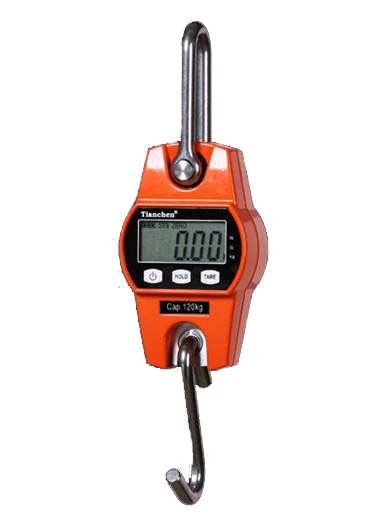
Shackle, hook, body and the mating surfaces between them carry the load. On these models the shackles and hooks are stainless steel, which resists corrosion but still needs looking at: deformation, wear at the throat, cracks around the eye and any sign that the hook has opened up.
OCS-L mini crane scale with stainless steel hook →
Know What The Overload Alarm Does
The overload alarm tells the operator the load is heavier than the scale is rated for. It is a warning, not a brake, and the lift should stop while the load is reassessed rather than continued carefully.
Keep The Display Readable
The mini crane scale models use a 20 mm LCD which reads clearly at normal working distance. If the operator stands further back, or the lift happens in poor light, tell us the reading distance at quotation so we can recommend a suitable display rather than an underspecified one.
Battery And Power Habits
These models include low voltage automatic power off, which protects the battery but also means a scale left hanging may be off when the next lift starts. Build a habit of waking and zeroing the scale before each lift rather than trusting the last reading on the display.
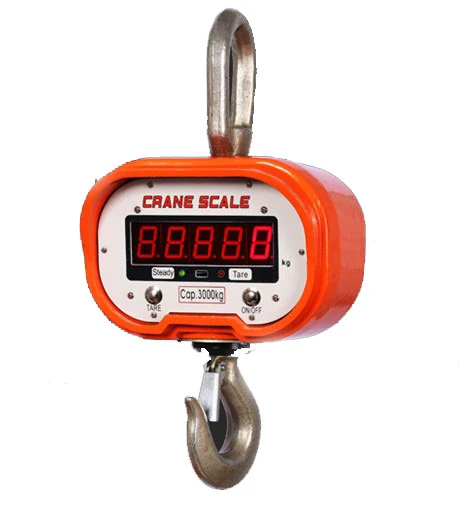
OCS-C1 crane scale with die cast aluminium enclosure →
Verify Periodically
A crane scale that has taken a knock can read low without looking damaged. Check it against known weights at a set interval, and take it out of service if a check fails rather than applying a mental correction.