
Spring Steel Buffers
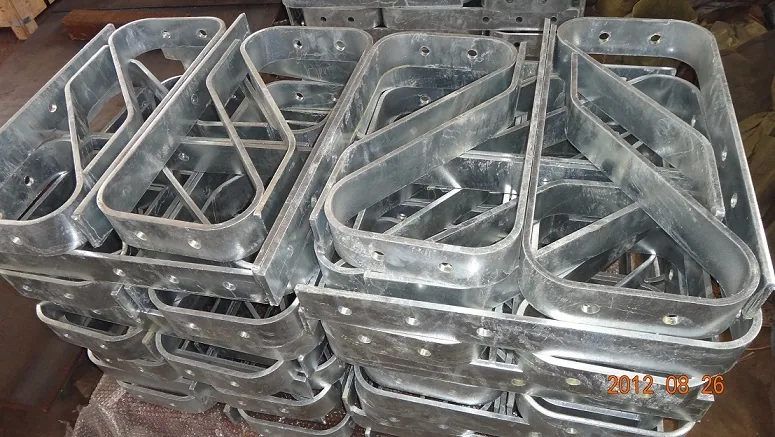
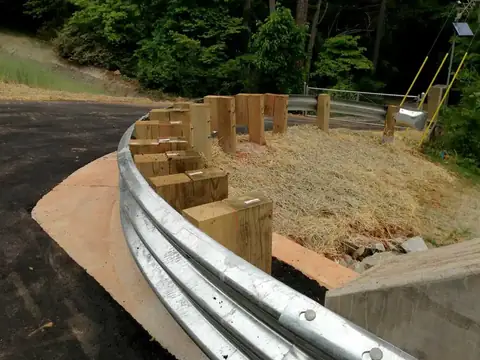
Spring steel buffers are impact-absorbing end terminals designed to reduce vehicle damage and structural failure at the ends of guardrail systems. The buffer uses a spring steel structure with a precision-bent and plasma-cut profile to absorb crash energy through controlled deformation. Made from high-strength spring steel and thermally treated for flexibility, it reduces anchor bolt pull-out forces during impact. The buffer is suitable for use at vehicle access points, loading docks, and industrial barriers where space is limited and impact energy must be dissipated safely.
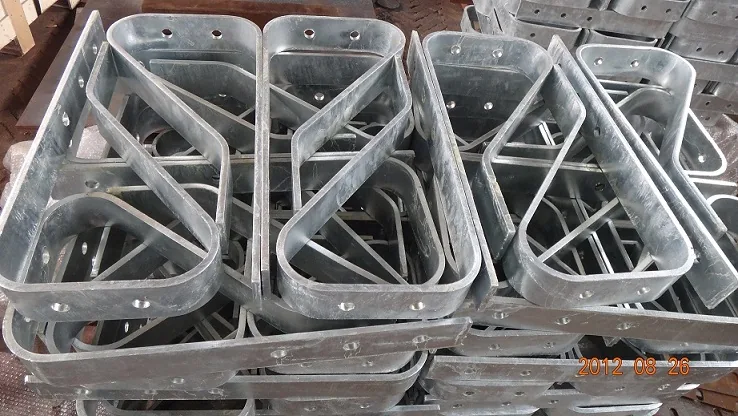
Key Benefits
- Absorbs impact energy through controlled deformation, reducing damage to vehicle and barrier structure
- Thermally treated spring steel provides high flexibility and resistance to repeated loading
- Precision-bent and plasma-cut profile ensures consistent geometry and reliable performance
- Reduces anchor bolt pull-out force during impact, improving terminal integrity
- Compact design with low footprint makes it suitable for tight installation spaces
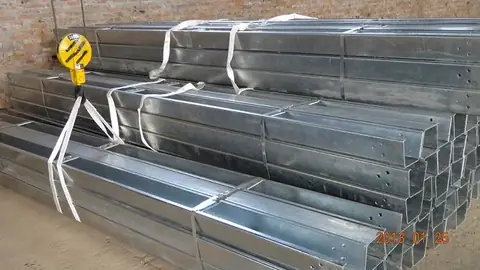
- Galvanized surface resists corrosion, extending service life in exposed environments
Application Scenarios
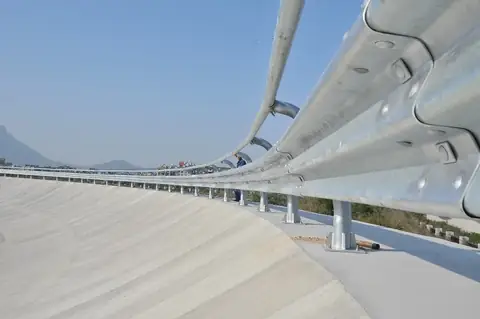
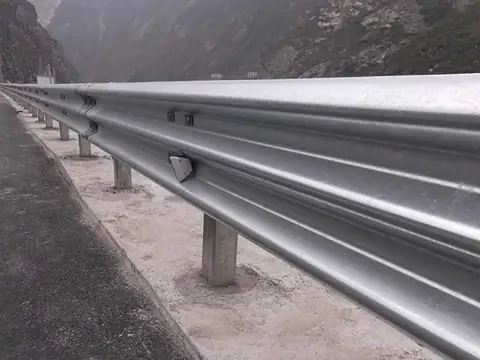
- End terminals on highway and roadway guardrail systems where vehicle run-off is a risk
- Loading docks and warehouse entrances where vehicles approach fixed structures at speed
- Parking barrier systems in industrial yards and commercial facilities
- Industrial compound perimeters where vehicle impact at barrier ends must be managed
- Areas with limited space for traditional crash cushioning, such as narrow shoulders or tight corners
Who It Is For
- Road authority contractors installing guardrail systems with end terminals
- Industrial facility managers specifying impact protection at entry and exit points
- Highway construction companies sourcing crash-tested buffer systems for tender compliance
- Civil infrastructure importers stocking terminal protection components for regional distribution
- Facility developers needing low-profile, high-performance impact buffers for parking and access zones
Problems It Solves
- End-of-barrier impact causing anchor bolt failure and structural collapse
- High vehicle damage at barrier terminations due to rigid, non-deformable ends
- Lack of energy absorption in terminal systems leading to rebound or penetration
- Corrosion at cut edges of steel components reducing service life in outdoor environments
- Inconsistent buffer geometry from manual fabrication leading to unpredictable crash performance
Technical Features
- Made from high-strength spring steel, thermally treated for flexibility and durability
- Precision-bent using automatic bending machine and plasma-cut for accurate radius
- Material dimensions: 100 mm x 14 mm, with bolted mounting system including springs and caps
- Designed with retro-lavado (reversed bend) column to reduce impact force transmission
- Galvanized surface for corrosion resistance on exposed installations
- Compact footprint suitable for space-constrained locations
Specifications
| Material | High-strength spring steel |
|---|---|
| Treatment | Thermally treated for flexibility and strength |
| Dimensions | 100 mm x 14 mm |
| Surface Treatment | Hot dip galvanized |
| Mounting | Bolted with springs and caps |
| Design | Retro-lavado column for energy absorption |
| Application | Guardrail end terminals, industrial barriers, loading docks |
Materials
- High-strength spring steel sourced from Tang Steel, China’s top steel producer
- Thermal treatment applied to enhance flexibility and fatigue resistance
- Zinc coating applied during hot-dip galvanizing to resist corrosion at cut and drilled surfaces
- Bolts, nuts, and spring components made from compatible steel to ensure system integrity
Manufacturing Process
- Steel coil received and verified for grade before entering production
- Material fed into automatic bending machine to form precise radius profile
- Plasma cutting used to shape the buffer to exact dimensions and geometry
- All cut edges inspected and treated to prevent corrosion at exposed surfaces
- Final assembly with bolts, springs, and caps performed in-house
- Galvanized in on-site workshop to meet corrosion resistance requirements
Quality Control
- Steel grade verified against Tang Steel supply documentation before processing
- Bend radius and profile geometry checked against design drawing
- Galvanizing thickness verified to meet corrosion resistance standards
- Assembly components inspected for correct fit and function
- Production covered by ISO9001 quality system and CNAS factory inspection
Certifications
Shandong Hongda Industry Co., Ltd is an ISO9001 certified company and holds a CE certificate, a CNAS factory inspection certificate and a qualification certificate for batch production. The company is a nominated high-tech enterprise of the Shandong Provincial Government and one of the Top 100 demonstration enterprises named by the Jinan Municipal Government.
Customization Options
- Dimensions adjusted to match specific barrier system or site layout
- Mounting configuration changed to suit different post types or anchoring methods
- Galvanizing thickness adjusted if required by regional specification
- Material grade upgraded if higher strength is needed for specific impact conditions
- Supplied as part of a full barrier system with compatible posts and end terminals
Compared With Other Products
| Concrete end terminals | Concrete is more rigid and requires more space, but has no moving parts. Spring buffers absorb energy through deformation and are better suited to tight spaces. |
|---|---|
| Cable barrier terminals | Cable systems allow greater deflection and are used on wide medians. Spring buffers offer a more compact solution for narrow or constrained areas. |
| Rigid metal end terminals | Rigid terminals can cause vehicle rebound or penetration. Spring buffers deform on impact, reducing risk of secondary collisions. |
| Hydraulic crash cushions | Hydraulic systems are more expensive and require maintenance. Spring buffers are low-maintenance and cost-effective for high-traffic zones. |
Use Guide
- Install buffer at the end of each guardrail run or at all access points
- Ensure the retro-lavado column faces the direction of oncoming traffic
- Anchor buffer to post using bolts and spring assembly as per design
- Check galvanized surface at cut edges and repair any bare steel before installation
- Inspect buffer after impact and replace if deformed or damaged
- Coordinate with post and beam system to ensure full compatibility and load transfer
Product Gallery
Spring Steel Buffers Questions Buyers Ask
What standard does your spring steel buffer meet?
What material and thickness do you use?
How is the galvanizing applied?
Can you customize the size or mounting?
Do you supply with bolts and springs?
What is your minimum order and lead time?
Do you export in containers?
Need Spring Steel Buffers to a Specification
Send the drawing or the tender clause and we will confirm the section, grade, thickness and coating weight we can supply.