
W-Beam Guardrail
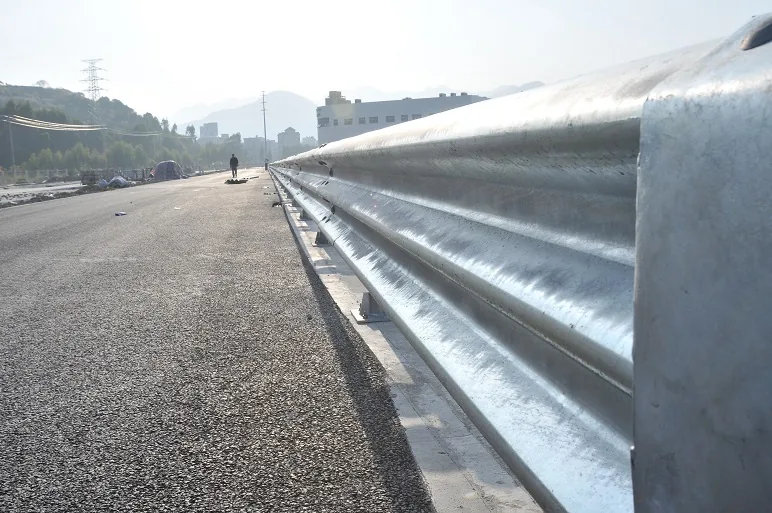
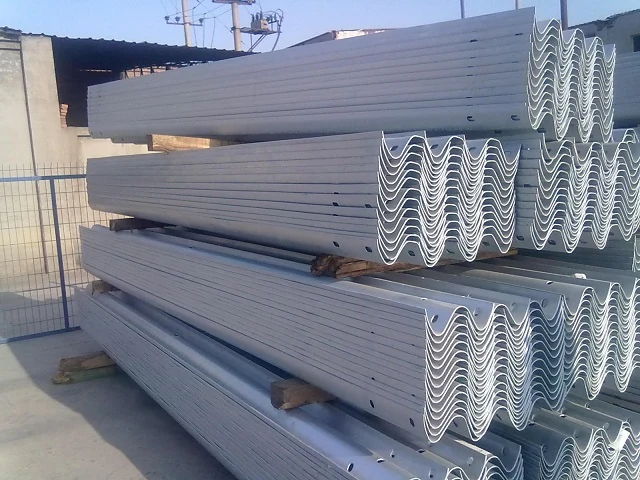
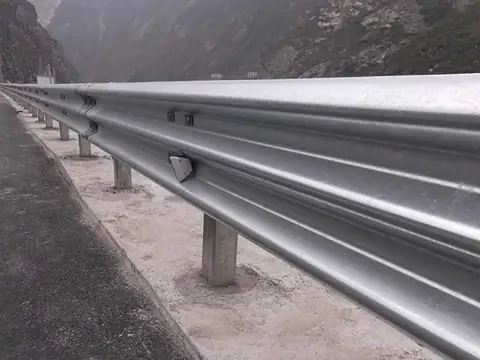
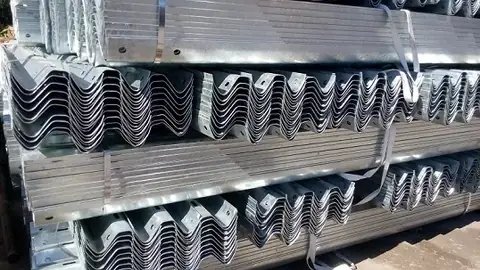
W-beam guardrail is the most widely installed crash barrier on highways and roadways, built to keep an errant vehicle on the carriageway and away from roadside structures. The corrugated beam absorbs impact energy and redirects the vehicle at a controlled exit angle instead of stopping it dead. Hongda rolls the profile to AASHTO M180 from Tang Steel coil and hot-dip galvanizes it to 550 g/m2, which is the specification most road authorities in the Americas write into their tenders. Standard sections run 4128 x 310 x 83 mm at 2.67 mm wall thickness, with other thicknesses rolled to order.
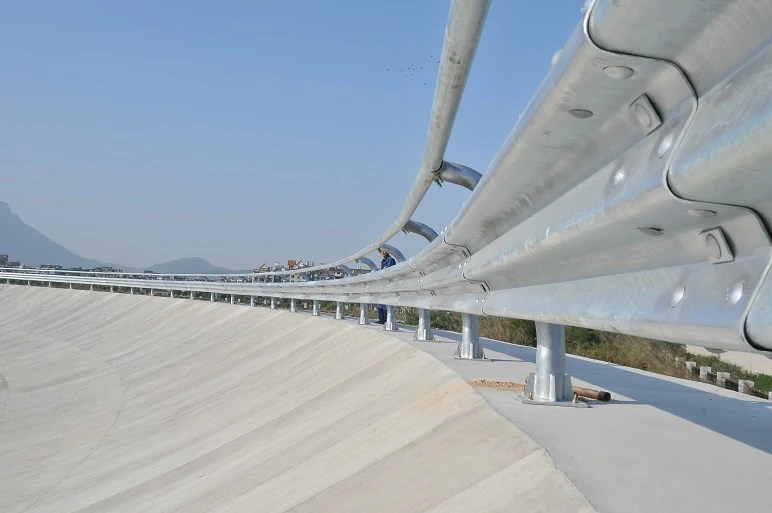
Key Benefits
- Redirects an errant vehicle back onto the carriageway instead of bringing it to an abrupt stop
- Rolled to AASHTO M180, the barrier standard specified across most road authorities in the Americas
- Hot-dip galvanized at 550 g/m2 (80 microns) for service life on exposed roadside installations
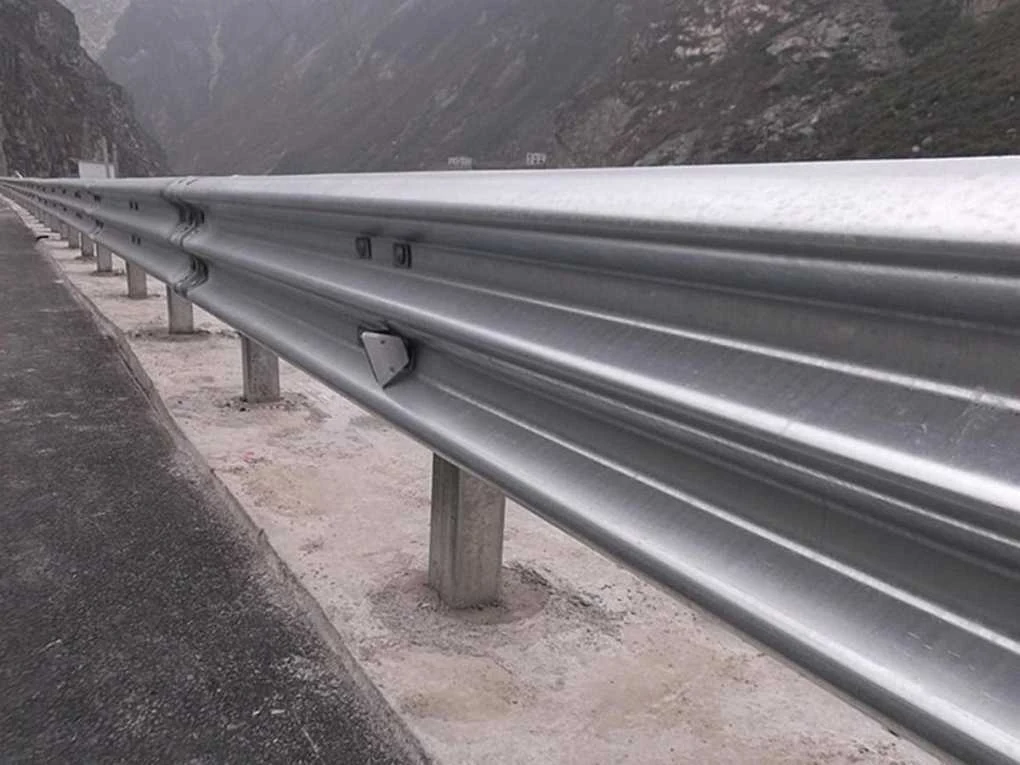
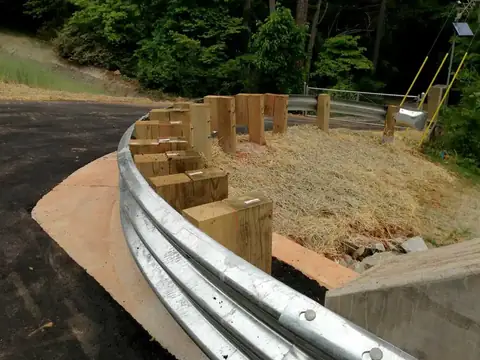
- Bolts beam to spacer then spacer to post, so a crew installs it without site welding
- Q235B or Q345 steel from Tang Steel, so impact performance is consistent across a delivery
- Damaged sections unbolt and swap individually, keeping repair cost to a single beam
Application Scenarios
- Highway and expressway shoulders where run-off-road departures are the main crash risk
- Rural roadway edges protecting drainage ditches, embankments and roadside structures
- Median separation between opposing traffic flows on divided carriageways
- Approaches to bridges, culverts and sign gantries needing point-hazard shielding
- Boundary lines where the barrier also keeps straying livestock off the running lanes
Who It Is For
- Highway contractors buying barrier by the container against a road authority specification
- Infrastructure importers and distributors stocking AASHTO M180 barrier for regional resale
- Civil works companies fitting out new roadway alignments and shoulder upgrades
- Maintenance departments replacing crash-damaged runs on existing installations
Problems It Solves
- Barrier that fails inspection because zinc coating falls short of the specified 550 g/m2
- Mixed steel grades across a shipment producing inconsistent impact behaviour along one run
- Profiles that do not splice cleanly to existing barrier already installed on site
- Corrosion at the roadside cutting barrier life well short of the design horizon
- Site welding on the carriageway slowing installation and adding hot work to the programme
Technical Features
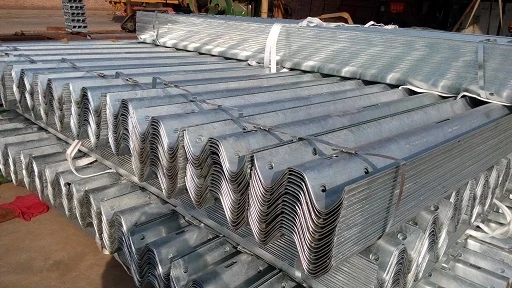
- Two-corrugation W profile, 4128 mm section length by 310 mm depth by 83 mm rib height
- 2.67 mm standard wall thickness, other thicknesses rolled to customer specification
- Q235B (equivalent to S235JR) or Q345 (S355JR / ASTM A529M 1994) hot rolled steel
- Hot-dip galvanized finish, zinc coating 550 g/m2 measured at 80 microns
- Bolt-through splice pattern allowing continuous runs and single-section replacement
- Rolled and punched to AASHTO M180 hole spacing for compatibility with standard posts
Specifications
| Standard Size | 4128 x 310 x 83 x 2.67 mm |
|---|---|
| Thickness | 2.67 mm or customized |
| Steel Grade | Q235B (equivalent to S235JR) / Q345 (S355JR / ASTM A529M 1994) |
| Surface Treatment | Hot dip galvanized |
| Zinc Coating | 550 g/m2 (80 microns) |
| Standard | AASHTO M180 |
| Application | Highway, roadway |
Materials
- Q235B hot rolled carbon steel, equivalent to S235JR, for standard highway runs
- Q345 higher strength steel, equivalent to S355JR and ASTM A529M 1994, where the specification calls for it
- Coil supplied by Tang Steel so grade and thickness stay consistent batch to batch
- Zinc for the hot-dip bath applied at 550 g/m2, the coating weight written into most tender documents
Manufacturing Process
- Steel coil is received and checked to grade before it enters the line
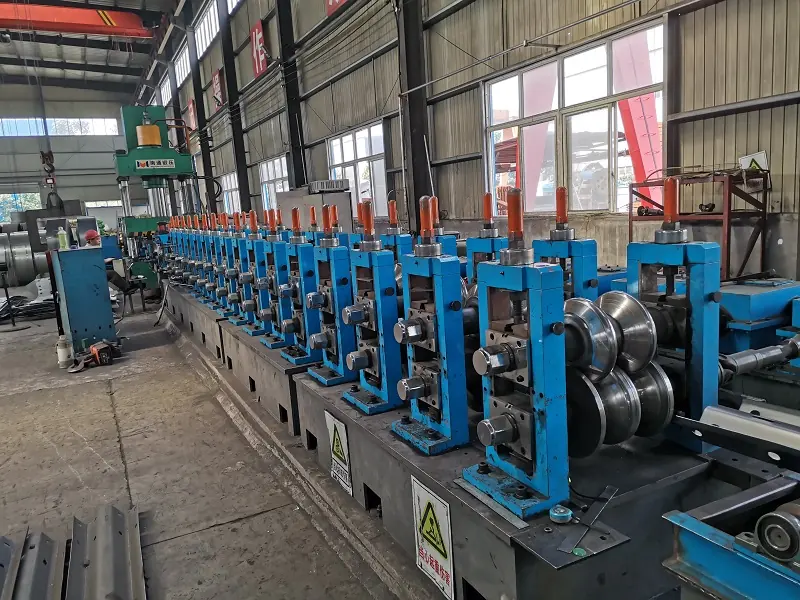
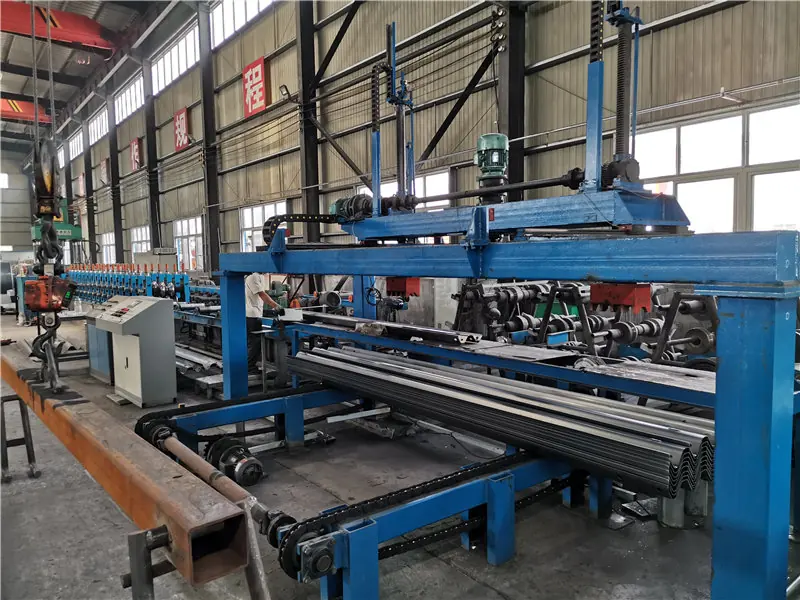
- Coil is roll formed through the W-beam forming machine to the two-corrugation profile
- Splice and post holes are punched to the AASHTO M180 pattern
- Sections are hot-dip galvanized in the on-site galvanizing workshop
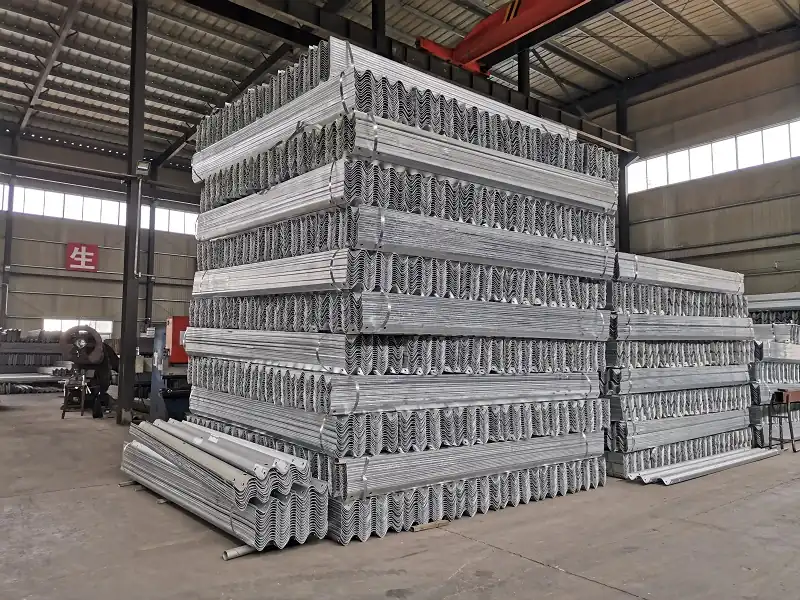
- Galvanized sections are inspected, bundled and loaded for container shipment
Inside the Workshop
Quality Control
- Steel grade verified against the Tang Steel supply before forming
- Section length, depth and rib height checked against the 4128 x 310 x 83 mm profile
- Zinc coating thickness checked against the 550 g/m2 requirement after galvanizing
- Hole pattern and spacing checked so sections splice without field drilling
- Production covered by the ISO9001 quality system and CNAS factory inspection
Certifications
Shandong Hongda Industry Co., Ltd is an ISO9001 certified company and holds a CE certificate, a CNAS factory inspection certificate and a qualification certificate for batch production. The company is a nominated high-tech enterprise of the Shandong Provincial Government and one of the Top 100 demonstration enterprises named by the Jinan Municipal Government.
Customization Options
- Wall thickness rolled away from the 2.67 mm standard where the specification requires it
- Q345 substituted for Q235B when the tender calls for the higher strength grade
- Section length and hole pattern matched to the standard being built to
- Supplied as a system with posts, spacers, terminal ends and bolt sets from the same production run
Compared With Other Products
| Thrie-beam guardrail | Thrie-beam adds a third corrugation and more impact resistance, but costs more per metre and is usually reserved for bridges, ramps and sharp corners |
|---|---|
| Open box beam | Box beam is stronger and lower maintenance over its life, but the section is heavier and the initial price per metre is higher |
| Concrete barrier | Concrete needs no galvanizing and lasts longer, but it does not deform on impact and cannot be repaired one section at a time |
| Cable barrier | Cable systems deflect further and suit wide medians, while W-beam works where the available deflection space is limited |
Use Guide
- Set posts to the spacing and embedment depth given in the road authority specification
- Fix the beam to the spacer block first, then fix the assembly to the post
- Lap splices in the direction of traffic flow so the joint does not snag an impacting vehicle
- Fit upstream and downstream terminal ends at every opening and at the end of each run
- Inspect galvanizing at cut or drilled points and treat any bare steel before handover
- Replace crash-damaged sections individually rather than re-running the whole line
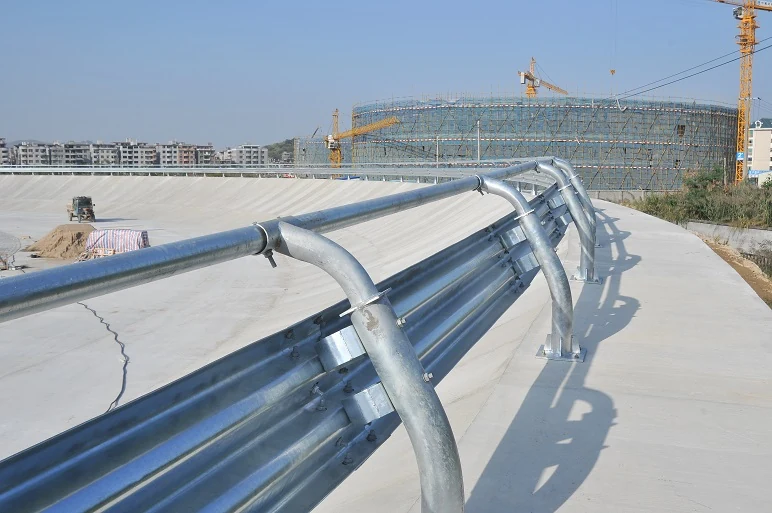
Product Gallery
W-Beam Guardrail Questions Buyers Ask
What standard is your W-beam guardrail made to?
What steel grade and thickness do you supply?
How thick is the galvanizing?
What are the section dimensions?
Can you supply posts and terminals with the beam?
What is your minimum order and lead time?
Do you export in full containers?
Need W-Beam Guardrail to a Specification
Send the drawing or the tender clause and we will confirm the section, grade, thickness and coating weight we can supply.