
Curved Radius Guardrail
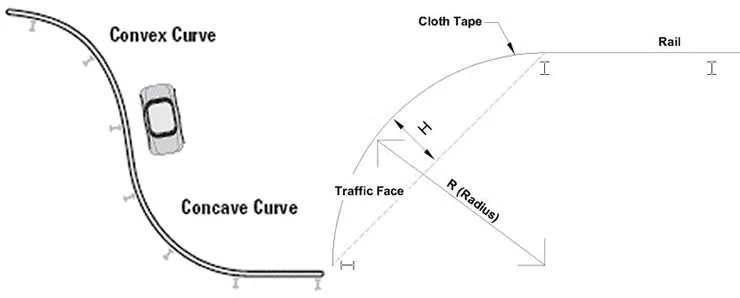
Curved radius guardrail is a specialized barrier section designed to provide a smooth transition in road curves, with radii ranging from 1.5 meters to 50 meters. It is formed into convex or concave profiles using an automated bending machine to achieve precise curvature. The system is developed from a proven design for both new installations and upgrades to existing road safety infrastructure. It ensures consistent impact performance and alignment continuity at turning points where straight barrier sections would create abrupt transitions.
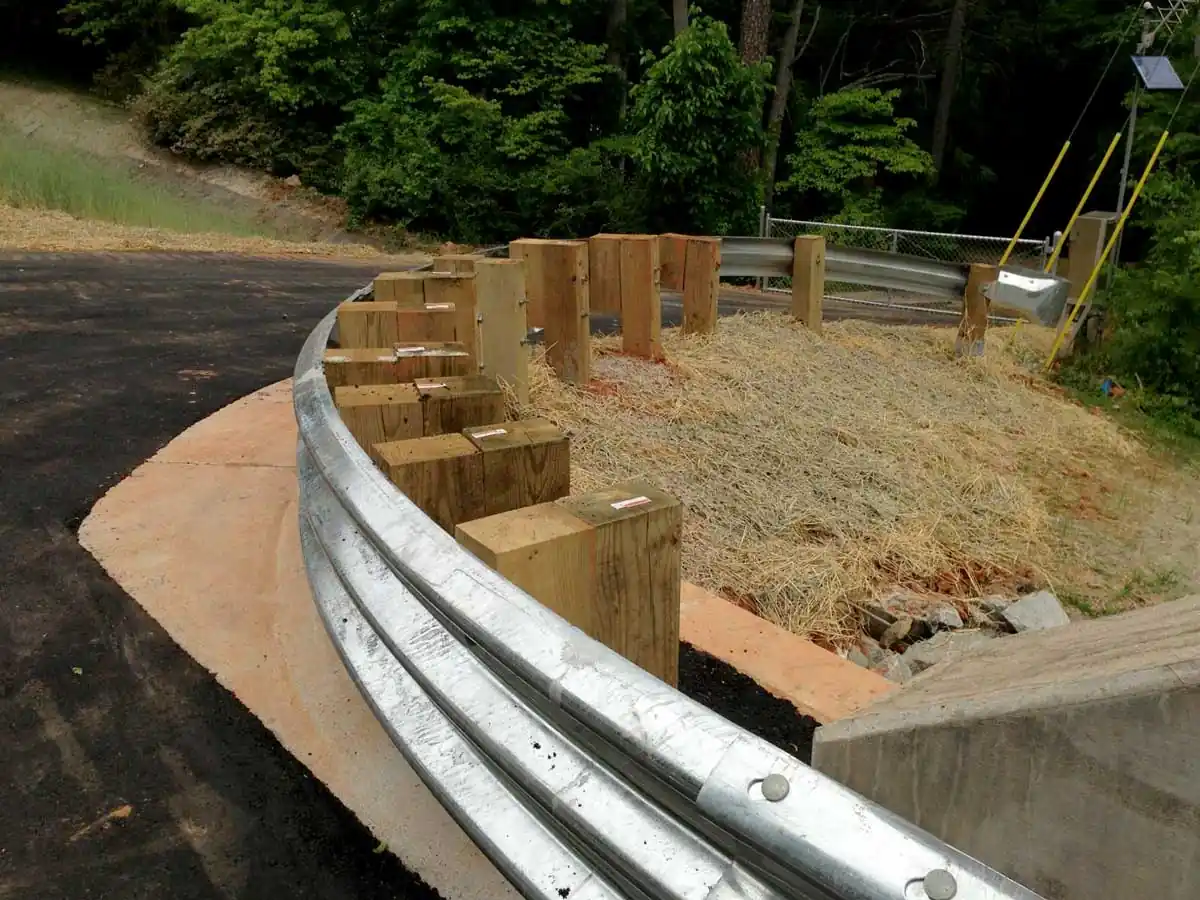
Key Benefits
- Provides a smooth, continuous transition in road curves without sharp angles or discontinuities
- Formed with an automated bending machine to maintain precise radius accuracy across the section
- Reduces the risk of vehicle snagging at curve entry and exit points
- Compatible with standard W-beam and thrie-beam systems for seamless integration
- Designed to maintain impact energy absorption and redirection in curved alignments
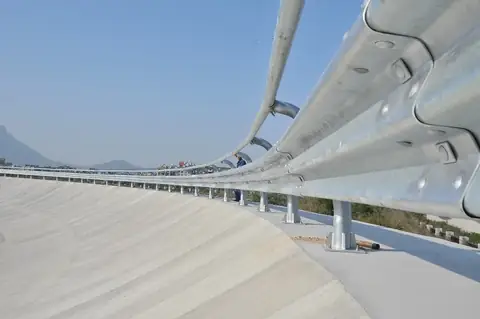
- Can be installed with standard posts and spacers to support the curved run
Application Scenarios
- Road curves with radii between 1.5 m and 50 m where straight barrier sections would create abrupt transitions
- Approaches to roundabouts and interchanges requiring a continuous barrier path
- Upgrade projects on existing highways where curve geometry must be matched without regrading
- Sharp bends on mountain roads or urban intersections where vehicle trajectory must be guided
- Site-specific installations where the natural alignment requires a custom radius
Who It Is For
- Highway contractors installing barrier systems on curved road alignments
- Infrastructure importers sourcing curved guardrail for regional projects with variable terrain
- Civil works companies fitting barrier to existing road geometry in retrofit applications
- Road safety engineers specifying barrier continuity at turning points
- Maintenance teams replacing damaged sections in curved runs without reworking the full alignment
Problems It Solves
- Abrupt transitions at curve ends where straight barrier sections meet, increasing crash risk
- Inconsistent alignment between straight and curved barrier runs due to mismatched geometry
- Vehicle snagging on sharp edges or misaligned joints at curve entry and exit
- Difficulty in maintaining continuous energy absorption across a curve with standard sections
- Need for field cutting or welding to fit barrier to site-specific curve radii
Technical Features
- Curved profile formed to radii between 1.5 m and 50 m, convex or concave
- Automated bending machine ensures consistent curvature and dimensional accuracy
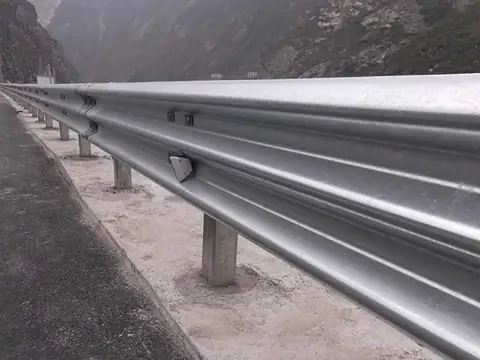
- Compatible with standard W-beam and thrie-beam profiles for system integration
- Formed from Q235B or Q345 steel, supplied by Tang Steel, for consistent mechanical properties
Specifications
| Radius Range | 1.5 m to 50 m |
|---|---|
| Forming Method | Automated bending machine |
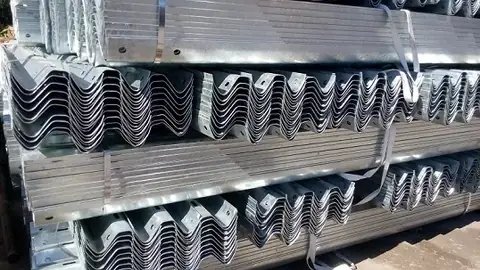
| Surface Treatment | Hot dip galvanized |
| Application | Road curves, roundabouts, interchanges, retrofit installations |
TBC The source specification does not state Steel Grade, Zinc Coating for this product. Confirm with us before you rely on it.
Materials
- Q235B or Q345 hot rolled steel, supplied by Tang Steel, ensuring consistent grade and thickness
- Steel coil processed through automated bending to maintain structural integrity
- No secondary welding or field modification required for curvature
Manufacturing Process
- Steel coil received and verified for grade before entering the forming line
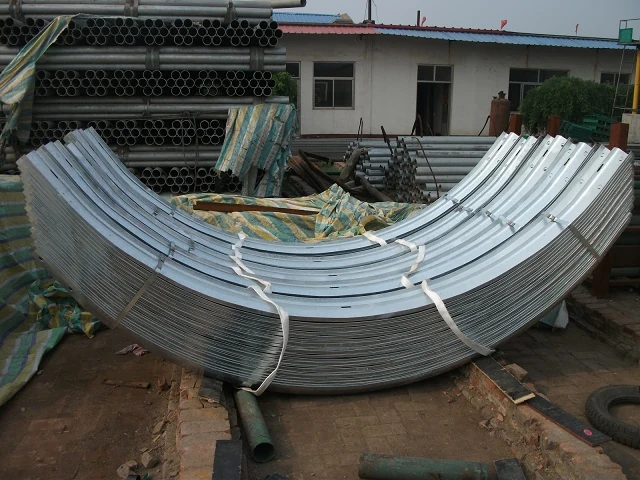
- Coil fed into automated bending machine to form the specified radius
- Sections hot-dip galvanized in the on-site galvanizing workshop
- Galvanized sections inspected for coating uniformity and integrity
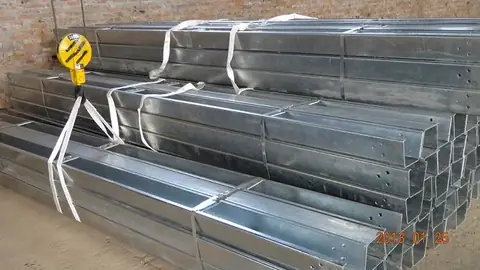
- Bundled and prepared for container shipment
Inside the Workshop
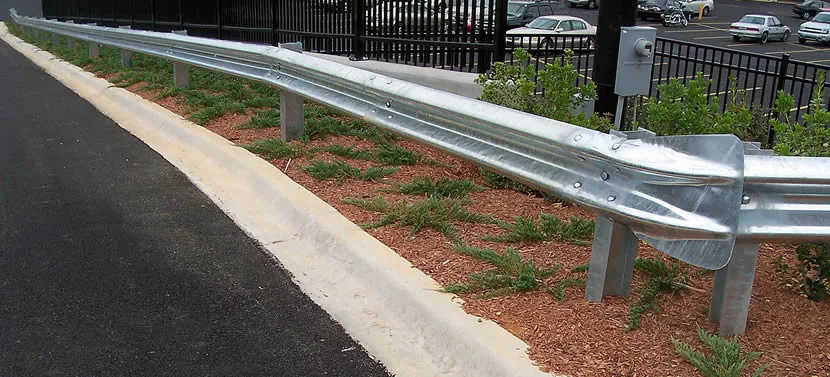
Quality Control
- Steel grade verified against Tang Steel supply documentation before forming
- Curvature measured against the specified radius using calibrated tools
- Hole pattern and spacing verified for compatibility with standard posts
- Production covered by ISO9001 quality system and CNAS factory inspection
Certifications
Shandong Hongda Industry Co., Ltd is an ISO9001 certified company and holds a CE certificate, a CNAS factory inspection certificate and a qualification certificate for batch production. The company is a nominated high-tech enterprise of the Shandong Provincial Government and one of the Top 100 demonstration enterprises named by the Jinan Municipal Government.
Customization Options
- Radius formed to match site-specific curve geometry between 1.5 m and 50 m
- Section length and hole pattern adjusted to match the standard being built to
- Steel grade selected as Q235B or Q345 based on specification requirements
- Supplied with matching posts, spacers, and terminal ends from the same production run
- Can be fitted with standard W-beam or thrie-beam profiles for system continuity
Compared With Other Products
| Straight W-beam guardrail | Straight sections are simpler to produce but create abrupt transitions at curves, increasing crash risk at entry and exit points |
|---|---|
| Thrie-beam guardrail | Thrie-beam offers higher impact resistance but is not typically used in curved sections due to complexity in forming and alignment |
| Concrete barrier | Concrete can be cast in curved forms but requires formwork and curing time, while curved metal barrier is pre-formed and faster to install |
| Cable barrier | Cable systems suit wide curves but do not provide the same physical containment or repairability as a formed metal barrier |
Use Guide
- Measure the curve radius at the site and confirm the required radius for the guardrail section
- Install standard posts at the specified spacing along the curve, ensuring proper embedment depth
- Position the curved guardrail section so the radius matches the road alignment
- Connect adjacent sections using standard splice bolts, ensuring the lap direction follows traffic flow
- Fit terminal ends at both ends of the curved run and at any break points
- Inspect galvanized surfaces at cut or drilled points and treat any exposed steel before handover
Product Gallery
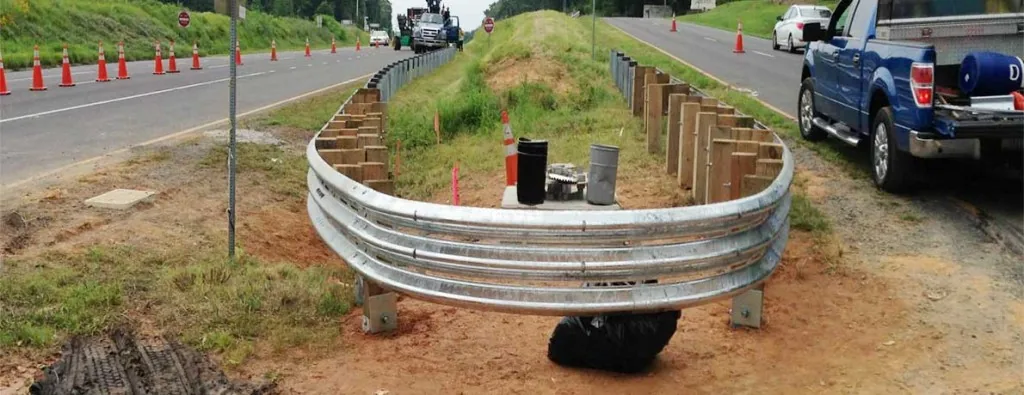
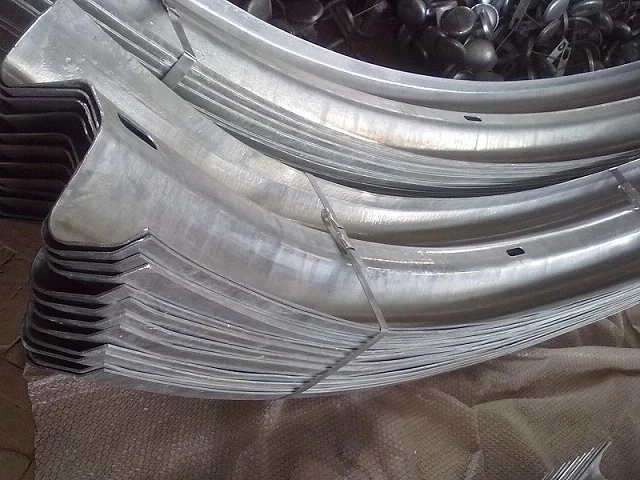
Curved Radius Guardrail Questions Buyers Ask
What radii can you produce for curved guardrail?
What steel grade and thickness do you use?
Can you supply curved sections with posts and terminals?
What is your minimum order and lead time?
Do you export in full containers?
Is the curved guardrail galvanized?
How do you achieve an accurate radius?
Need Curved Radius Guardrail to a Specification
Send the drawing or the tender clause and we will confirm the section, grade, thickness and coating weight we can supply.