
XUP300 Optical Polarizing Microscope
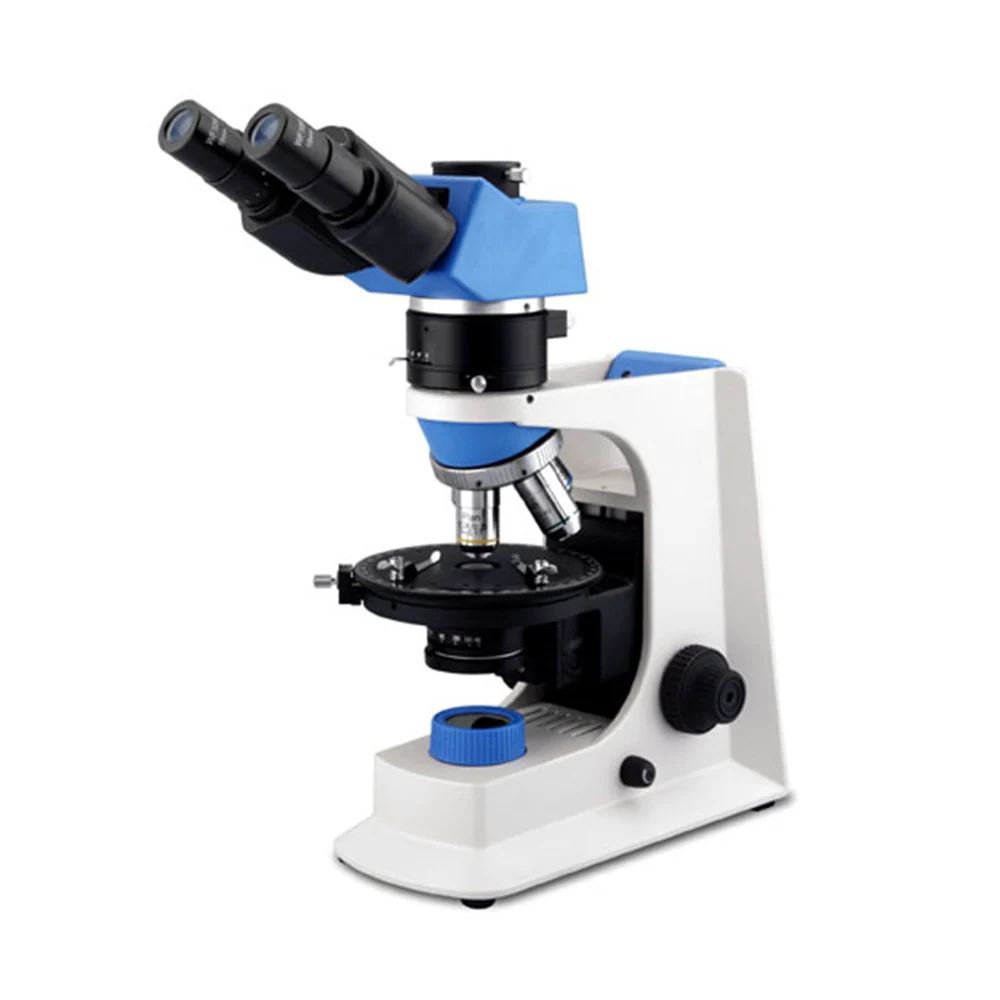
The XUP300 is a Seidentopf binocular or trinocular polarizing microscope with a non-stress infinity plan optical system, designed for detailed analysis of anisotropic materials.
Product Overview
The XUP300 is a Seidentopf binocular or trinocular polarizing microscope with a non-stress infinity plan optical system, designed for detailed analysis of anisotropic materials. It includes a 4x to 60x (S) objective range, a 360° rotatable stage with 1° divisions and 6' vernier, and a built-in 6V/20W halogen lamp. The polarizing unit, analyzer, Bertrand lens, and λ slip accessories allow for full polarized light observation, including conoscopic and interference patterns. The microscope supports both transmitted and reflected polarized light, making it suitable for mineralogy, metallurgy, and material science.
- Optical systemNon-stress Infinity Plan
- HeadSeidentopf Binocular / Trinocular
- Head inclination30°
- Head rotation360°
- Interpupillary adjustment48-75mm
- Objective range4x, 10x, 20x (S), 40x (S), 60x (S)
Key Benefits
- Non-stress infinity plan objectives reduce image distortion across the field
- 360° rotatable stage with 1° divisions and 6' vernier enables precise sample alignment
- Analyzer unit rotates 0-90° and can be removed for single polarizing observation
- Bertrand lens and λ slip accessories support conoscopic and interference pattern analysis
- Optional 6V/30W halogen and 3W-LED lamps provide alternative illumination sources
- C-mount adapter with focus adjustment allows for camera integration
- Seidentopf head with 30° inclination and 48-75mm interpupillary adjustment supports long-term viewing comfort
Application Scenarios
- Mineral identification in geology labs using interference colors and extinction angles
- Metallographic analysis of grain structure and phase distribution in metallurgy
- Stress analysis in transparent materials using polarized light and interference fringes
- Quality inspection of optical components and thin films for birefringence
- Teaching polarized light microscopy in university material science courses
- Documentation of crystal structures and optical properties for research reports
Who It Is For
- Geology, mineralogy and gemmology labs analyzing crystal structures and optical properties
- Metallurgy and materials science labs inspecting grain boundaries and stress patterns
- Research laboratories studying birefringent materials and thin film coatings
- University teaching labs demonstrating polarized light techniques
- Quality control departments in optics and semiconductor manufacturing
Problems It Solves
- Fixed stage rotation limits precise angular alignment of samples under polarized light
- Lack of interchangeable polarizing components forces separate instruments for different modes
- Standard objectives introduce image distortion in high-magnification polarized observations
- No built-in stage rotation with fine divisions makes quantitative angular measurement difficult
- Inadequate illumination intensity or spectrum limits contrast in birefringent samples
Technical Features
- Non-stress infinity plan optical system ensures consistent focus and image quality
- Seidentopf binocular or trinocular head with 30° inclination and 360° rotation
- Interpupillary adjustment 48-75mm for user-specific eye spacing
- Quadplex nosepiece with center adjustment for objective alignment
- Rotatable 360° stage with 1° divisions and 6' vernier for precise angular positioning
- Built-in 6V/20W halogen lamp with optional 6V/30W and 3W-LED lamps
- Analyzer unit rotates 0-90° and can be removed from the optical path
- Bertrand lens can be moved in and out of the optical path for conoscopic observation
- λ slip first class red and 1/4λ slip for interference color analysis
- Quartz wedge (I-IV class) for measuring birefringence and retardation
- Polarizing unit can be removed from the optical path for single polarizing use
- C-mount adapter with focus adjustment for camera integration
Specifications
| Optical system | Non-stress Infinity Plan |
|---|---|
| Head | Seidentopf Binocular / Trinocular |
| Head inclination | 30° |
| Head rotation | 360° |
| Interpupillary adjustment | 48-75mm |
| Objective range | 4x, 10x, 20x (S), 40x (S), 60x (S) |
| Eyepiece | WF 10x-18mm |
| Eyepiece with reticule | WF 10x-18mm (Reticule 0.1mm) |
| Nosepiece | Quadplex, Center adjustable |
| Stage | Revolving round, 360° rotatable, 1° divisions, 6' vernier, can be locked |
| Stage diameter | 148mm |
| Illumination | 6V/20W Halogen Lamp |
| Optional illumination | 6V/30W Halogen Lamp, 3W-LED Lamp |
| Polarizing unit | Can be moved out of optical path |
| Analyzer unit | 0-90°, can be moved out of optical path |
| Bertrand lens | Can be moved out of optical path |
| λ slip | First Class Red, 1/4λ Slip |
| Quartz wedge | I-IV Class |
| C-mount adapter | 1x, 0.47x (Focus adjustable) |
| Packing size | 570mm x 275mm x 450mm |
| Gross weight | 8.6 kgs |
| Net weight | 7.5 kgs |
Specifications are taken from the AMADA product data for this item. Confirm critical dimensions with us in writing before ordering.
Customization Options
- Binocular or trinocular head configuration
- Optional 6V/30W halogen lamp or 3W-LED lamp
- C-mount adapter with focus adjustment for camera integration
- Addition of quartz wedge (I-IV class) for birefringence measurement
- Optional 1/4λ slip and first class red λ slip for interference analysis
Comparison With Other Options
| XUP301 Polarizing Microscope | The XUP300 includes a 60x (S) objective and a 360° rotatable stage with 6' vernier; the XUP301 lacks the 60x objective and has no vernier on the stage. |
|---|---|
| XUP302 Polarizing Microscope | The XUP302 includes a 6V/30W halogen lamp and 3W-LED lamp as standard; the XUP300 has these as optional accessories. |
| Standard biological microscope | A standard biological microscope lacks polarizing components, analyzer, Bertrand lens, and λ slip, so it cannot perform birefringence or conoscopic analysis. |
Use Guide
- Adjust the interpupillary distance between 48mm and 75mm before focusing to ensure a single merged image
- Use the 1° divisions and 6' vernier on the stage to align crystal axes or grain boundaries precisely
- Remove the Bertrand lens and analyzer for single polarizing observation when needed
- Insert the λ slip or quartz wedge to measure birefringence and retardation in transparent materials
- Use the C-mount adapter with focus adjustment to attach a camera for documentation
- Ensure the polarizing unit is properly aligned with the condenser for transmitted light observation
More From Polarizing Microscope
Frequently Asked Questions
What is the maximum magnification with the 60x objective?
With a 10x eyepiece, the total magnification is 600x. Higher magnifications are possible with optional eyepieces.
Can I use this microscope for transmitted and reflected polarized light?
Yes. The polarizing unit and analyzer are designed for transmitted light. For reflected light, a suitable mirror or beam splitter must be added.
Does the stage have fine angular control?
Yes. The stage rotates 360° with 1° divisions and a 6' vernier for precise angular positioning.
What is the purpose of the Bertrand lens?
The Bertrand lens enables conoscopic observation, allowing the visualization of interference figures in birefringent materials.
Can I add a camera to this microscope?
Yes. A C-mount adapter with focus adjustment is available as an optional accessory for camera integration.
What is the difference between XUP300 and XUP301?
The XUP300 includes a 60x (S) objective and a stage with 6' vernier; the XUP301 has only up to 40x (S) and no vernier on the stage.
Request A Price On The XUP300 Optical Polarizing Microscope
Send quantity, destination and the application. We will confirm the configuration, the price and the lead time.