
How to Choose a Stereo Microscope for Inspection Work
Zoom range, working distance, head type, stand and light - the five decisions that decide whether a stereo microscope suits the job.
Start With the Smallest Feature
Magnification figures on their own tell you very little. What matters is the smallest feature you have to resolve and the largest area you have to see at once. Those two numbers give you a zoom range. A 1:6.4 zoom ratio at 0.7X to 4.5X, for example, covers a field from about 28.6mm down to 4.4mm under a 1X objective, which suits work that starts by locating a component and ends by inspecting one joint.
Reserve the Working Distance Before You Choose Magnification
Working distance is the space between the objective and the sample. It is the figure people forget until the soldering iron hits the lens. A standard 1X objective typically gives around 100mm. Auxiliary objectives trade magnification against clearance: a 0.5X pushes the working distance out, a 2X pulls it in. Decide what has to fit underneath first.
Binocular or Trinocular
A binocular head is for looking. A trinocular head adds a third port for a camera. If any part of the job involves showing a defect to somebody who is not at the bench, buy the trinocular head. Retrofitting a port is not possible; adding a camera to an existing port is.
The Stand Decides What You Can Inspect
Pillar and track stands suit parts that come to the microscope. Boom and articulated arms suit assemblies that cannot be moved. A focusing mount is the part that carries the head up and down the post, and it is bought separately, which is what makes a stand upgrade possible later.
Light Is Half the Image
Even ring illumination removes the directional shadow that hides defects. Segmented rings and directional cold light bring out engraving and surface texture. Coaxial illumination suits flat specular surfaces where you need to read marking.
Where To Look In The Catalogue
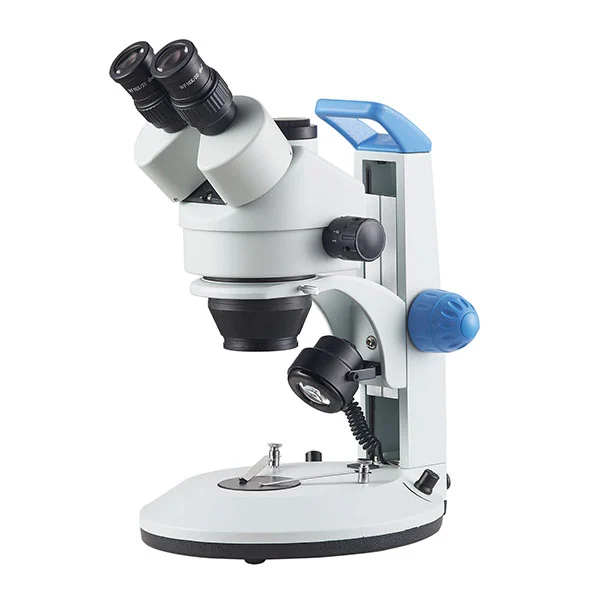
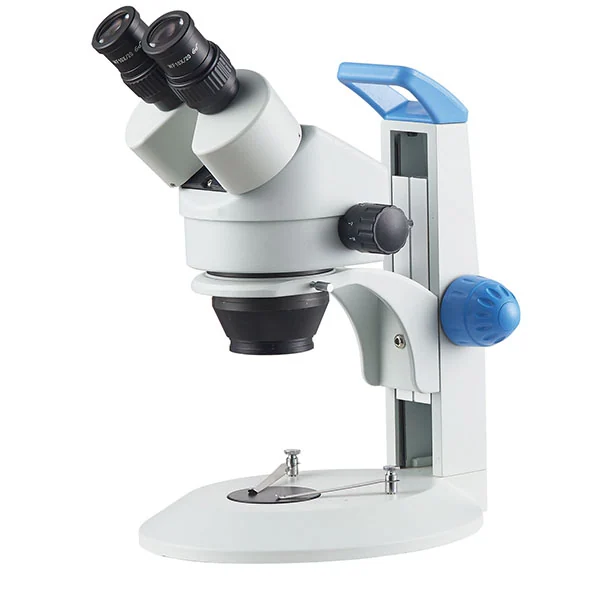
26 productsXSZ7045 Stereo Zoom Microscope
A 7-45X zoom stereo microscope with Greenough optical system, designed for detailed inspection of small components, assemblies and specimens across electronics, precision engineering and laboratory workflows.
 29 products
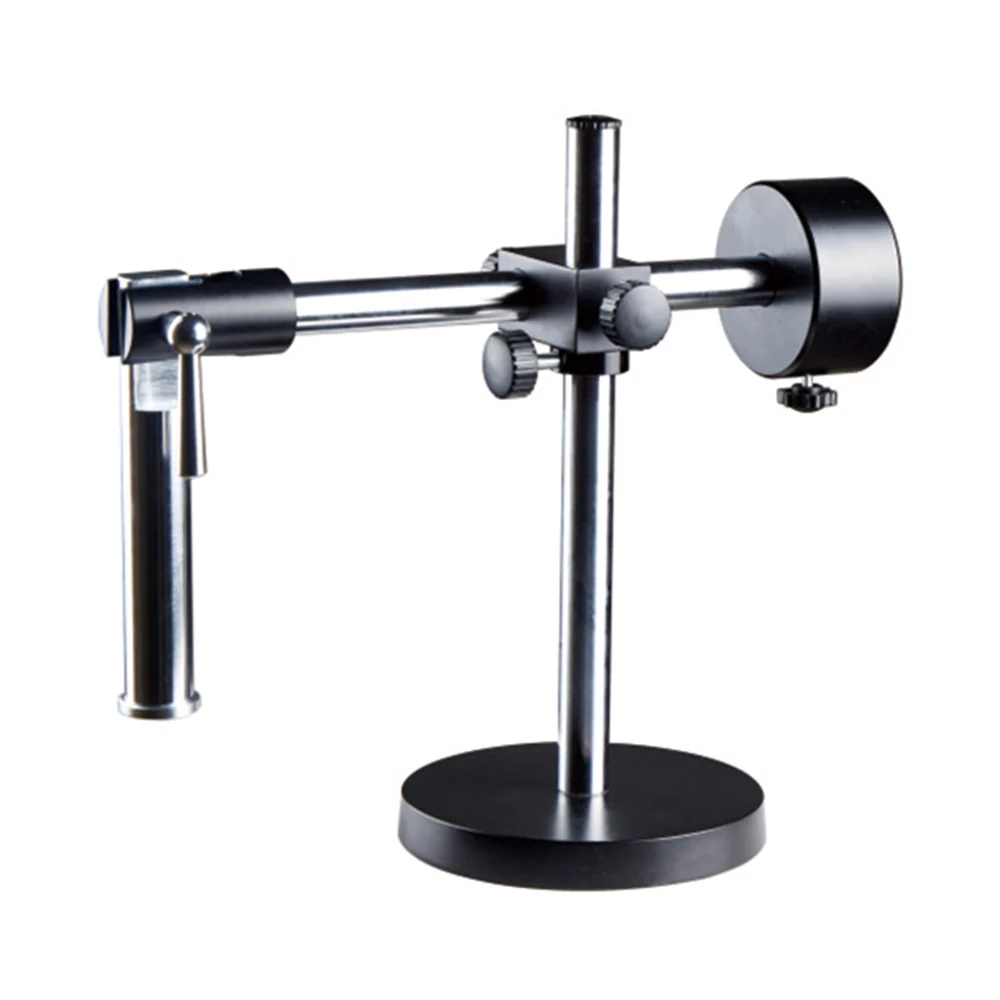
Stereo Microscope Stand
Microscope stands designed for stereo and video digital microscopes, offering adjustable positioning and stable mounting for inspection tasks across electronics, precision assembly and laboratory environments.
 17 products
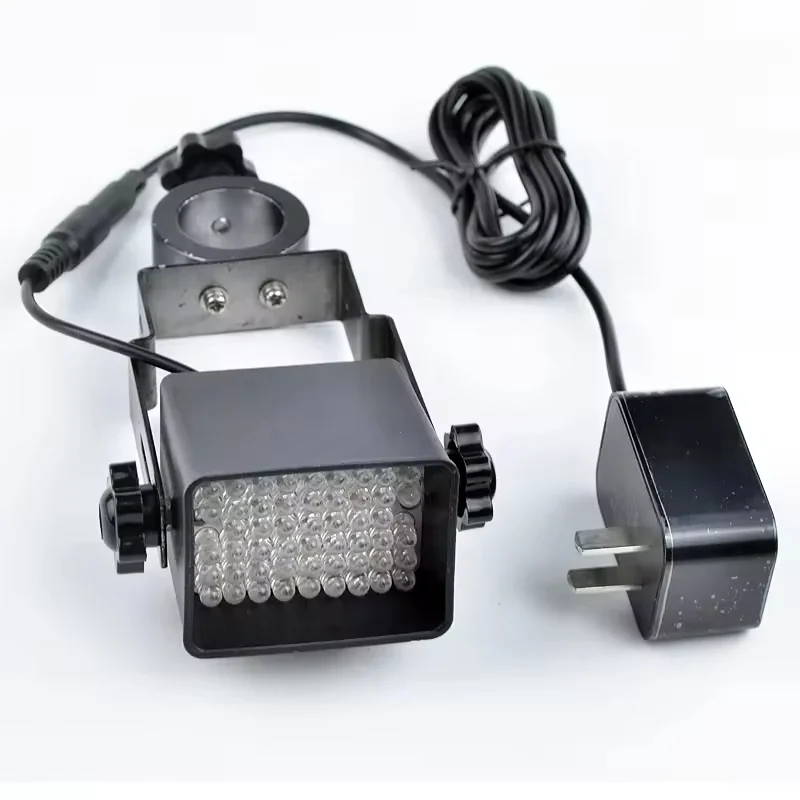
LED Ring Light
LED ring lights that mount around a microscope objective to deliver even, shadow-free illumination directly onto the surface being inspected. Available in multiple sizes, LED counts, and configurations including adjustable brightness, segmented quadrants, and polarized variants for specialized surface analysis.
Frequently Asked Questions
Is a higher zoom ratio always better?
No. A wide zoom ratio is useful when one bench does both search and inspection. If the job always happens at one magnification, spend the money on optics quality and illumination instead.
Can I change the working distance later?
Yes, by fitting an auxiliary objective. That changes both the magnification band and the clearance, so check both before ordering.
Ask Before You Order
Send the model you are considering and the task it has to do. We will confirm the fit in writing.