


Design guide
Layered Lighting: Why One Beautiful Fixture Is Not A Lighting Scheme
Rooms fail on lighting because they have one layer. The fix is ambient, task, accent and decorative working together, and it is a drawing decision rather than a shopping decision.
Almost every badly lit room has the same fault: one source, in the middle of the ceiling, at one brightness. It is why rooms feel like offices in the evening and why a beautiful chandelier so often disappoints the person who bought it. A chandelier is a decorative layer. On its own it is not a scheme.
The four layers
| Layer | Job | Fixtures in this catalogue |
|---|---|---|
| Ambient | General light so the room is usable and safe | Ceiling lights, large acrylic pendants, ceiling fan lights |
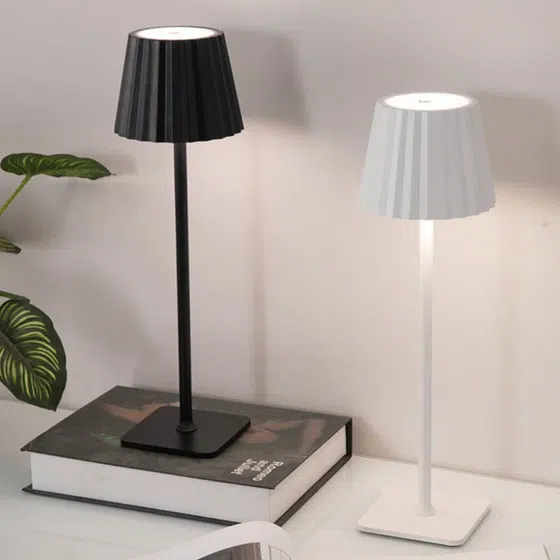
| Task | Enough light on a specific surface to work, read or cook | Table lamps, floor lamps, track lighting |
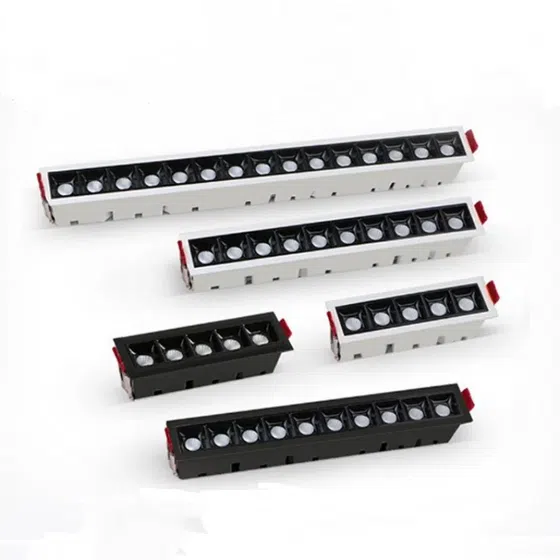
| Accent | Draws the eye to an object, a texture or a display | Spotlights, track lights, linear wall lights |
| Decorative | The fixture is itself the thing being looked at | Chandeliers, statement pendants, art pendants |
The order to think in
- Decide what the room is for, and at what times of day.
- Place the task light first, where people actually read, cook, work or eat.
- Add ambient light to lift the whole space, not to dominate it.
- Add accent light only where there is something worth accenting.
- Choose the decorative fixture last, when you know what light it does not have to provide.
Working in that order costs nothing and changes the result completely, because it stops the decorative fixture being asked to do a job it was never designed for.
Switching is part of the design
Four layers on one switch is one layer with extra steps. Each layer needs its own control so the room can be bright in the morning and low in the evening. Switch control is the standard published mode across this catalogue, so the flexibility comes from the circuit design rather than from the fixtures. That is also why lighting and circuitry design is a service listed on our own product specifications.
Worked example: a hotel guest room
- Ambient: a flush ceiling light, since nothing should hang over a bed
- Task: wall lights at the bedside, freeing the nightstand, plus a desk lamp
- Accent: a linear wall light grazing the headboard wall
- Decorative: a small pendant or a table lamp with presence, in the seating corner
- All four on separate switches, with the bedside pair switched at the bed
If you can only improve one thing in a finished room, add a floor lamp in a dark corner. It is the only fixture that needs no electrician and it fixes more rooms than any other single change.
FAQ
Questions On This Guide
How many layers does a small room need?
Two is usually enough: ambient plus task. The four-layer model is for larger and more used spaces, not a rule to apply everywhere.
Do you provide lighting design?
Lighting and circuitry design is listed as a service on our product specifications. Send a floor plan with ceiling heights and we will tell you what we can produce for your project.
Is dimming necessary?
It is the easiest way to make one fixture serve two moods, but separate switching of separate layers achieves more for less. Dimming support is model specific, so confirm it before designing around it.
Where should I not put a decorative fixture?
Anywhere it will be looked into rather than at, such as directly at seated eye level, and anywhere it has to be the only light in the room.
Related products
Products Referenced In This Guide
Product groups
Ranges This Guide Covers
37 products
Ceiling Lights
Flush and semi-flush ceiling fixtures in iron, acrylic, crystal, resin and stainless steel, including high-output LED models for rooms without the hei
56 products
Table Lights
Copper, glass, PS, acrylic and shell table lamps on E27, GU10 and LED, including rechargeable and lava models.

66 products
Floor Lights
Iron, fabric, acrylic, feather and glass floor lamps on E27, G9, G4 and LED, from reading lights to metre-plus sculptural pieces.
Turn This Into A Specification
Send us the project and we will translate it into item numbers, a lead time and a container plan.