
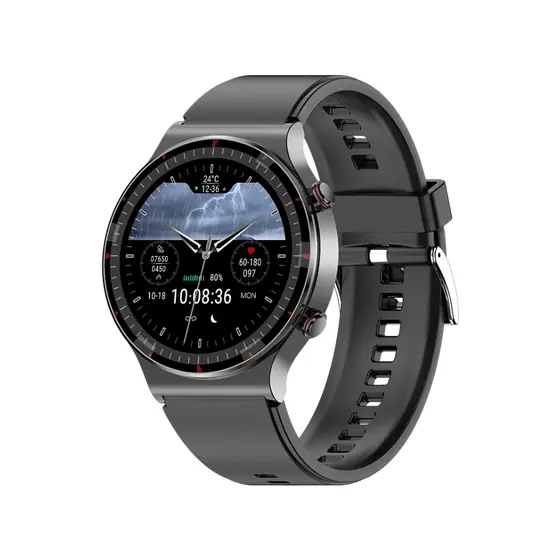
ECG Health Smart Watches
Medical Grade ECG HRV Monitor Smart Watch SpO2 Body Temperature Round Smart Watch
Goodix 5515 and Max86176 ECG platform at 512Hz with HRV replay and sleep apnea monitoring
View specification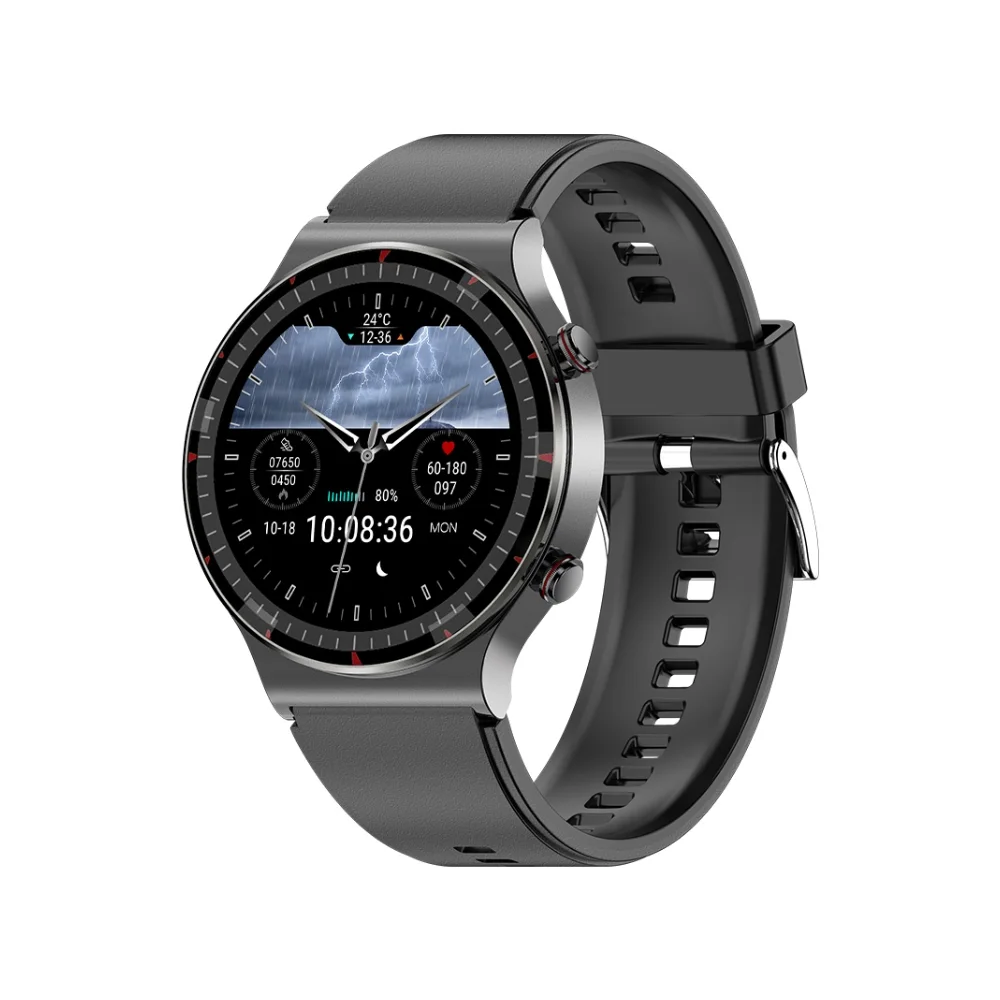
PPG sensors and ECG front ends measure different things. Knowing which is which decides what a wearable may legally and honestly claim.
A PPG sensor shines light into the skin and measures how much comes back. Blood volume changes with each heartbeat, so the reflected signal rises and falls, and the interval between peaks gives a heart rate. Every watch in this catalogue carries one: PAH8007 on the 1.1 inch trackers, LC10A on the 1.7 inch band, HX3605 on the 1.85 inch calling watch, HRS3300 on T32S, VC32S on UQ33 and PAH 8009 on the 4G models.
An ECG front end measures the electrical activity of the heart through electrodes in contact with the skin. It is a different physical quantity. On the Medical Grade ECG HRV watch that front end is a Maxim Max86176 sampling at 512Hz, with a Goodix 5515 host. Sampling rate matters because the features a clinician looks for in a trace are short.
PPG gives a continuous heart rate and, with enough processing, heart rate variability. It does not produce a waveform a cardiologist can read. An ECG front end does. That is why the ECG model in this range is the one quoted into telehealth programmes and why the trackers are not.
A capable ECG chip does not make a certified medical device. The source material for this catalogue describes CFDA and FDA medical certification as being sought for that ECG platform. Pending is not granted, and we publish it as pending. Any supplier who blurs that distinction is creating a problem for the buyer, not solving one.
If the requirement is activity, sleep, recovery and trend data, a PPG device is the right tool and the cheaper one. If the requirement is a cardiac waveform that someone will review, specify the ECG platform and read the certification status carefully.
Goodix 5515 and Max86176 ECG platform at 512Hz with HRV replay and sleep apnea monitoring
View specification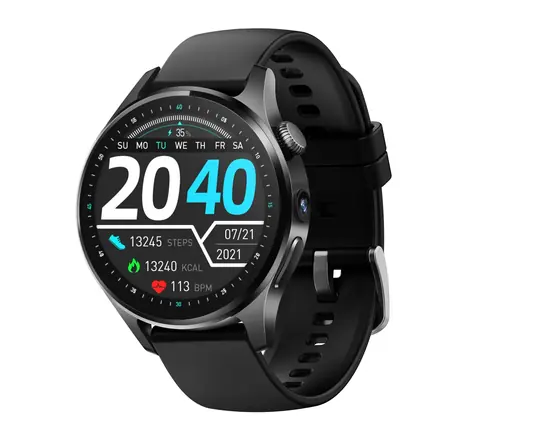
Standalone Android 8.1 watch phone with a 454x454 AMOLED, dual cameras and real time GPS location
View specification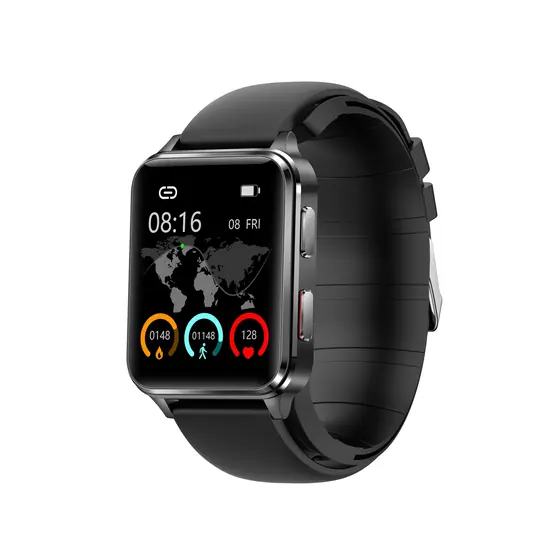
Cuff style blood pressure watch using a real air pump and airbag rather than an optical estimate
View specificationPanel choice drives battery life, daylight readability, case thickness and cost. Here is how the two behave in the models in this catalogue.
Battery capacity explains less than buyers expect. Screen, radio and sensor duty cycle explain most of it, and the numbers in this catalogue show why.
IP ratings describe a laboratory test, not a swimming pool. Here is what each rating in this catalogue actually permits.
The two words get used interchangeably and they should not be. The difference decides who owns the design, who carries the tooling cost and how fast you launch.
Four calling models, four different answers. Screen size, case material, audio path and ruggedness are the axes that actually separate them.
A standalone watch phone is a network device before it is a wearable. Most deployment failures are SIM and carrier problems, not hardware problems.
Straps decide comfort, skin reaction and how many SKUs one hardware build can produce. Here is what the materials in this range do.
Some PPG algorithms flag irregular rhythms, but a flag is not a diagnosis and PPG does not produce a reviewable waveform. Specify an ECG front end if a trace is required.
512Hz, on a Maxim Max86176 front end.
No. Certification is described as pending on that platform, and we state it that way.
Send the requirement and we will match it to a platform, name the silicon behind it and confirm every figure in writing.