
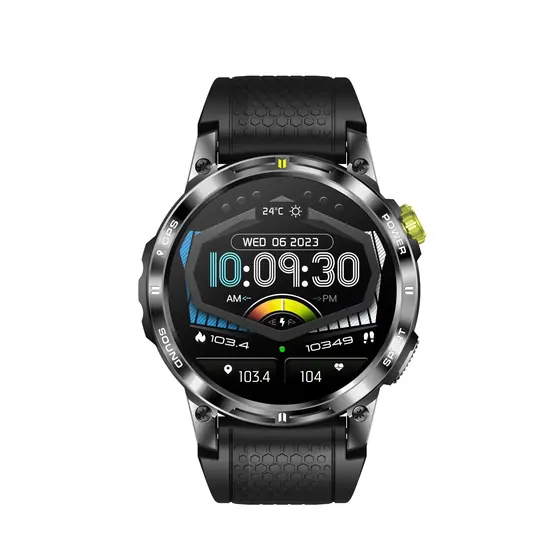
Bluetooth Talking Smart Watches
1.508 Inch AMOLED Display GPS Sport Heart Rate SpO2 Monitor Bluetooth Calling Watch
Four constellation GPS sport watch with a 466x466 AMOLED always on display and a 400mAh battery
View specification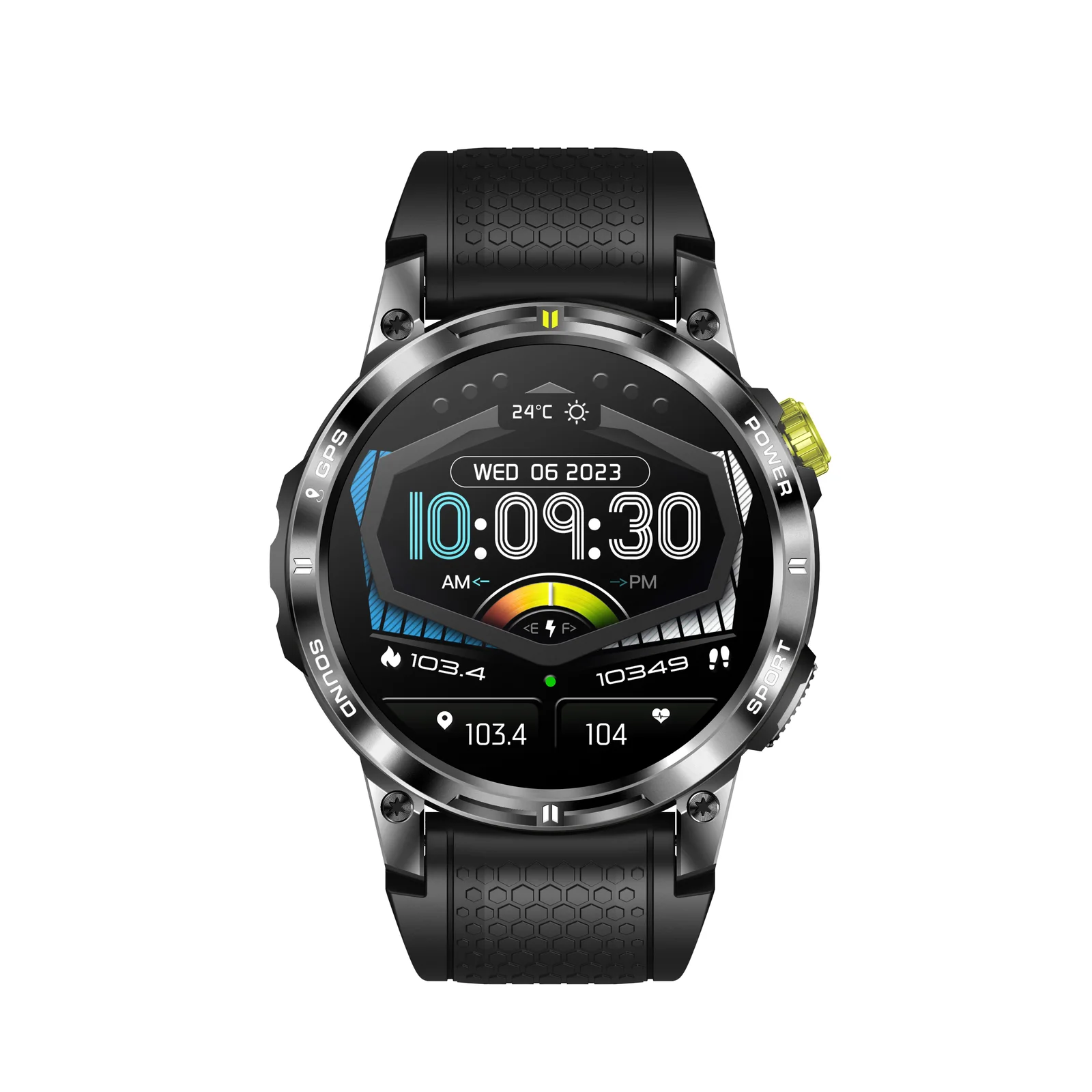
Panel choice drives battery life, daylight readability, case thickness and cost. Here is how the two behave in the models in this catalogue.
An AMOLED pixel emits its own light, so black pixels are off and draw nothing. A TFT panel is lit from behind by a backlight that stays on whatever the image. That single difference explains almost every trade-off that follows.
The 1.508 inch GPS calling watch runs a 466x466 AMOLED with a low power always on mode. On a TFT that mode would keep the backlight lit continuously, which is why no TFT model in this range offers it.
AMOLED models here run at 466x466 on the 1.508 inch flagship, 454x454 on the round 4G watch, 368x448 on the square 4G watch and 126x294 on the 1.1 inch trackers. The TFT models run 240x280 on the 1.7 inch band and the air pump blood pressure watch, 240x284 on the 1.85 inch calling watch and 240x240 on the ECG watch.
The 1.1 inch AMOLED trackers deliver 7 to 10 days from a 90mAh cell, because most of a tracker interface is black. The 1.7 inch TFT band needs 330mAh for a comparable experience with a much larger lit area.
Specify AMOLED for outdoor readability, always on display and dark interfaces on small cells. Specify TFT when a large display is needed at the lowest bill of materials and the interface is mostly light coloured anyway.
Four constellation GPS sport watch with a 466x466 AMOLED always on display and a 400mAh battery
View specification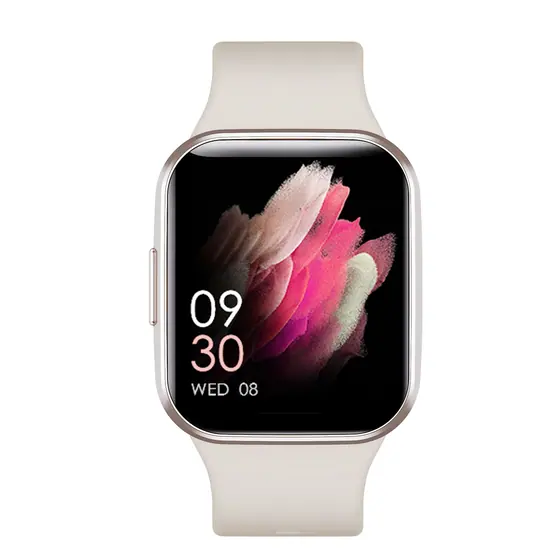
1.7 inch rectangular band with deep, light and REM sleep staging and all day stress monitoring
View specification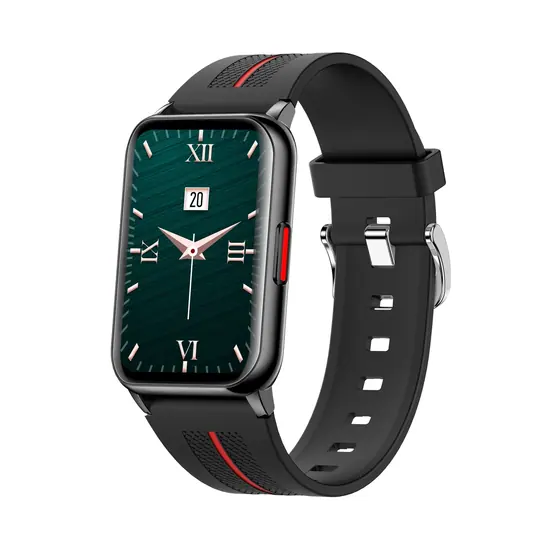
UQ76 curved hyperboloid display in a zinc alloy case with a two-tone strap and IP68
View specificationPPG sensors and ECG front ends measure different things. Knowing which is which decides what a wearable may legally and honestly claim.
Battery capacity explains less than buyers expect. Screen, radio and sensor duty cycle explain most of it, and the numbers in this catalogue show why.
IP ratings describe a laboratory test, not a swimming pool. Here is what each rating in this catalogue actually permits.
The two words get used interchangeably and they should not be. The difference decides who owns the design, who carries the tooling cost and how fast you launch.
Four calling models, four different answers. Screen size, case material, audio path and ruggedness are the axes that actually separate them.
A standalone watch phone is a network device before it is a wearable. Most deployment failures are SIM and carrier problems, not hardware problems.
Straps decide comfort, skin reaction and how many SKUs one hardware build can produce. Here is what the materials in this range do.
The 1.508 inch GPS bluetooth calling watch, at 466x466 on an AMOLED panel.
Only for dark interfaces. A mostly white interface on AMOLED can draw more than the same image on TFT.
The 1.39 inch and 1.85 inch calling watches use 2.5D high hardness glass, and UQ76 uses a hyperboloid double curved panel.
Send the requirement and we will match it to a platform, name the silicon behind it and confirm every figure in writing.