
How to Size a Solar Home System
Panel watts, battery amp hours and the load you actually want to run, using the figures from real Sinoware systems.
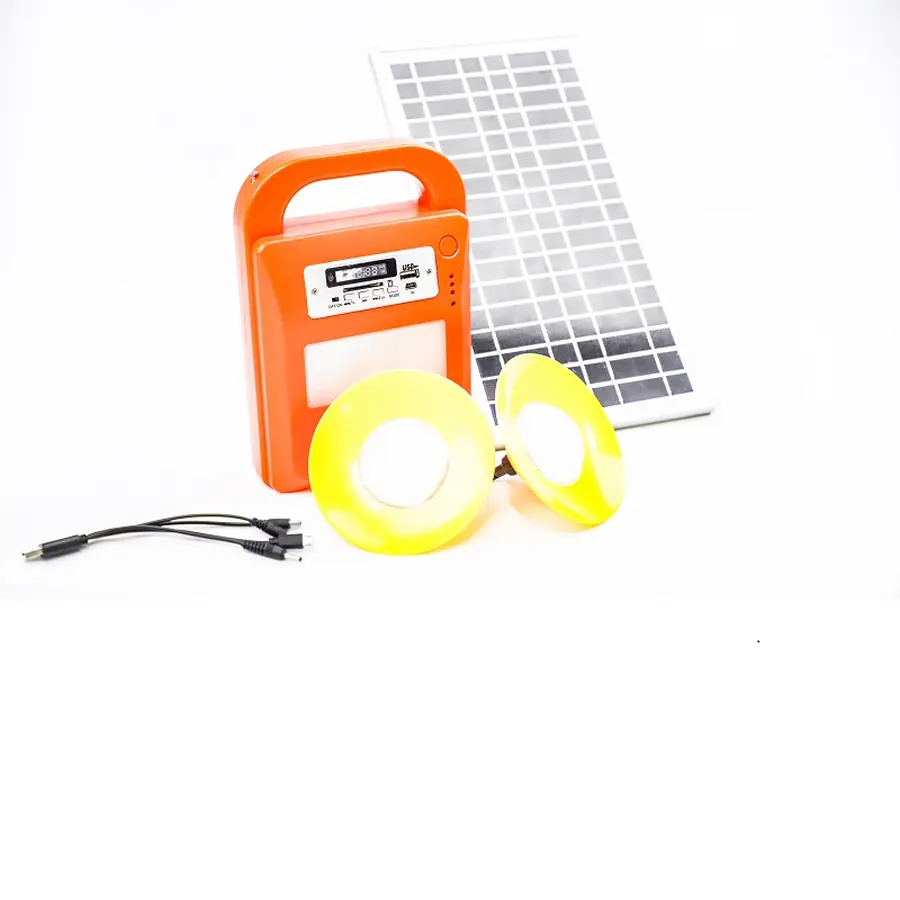
Most bad off-grid purchases come from the same mistake: someone picks a panel wattage, not a load. Work in the other direction and the sizing falls out on its own.
Start With the Load, Not the Panel
Write down what has to run, and for how long each night. Four LED lamps for five hours is a very different system from a lamp, a fan and a television. On the Sinoware range those two answers land in different product families.
What Each Size Actually Runs
- 4W to 8W portable systems. Three LED lamps of 150 or 200 lumens, phone charging and an emergency light. Lithium battery of 2600mAh or 5200mAh at 7.2V.
- 10W indoor systems. A 12V 7Ah lead acid battery, three or four 3W LED lamps, 6 to 8 hours of lighting from a full charge, plus USB charging and optional radio and MP3.
- 20W and 30W SEHEN kits. Three or four lamps of 375 lumens, each with its own 3.7V 2600mAh cells, plus a remote torch. Run times are stated per brightness step: 3 hours at 375 lumens, 3 hours at 187.5, then 4 hours at 37.5.
- 300W system. 12V 200Ah battery, 24V 10A charge control, 4 to 8 working hours, and a load list of one TV, one fan, one washing machine and one small fridge.
- 2000W system. 12V 600Ah battery, 48V 30A charge control, the same load list plus an electric pot.
Then Add the Cloudy Days
The larger systems are specified with two to three days of cloudy or rainy day operation. That reserve is not a bonus, it is the difference between a system people trust and a system they stop paying for. If you are sizing for a monsoon region, this is the number to argue about, not the panel.
Lead Acid or Lithium
The portable systems use lithium because weight and cycle life matter in a product someone carries. The 10W indoor systems and the large systems use deep cycle maintenance free lead acid because the cost per amp hour is lower where the battery sits still. Both are correct for their job.
Check the Output Ports Before You Commit
A 10W indoor system gives two USB 5V ports and five DC 12V ports. The 4W and 8W portable systems give two USB 5V and three DC 6V. If your customers plan to run a DC fan or a DC television, the port voltage decides whether that is possible at all.
Do Not Forget the Cable
Panel cables are supplied at 5 metres or more, lamp cables at 3 to 6 metres. In a house with a metal roof and a panel on the ridge, cable length is the thing that stops an installation, not the electronics.
A Working Method
- List the loads and hours per night.
- Pick the family that carries those loads.
- Check the run time per brightness step, not just the peak lumens.
- Add the cloudy day reserve your climate needs.
- Confirm the port count, port voltage and cable lengths.
Products in This Guide
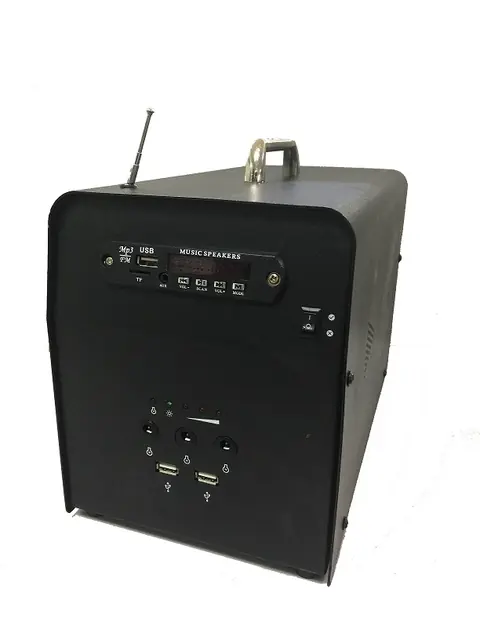
Solar Home System With Inverter
Model SW-HS300-200 / SW-HS2000-600
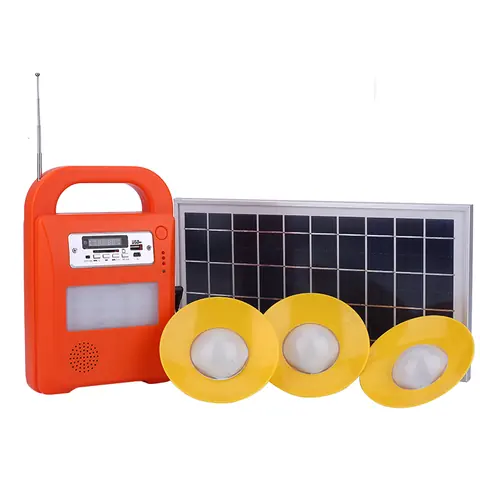
10W Portable Solar Power System With Emergency Lamp
Model 10W lighting system
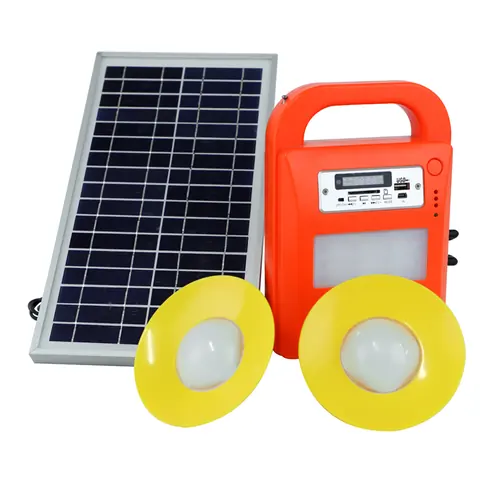
10W Solar Home Lighting System With Mobile Charger
Model 10W indoor system
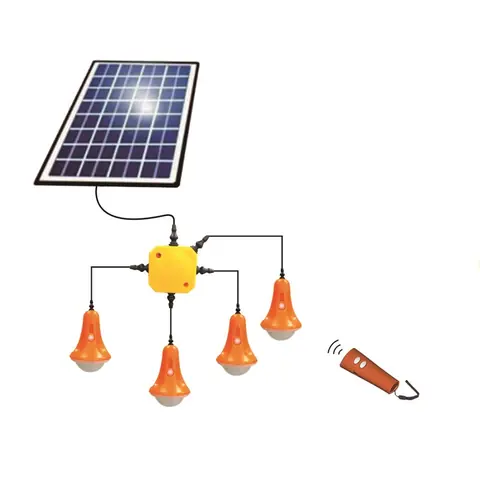
SEHEN Lighting System With 4 LED Lamps
Model 30W SEHEN kit
Questions About This Guide
How many lamps can a 30W SEHEN kit run?
What does a 300W system run?
Do the small systems have an inverter?
Still Deciding
Send the numbers you are working with and we will tell you which model fits, or tell you plainly if none of ours does.