
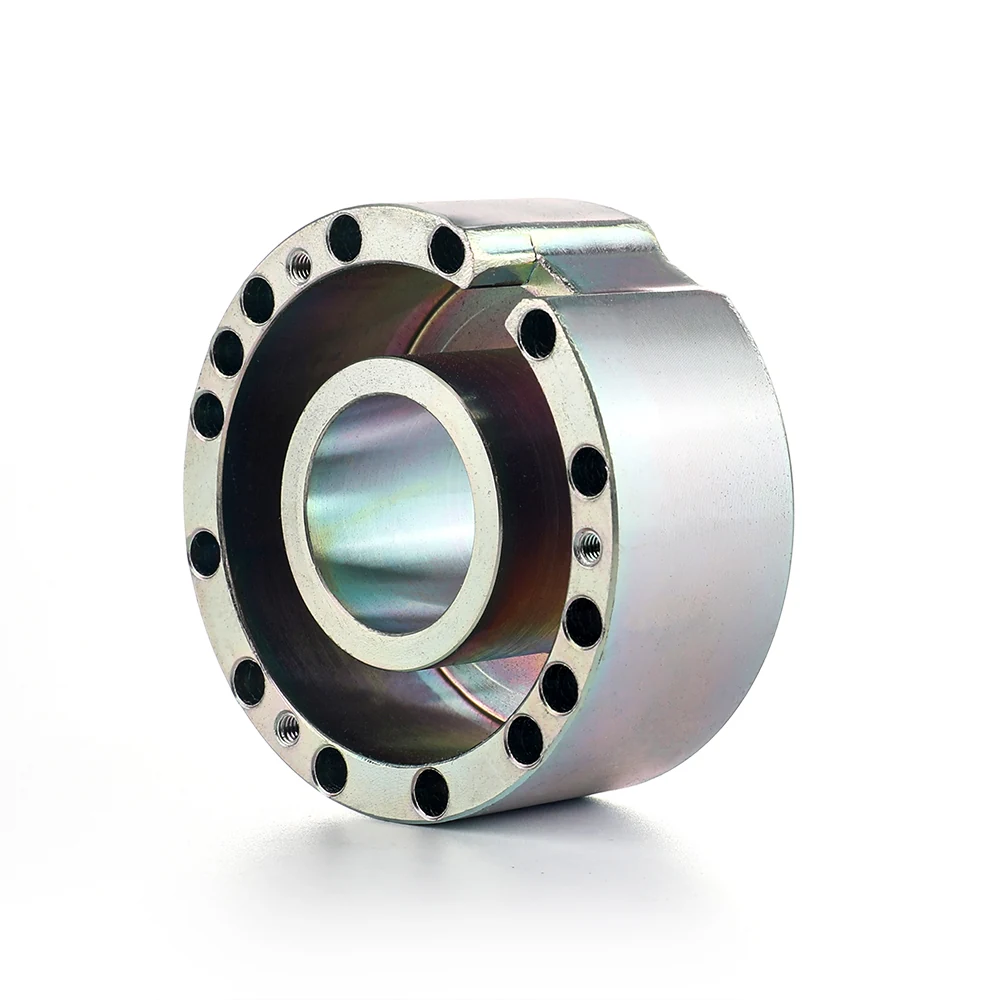
Plated Bearing Housing Ring
A ring that carries a bearing on its inner seat and bolts to a face through a full circle of holes
A Bolt Circle That Is True To The Bearing Seat
The inner seat is machined first, then the bolt circle is drilled from that same centre. On a ring with this many holes the pattern has to be right all the way round, because a bolt that fights the hole will pull the ring, and a pulled ring will nip the bearing.
The finish on these is a plated coating over steel, which is why the parts look gold rather than grey; the plating is applied by a local processor to the customer's specification.
Why The Machining Order Matters
Seat First, Holes Second
Every hole is positioned from the finished bearing seat rather than from the outside diameter.
Even Bolt Loading
A true pattern lets all the bolts share the clamp load instead of one taking it.
Plating To Specification
The coating is nominated by you and applied by a qualified processor, with the seat masked or allowed for.
Application Scenarios
- Bearing mounts on rotating equipment covers
- Flanged supports on drive housings
- Machine spindle end caps
- Sealed bearing retainers on gearboxes
Who It Is For
- Designers bolting a bearing housing to a flat face
- Engineers with bearings running hot after assembly
- Buyers needing plated rather than stainless parts
- Maintenance teams replacing distorted housing rings
Why Bearing Rings Fail Early
- Bolt patterns drilled from the outside diameter instead of the bearing seat
- Rings distorted on tightening because the holes do not line up
- Plating built up inside the seat and altering the bearing fit
- Bearings running hot with no obvious cause
Seat Datum
All positional features reference the bearing seat.
Plating Allowance
Coating thickness is taken into account before the seat is cut.
Pattern Verified
Hole positions are checked around the full circle, not on one sample hole.
Technical Features
- Machined bearing seat on the inner diameter
- Full bolt circle drilled and counterbored
- Faces machined parallel to the seat axis
- Plated finish over the machined body
- Deburred hole break-outs on both faces
Specifications
| Part Type | Flanged bearing housing ring |
|---|---|
| Typical Material | Steel with a plated finish |
| Primary Processes | CNC turning and drilling |
| Bearing Seat | Machined to the bearing maker's fit recommendation |
| Bolt Pattern | Drilled from the seat datum, to drawing |
| Finish | Plating to customer specification, applied by a qualified processor |
| Tolerance | To customer drawing, confirmed at quotation |
| Sample Lead Time | Within 30 days of drawing approval |
Seat fit comes from the bearing you nominate; plating type and thickness come from your specification.
Materials We Run
- Free-cutting or low-alloy steel with plating
- SUS304 stainless where plating is not wanted
- Aluminium alloy for lightweight covers
- Customer-nominated grades where a specification applies
Manufacturing Process
Turn The Ring
Faces, outside diameter and bearing seat are cut from bar or billet.
Drill The Circle
Holes are positioned from the finished seat and counterbored.
Deburr
Both break-outs are cleaned so the faces seat flat.
Plate
The coating is applied to your specification with the seat allowance built in.
Quality Control
- Bearing seat measured before and after plating
- Hole positions verified around the full circle
- Face parallelism checked on the first article
- Plating certificate retained from the processor
- ISO 9001 system in place since 2009
Customization Options
- Bearing seat size and fit class
- Hole count, diameter and pitch circle
- Ring thickness and outside diameter
- Plating type and thickness
- Seal groove or retaining ring groove
Machined Ring Against Cast And Stamped Options
| Cast housing ring | Seat dimensions do not vary between batches and there is no porosity under the plating. |
|---|---|
| Stamped steel retainer | Carries a proper machined bearing seat instead of relying on a pressed hole. |
| Stainless machined ring | Plated steel costs less; stainless avoids the plating step and the seat allowance it brings. |
Ordering The Ring
Give The Bearing Number
The seat fit is worked from the bearing maker's data.
Specify The Plating
Type and thickness, because both affect the finished seat.
Fix The Pattern
Hole count and pitch circle referenced to the seat centre.
State The Mating Face
What the ring bolts to decides the counterbore and bolt length.
Plated Bearing Housing Ring — FAQ
Does the plating change the bearing fit?
It can, which is why the coating type and thickness are agreed before machining and allowed for when the seat is cut. On tight fits we mask the seat instead, and we will tell you which approach we plan to use.
Why drill the bolt holes from the bearing seat rather than the outside diameter?
Because the seat is the feature the bearing cares about. If the pattern is taken from the outside diameter, any eccentricity between the two ends up pulling the ring when the bolts are tightened.
Can you supply these in stainless instead of plated steel?
Yes, and it removes the plating allowance and the subcontract step. It costs more in material but the lead time is usually shorter.
Do you machine the seal groove as well?
If the drawing shows one, it is cut in the same setup as the bearing seat so the two stay concentric.
How do you verify the hole pattern?
Positions are checked around the full circle on the first article, not on a single sample hole, because pattern errors on a ring are rarely uniform.
Related Products
Related Guides
The Drawing Checklist That Gets You A Firm Machining Quote
What to put on the print so the quotation comes back firm instead of hedged.
What To Check Before Importing Machined Parts From China
How to separate a machine shop from a trading company, and how to structure a first order so it proves something.
Send The Ring Drawing And Bearing Number
With the bearing part number and the plating specification we can quote the ring, the seat fit and the lead time in one reply.