
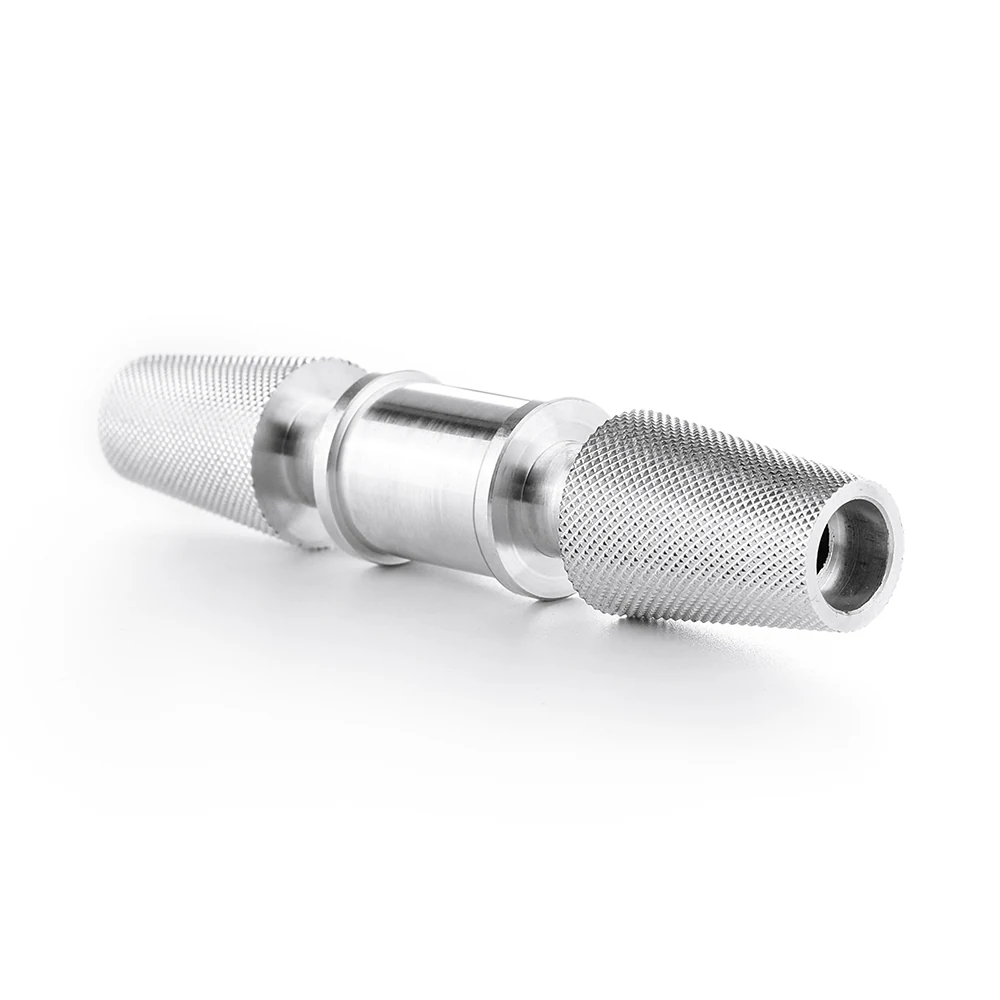
Knurled Hollow Shaft
A hollow shaft with knurled bands at each end, so it can be gripped, pressed or bonded into a housing
Knurls That Hold, A Bore That Stays Round
The through bore is finished after the knurls are rolled. Rolling a knurl displaces material and will close a thin bore if you do it the other way round, so the sequence here is deliberate: turn, knurl, then finish the bore to size.
Hollow shafts like this are pressed into plastic or light-alloy housings, where the knurl gives the joint its torque capacity, or used as hand-turned adjusters where the knurl is simply the grip.
What The Sequence Buys
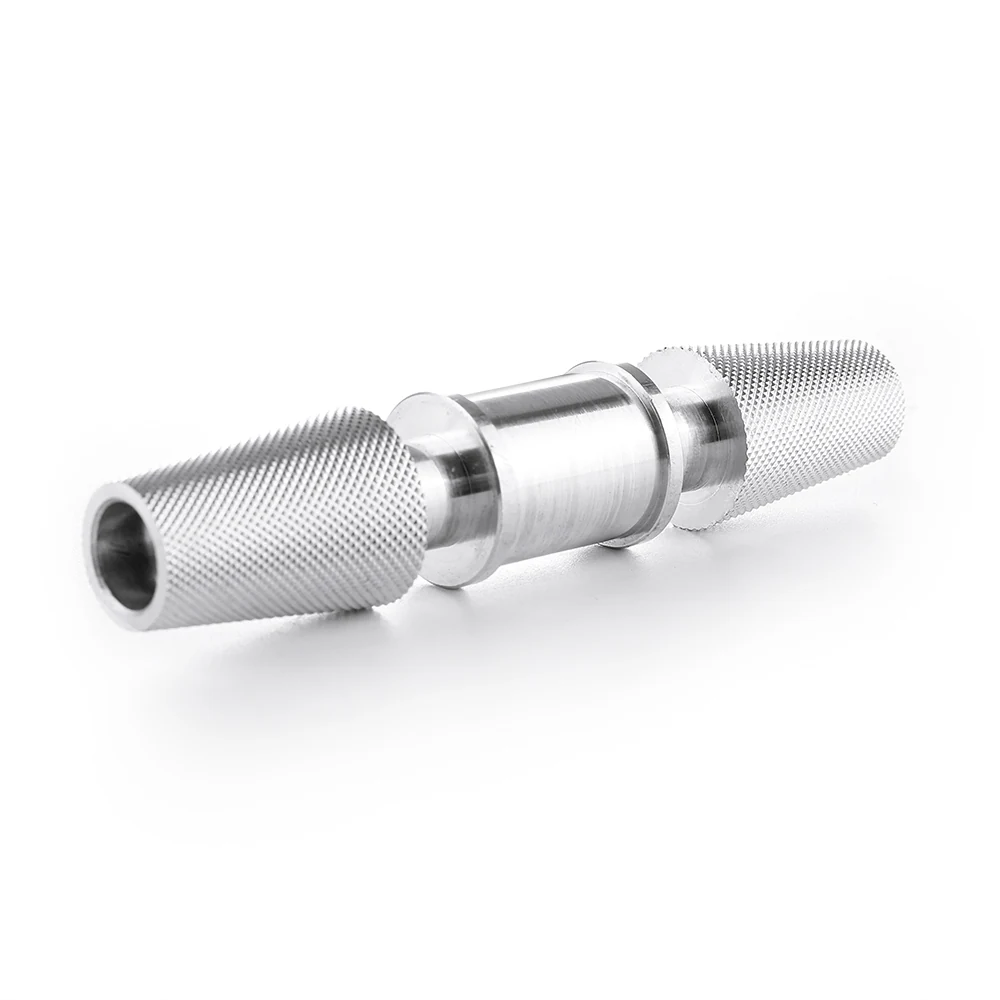
Round Bore After Knurling
Finishing the bore last removes the distortion the knurl roller causes.
Knurl Sized For The Press Fit
Crest diameter is gauged, so the interference into the housing is predictable.
Two Bands, One Setup
Both knurls are rolled on the same axis without re-clamping.
Application Scenarios
- Inserts pressed into plastic or alloy housings
- Hand-turned adjusters on instruments
- Hollow spindles carrying a cable or tube
- Bonded joints where the knurl gives the adhesive a key
Who It Is For
- Designers pressing metal inserts into moulded parts
- Engineers whose bores go oval after knurling
- Buyers replacing a two-part insert and sleeve
- Teams needing a grip surface and a through passage
Knurling Problems We Design Around
- Bores closing up or going oval when the knurl is rolled
- Press fits that vary because knurl crest diameter is uncontrolled
- Inserts spinning in plastic housings under torque
- Grip surfaces too sharp for repeated hand use
Bore Last
The final cut is the bore, after all deformation is done.
Gauged Crest
Knurl outside diameter is measured, not assumed.
Pattern To Suit
Straight or diamond knurl chosen for press-fit or for grip.
Technical Features
- Through bore finished as the last operation
- Two rolled knurl bands with a turned relief between
- Chamfered lead-in at the press end
- End faces square to the bore axis
- Deburred bore at both ends
Specifications
| Part Type | Hollow knurled shaft or insert |
|---|---|
| Typical Material | Free-cutting steel, stainless or aluminium |
| Primary Process | CNC turning with knurl rolling |
| Knurl | Straight or diamond, pattern to drawing |
| Bore | Finished after knurling to stay round |
| Tolerance | To customer drawing, confirmed at quotation |
| Finish | As machined, plated or anodised |
| Sample Lead Time | Within 30 days of drawing approval |
Knurl pattern and interference are set from your housing data. No standard sizes are held.
Materials We Run
- Free-cutting steel for pressed-in inserts
- SUS304 stainless where corrosion matters
- Aluminium alloy for light hand adjusters
- Brass where the insert must not mark a soft housing
Manufacturing Process
Turn The Body
Outside diameters and the relief band are cut from bar.
Roll The Knurls
Both bands are rolled while the part is still in the collet.
Finish The Bore
The through bore is cut to size after all deformation.
Deburr And Gauge
Bore and knurl crest are checked before packing.
Quality Control
- Knurl crest diameter gauged on every lot
- Bore size and roundness checked after knurling
- Press-fit trial into a customer housing sample where supplied
- Visual check for knurl pick-up or flaking
- ISO 9001 system in place since 2009
Customization Options
- Knurl pattern, pitch and band width
- Bore diameter and lead-in chamfer
- Overall length and relief position
- Material and surface treatment
- Press-fit interference sized to your housing
Knurled Insert Against Other Joints
| Plain pressed insert | A knurl carries far more torque in a plastic or alloy housing than a plain interference fit. |
|---|---|
| Heat-staked or ultrasonic insert | No specialised installation equipment, though the press force has to be controlled. |
| Threaded insert | Simpler and cheaper where the joint is permanent and does not need servicing. |
Getting The Press Fit Right
Send The Housing Data
Bore size and material decide the knurl crest we aim for.
State The Torque
Required torque capacity sets the knurl pattern and band width.
Describe The Assembly
Press, bond or hand-fit changes the design.
Supply A Housing Sample
With one we can trial the fit before the batch runs.
Knurled Hollow Shaft — FAQ
Why is the bore machined after knurling?
Rolling a knurl pushes material outward and inward. If the bore is finished first it closes up or goes oval. Cutting it last gives you a round bore and a controlled knurl at the same time.
What interference should I allow for a plastic housing?
It depends on the polymer and the wall thickness, so we ask for the housing drawing and material rather than quoting a number. If you can send a housing sample we will trial the fit.
Straight or diamond knurl for a press fit?
Straight knurls generally give better torque resistance in a press fit; diamond knurls are the better hand grip. We will recommend one once you tell us what the joint has to do.
Can the shaft be anodised after knurling?
On aluminium, yes. The coating thickness is allowed for when the knurl and bore are sized, so the finished part still presses correctly.
Do you check the fit into our housing?
If you supply housing samples we press a trial set and report the result before running the batch. That step has saved several customers a tooling change.
Related Products
Related Guides
Send The Insert And Housing Details
Give us the housing bore, the housing material and the torque the joint must hold. We will propose the knurl and confirm the price.